Grilled Corn with Scallion Oil
Bắp nướng mỡ hành
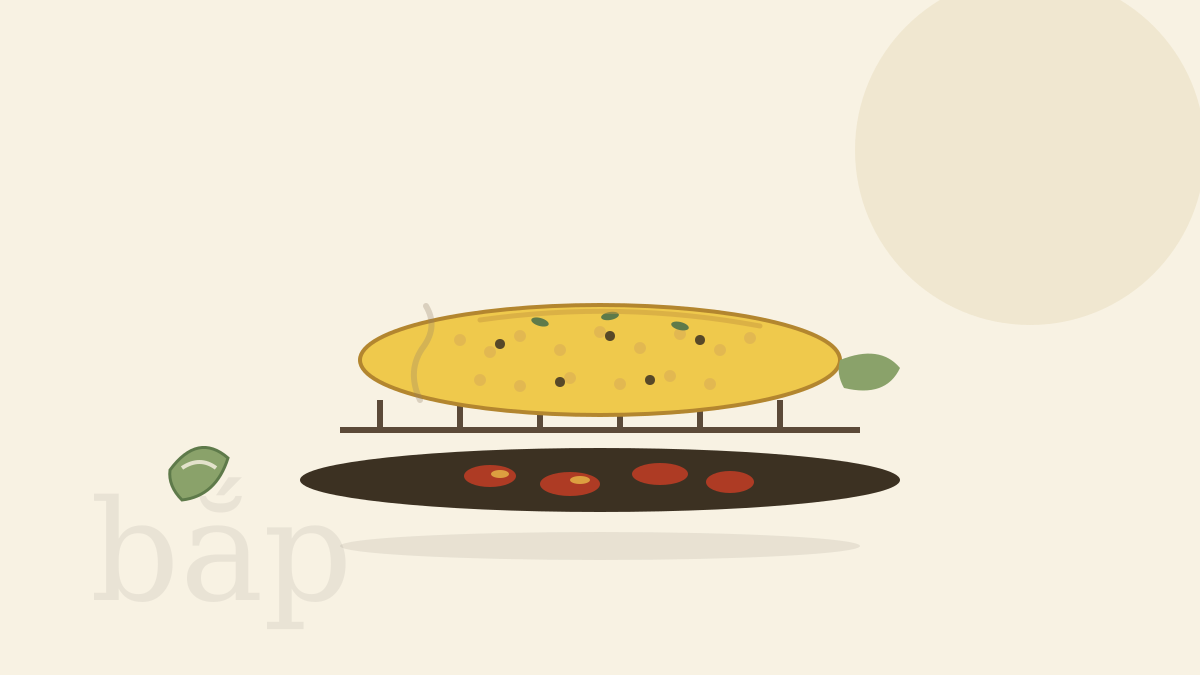
Whole corn charred over coals and basted with scallion oil — the coast's night-market brazier snack, with the char doctrine that separates good from burnt.
By Vietnamese Cookbook Kitchen · May 18, 2026
The South Central CoastThe Subsidy Era era, 1975–1986
 Phố
Phố- Prep
- 15 min
- Cook
- 15 min
- Serves
- 4
- Level
- Beginner
Corn arrived in Vietnam centuries after rice, but by the lean bao cấp decades it had become a genuine staple on the central coast — cheap, fast-growing, and forgiving of the poor coastal soil that struggled with rice paddies. Grilling it whole over charcoal and basting with mỡ hành turned a subsistence crop into one of the coast's most reliable night-market snacks, sold off braziers from Quy Nhơn to Nha Trang for the price of pocket change, eaten standing up under a string of bare bulbs.
The whole dish comes down to one piece of grill discipline: char is sweet, burnt is bitter, and the difference is measured in a couple of minutes of attention, which is why a vendor working a brazier never walks away from it. Baste light and early for the oil to work into the kernels, baste heavy and late for the shine — get that sequence backward and you've made expensive ash instead of the best two dollars you'll spend on a hot night.
Baste twice, not once — early for color, late for gloss. Oil brushed on raw corn burns before the kernels char properly; oil brushed on only at the end never soaks in.
Lời đầu bếp · A word from the kitchen
Ingredientsnguyên liệu
Serves 4
The corn
- 4ears fresh corn, husked — look for corn with plump, tightly packed kernels; older, starchy corn chars before it cooks through
- 2 tbspneutral oil — for the first, light basting before the corn touches the grill
Mỡ hành (scallion oil)
- 6scallions, green parts only, thinly sliced — see our bánh hỏi page for the full method — this dish leans on the same foundation
- 80 mlneutral oil — 1/3 cup
- 0.25 tspfine salt
- 0.25 tspsugar
To finish
- 2 tbspcrushed roasted peanuts
- 1pinch chili flakes or sliced fresh chili — optional, for those who want the sweet corn to fight back a little
- 1lime wedge per ear
Methodcách làm
Step 1: Make the mỡ hành
Put the scallion rings, salt, and sugar in a heatproof bowl. Heat the oil until it shimmers, about 160°C, and pour it over — the scallions should fizz and turn vivid green in seconds. If they brown, the oil went in too hot.
Step 2: Light-oil and start the char
Brush the corn lightly with plain oil and set it over medium-high coals, turning every 2–3 minutes so the char builds evenly around the ear rather than scorching one side black while the other stays pale.
Step 3: Follow the char doctrine: color first, gloss last
Grill 10–12 minutes total, watching for kernels that turn a deep amber-brown with occasional black spots — that's char, which tastes of caramelized sugar, not burn, which tastes of ash. **Even blistering beats a few showy black stripes**; rotate before any one side goes fully dark.
Step 4: Baste with mỡ hành in the last two minutes
Brush the scallion oil generously over the corn in the final 2 minutes of grilling, letting it sizzle briefly against the hot kernels rather than pooling and going raw. This second, late basting is what gives bắp nướng its glossy, fragrant finish — earlier and it just burns off.
Step 5: Finish and serve hot
Pull the corn off the grill, brush with any remaining mỡ hành, scatter with peanuts and chili if using, and serve immediately with a lime wedge. This is standing-up, night-market food — it wants to be eaten within minutes of leaving the coals, not plated and rested.
Đồ nghề · The tools
Equipment
Charcoal grill / grill pan
Vỉ nướngNướng means fire, and lemongrass pork wants char and smoke. A small charcoal grill is the true answer; a screaming-hot cast-iron grill pan under a cracked window is the honest apartment one.
Shop on Amazon →Mandoline
Bàn bàoĐồ chua lives or dies on evenness — carrot and daikon cut to the same whisper-thin matchstick pickle at the same speed. Use the guard; every Vietnamese grandmother has the scar that says otherwise.
Shop on Amazon →
Equipment links are Amazon affiliate links. As an Amazon Associate we earn from qualifying purchases, at no cost to you. Disclosure.
Questions from the kitchen
How do I tell char from burnt without a grill I trust?
Char smells sweet and toasty even close up; burnt smells acrid and bitter the moment you lean in. Visually, char is uneven — brown with scattered dark spots — while burnt is a uniform black crust. If more than a third of any single row of kernels has gone solid black, that ear is past the point of no return; move the others sooner.
Can this be done on a stovetop or in the oven?
A cast-iron grill pan gets respectably close, turned often over high heat; a broiler works too, corn rotated every few minutes a few inches from the element. Neither replaces charcoal's smoke, but the scallion oil basting carries most of the dish's identity regardless of heat source.
Why scallion oil on corn specifically — isn't that a savory pairing for a sweet vegetable?
That contrast is the point, and it's the same logic bánh hỏi and grilled meats run on across Vietnamese cooking — mỡ hành's savory, faintly sweet aromatic oil doesn't compete with corn's sugar, it frames it. Night-market vendors up and down the coast reach for the same bottle of scallion oil whether they're dressing noodles or corn.
Nấu tiếp · Cook next
Keep the burner on
 Phố
PhốStreet Food·55 min·Intermediate
Bánh Mì ThịtBánh mì thịt
The full Saigon cold-cuts bánh mì built at home — crackly baguette, a quick chicken-liver pâté, đồ chua, and a shake of Maggi, assembled in the right order.
 Phố
PhốStreet Food·75 min·Intermediate
Hội An Chicken RiceCơm gà Hội An
Hội An's chicken rice — rice cooked golden in the poaching broth, hand-torn chicken tossed with rau răm and onion, a Hainanese idea gone thoroughly Vietnamese.
 Phố
PhốStreet Food·35 min·Beginner
Đà Lạt Grilled Rice PaperBánh tráng nướng
Đà Lạt's night-market rice paper grill — egg, scallion, and dried shrimp crisped onto bánh tráng. The 'Vietnamese pizza,' translated to a home stove.