Tuna Braised with Pineapple
Cá ngừ kho thơm
Phú Yên tuna steaks braised in caramel and fish sauce with pineapple for acid and sweetness — a claypot dish built on the difference between loin and belly.
By Vietnamese Cookbook Kitchen · May 9, 2026
The South Central CoastThe Lê Dynasty era, 1428–1789
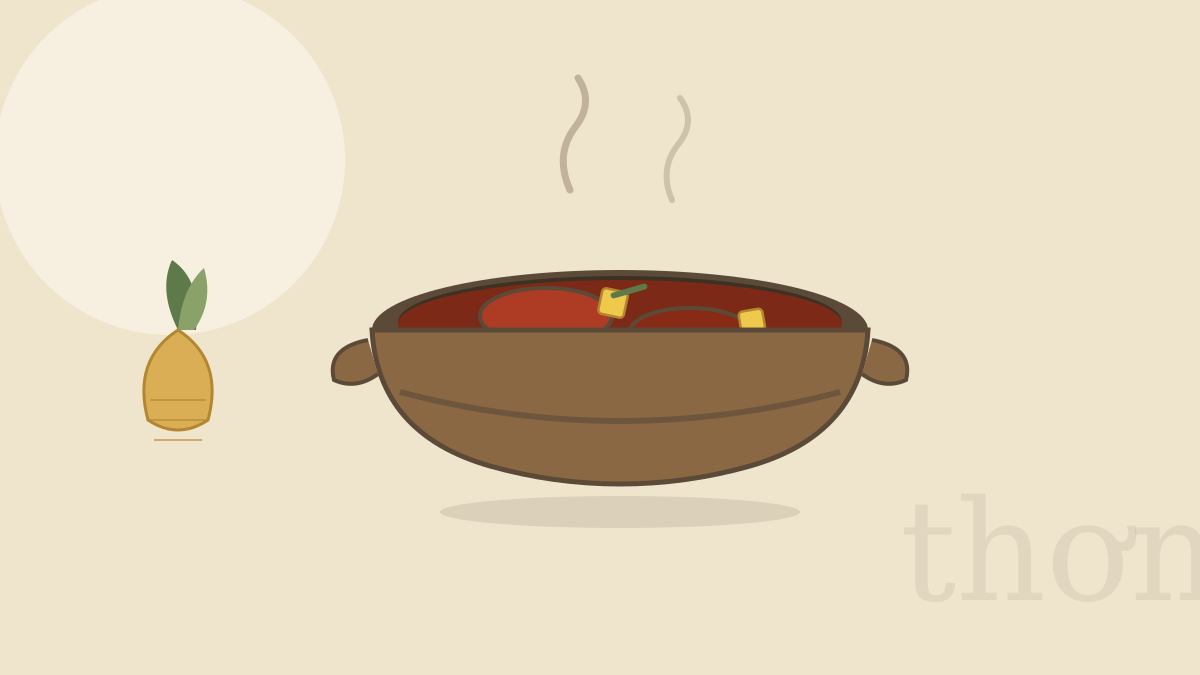 Kho
Kho- Prep
- 20 min
- Cook
- 35 min
- Serves
- 4
- Level
- Intermediate
Phú Yên's fishing fleets bring in some of the country's biggest tuna catches, and cá ngừ kho thơm is what the province cooks with the fish that doesn't go to the export market — thick steaks braised in the caramel and fish sauce base that anchors nearly every kho dish in Vietnamese cooking, brightened here with pineapple instead of the usual plain water reduction. It's a dish old enough to predate refrigerated shipping, built on the same logic as the Mekong Delta's caramel fish: a rich protein, a dark savory-sweet base, and whatever local produce cuts the richness.
The choice that actually matters is the cut, not the technique: fatty belly rewards a longer braise, lean loin punishes one, so know which piece you bought before you set the timer. Either way, the pineapple's job is structural as much as flavorful — its acid keeps a dish this rich from tipping into monotony, chunk by chunk, all the way to the bottom of the pot.
Buy belly if the market has it and loin if it doesn't — both work, but they want different cooking times. Belly's fat can take a longer braise and improves for it; lean loin turns dry past twenty-five minutes.
Lời đầu bếp · A word from the kitchen
Ingredientsnguyên liệu
Serves 4
The fish
- 700 gfresh tuna steaks, belly or loin, cut into thick pieces — about 1.5 lb — Phú Yên's own fishery is one of Vietnam's biggest tuna ports, and belly (bụng) is the prized cut there; loin (thăn) is leaner and easier to find abroad, see the chef's note
- 1.5 tbspfish sauce — for marinating the fish before it goes in the pot
- 0.5 tspground black pepper
The braise
- 3 tbspnước màu (Vietnamese caramel sauce) — or 3 tbsp sugar melted to dark amber in the pot — see our nước màu foundations page for the method
- 3 tbspfish sauce
- 2 tbspsugar
- 3shallots, sliced
- 3garlic cloves, smashed
- 2bird's-eye chilies, left whole or sliced
- 250 gfresh pineapple, cut into chunks — about 1½ cups — slightly underripe pineapple holds its shape and acid better through a long braise than very ripe fruit
- 250 mlwater or light stock — 1 cup, added gradually
- 2scallions, cut into lengths
- 1pinch ground white pepper, to finish
Methodcách làm
Step 1: Marinate the fish
Toss the tuna pieces with fish sauce and pepper and let sit 15 minutes at room temperature. Tuna's dense flesh takes seasoning slowly — this short marinade is about surface flavor, not a cure.
Step 2: Build the caramel base
In a claypot or heavy pot, combine the nước màu, fish sauce, and sugar and warm gently until it turns glossy and fragrant, about a minute — this is the dark, savory-sweet base every kho dish shares.
Step 3: Layer in aromatics and fish
Add the shallots, garlic, and chili to the caramel base, then lay the tuna pieces on top in a single layer. Let the fish sit undisturbed 2 minutes over medium heat so the underside picks up color before you touch it — tuna breaks easily, and the first flip matters more than any that follow.
Step 4: Add pineapple and braise
Tuck the pineapple chunks between the fish pieces, pour in the water or stock gradually, and bring to a bare simmer. Cover and cook 20–25 minutes for loin, up to 30 for belly, spooning the sauce over the fish once or twice rather than stirring, which would break the pieces apart.
Step 5: Reduce and finish
Uncover for the final 5 minutes and let the sauce reduce to a thick, clinging glaze, tasting and adjusting with a touch more fish sauce or sugar as needed — the pineapple should have softened slightly but still hold its shape and its bite of acid. Scatter scallions and white pepper over the top just before serving.
Đồ nghề · The tools
Equipment
Claypot
Thố đấtThe vessel kho was invented in — clay heats slowly, holds a caramel simmer without scorching, and goes straight to the table still bubbling. Season it once with rice water and it outlives you.
Shop on Amazon →Heavy pot / Dutch oven
Nồi dàyDeep, heat-retentive, and stable — for deep-frying without temperature crashes, and for bò kho and cà ri when the claypot is too small for the crowd.
Shop on Amazon →
Equipment links are Amazon affiliate links. As an Amazon Associate we earn from qualifying purchases, at no cost to you. Disclosure.
Questions from the kitchen
Why pineapple with tuna specifically?
Tuna is a rich, almost meaty fish, and pineapple's acid and sweetness cut that richness the way tamarind does in a sour soup — it's the same logic that pairs pineapple with fatty pork in the south, applied to the central coast's own fish. Underripe pineapple is preferred here precisely because it keeps enough sharpness through a 30-minute braise.
Belly versus loin — how different is the result really?
Meaningfully. Belly carries streaks of fat that render into the sauce and stay tender well past the point loin would turn dry and stringy, which is why Phú Yên cooks who have their pick of the catch favor it for this dish. Loin makes a perfectly good version — just watch the clock more closely and don't push past 25 minutes.
Is there any safety concern with tuna cooked this way?
None beyond ordinary fish handling — this is a fully cooked braise, not a raw preparation, so buy tuna as you would any fresh fish (cold, firm, no strong odor) rather than needing sashimi-grade sourcing. Cook until it flakes and shows no translucent center at the thickest point.
Nấu tiếp · Cook next
Keep the burner on
 Kho
KhoKho & the Claypot·35 min·Beginner
Tamarind-Glazed SquidMực rim me
Squid lacquered in sticky tamarind and fish sauce — the central coast's great beer snack, plus the science of keeping squid tender, not rubbery.
 Kho
KhoKho & the Claypot·180 min·Intermediate
Beef Stew with Star Anise & LemongrassBò kho
Saigon's French-Vietnamese beef stew — chuck braised with lemongrass, star anise, and annatto until the broth is the point, eaten with torn baguette or noodles.
 Kho
KhoKho & the Claypot·60 min·Intermediate
Claypot Caramel FishCá kho tộ
Catfish braised in bittersweet nước màu caramel and fish sauce until the sauce turns mahogany — the Mekong Delta's claypot standard, saucepan route included.