Artichoke & Pork-Knuckle Soup
Canh atiso hầm giò heo
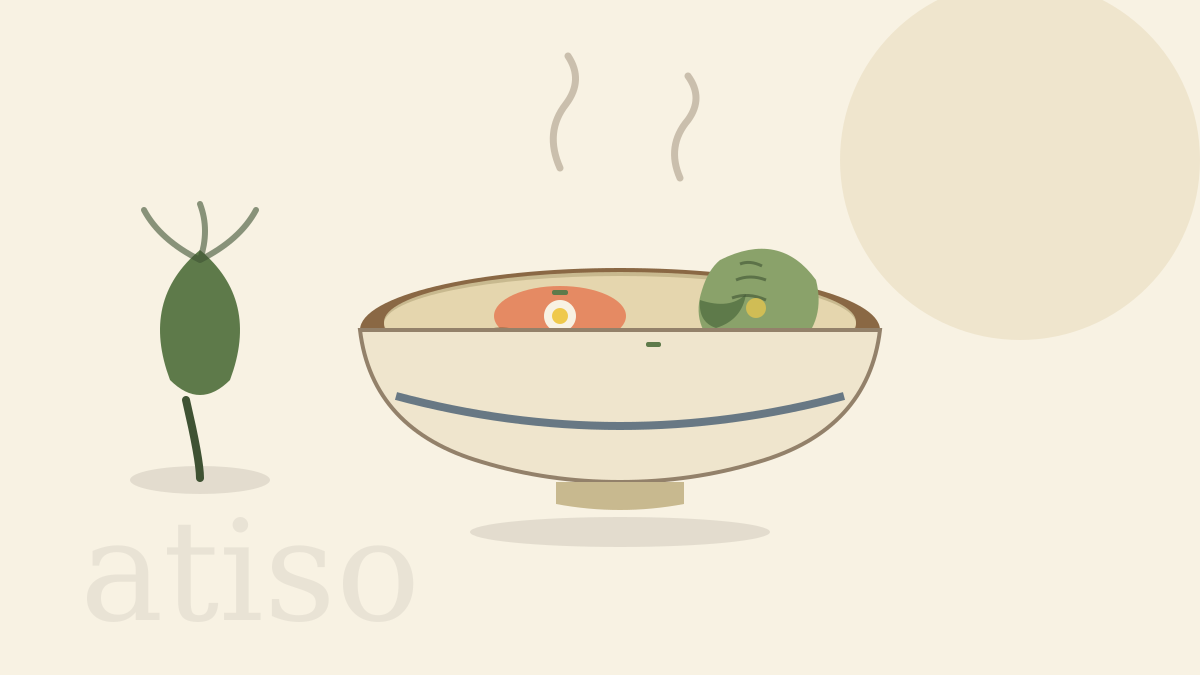
A French vegetable gone native — whole artichokes simmered for hours with pork knuckle until both turn silken, in the hill station the colonists built to feel like home.
By Vietnamese Cookbook Kitchen · April 4, 2026
The Central HighlandsFrench Indochina era, 1883–1945
 Kho
Kho- Prep
- 20 min
- Cook
- 150 min
- Serves
- 4
- Level
- Beginner
Đà Lạt exists because the French wanted a piece of home at altitude. From the early 1900s, colonial administrators built the hill station as a retreat from the lowland heat, and they brought European vegetables with them — artichokes chief among them, planted on hillsides they judged close enough to Provence. More than a century later, the plant has outlasted the empire that brought it: Đà Lạt is now Việt Nam's artichoke capital, and canh atiso hầm giò heo is what the highlands did with a very French vegetable once it stopped being anyone's import.
The soup itself owes nothing to France beyond its main ingredient — a long, Vietnamese-style simmer of pork knuckle and rib bones, built the same way a dozen other canh are built, just given hours instead of minutes because artichoke needs the same patience as bone does. Both go in tough and come out silken: the pork releases collagen into a broth gone rich and faintly sweet, while the artichoke turns from thistle to something you pull apart with your fingers, leaf by leaf. It's a slow Sunday soup, French by ingredient and entirely Vietnamese by method.
Buy the heaviest artichokes on the table — weight means water content, and a light, papery artichoke has already given up half its flavor before it ever sees your pot.
Lời đầu bếp · A word from the kitchen
Ingredientsnguyên liệu
Serves 4
- 4whole fresh artichokes — medium, about 200 g each — trim the stem to 3 cm and the top third of the leaves, then halve lengthwise
- 1pork knuckle, cut into rounds — about 800 g / 1.75 lb — ask the butcher to cross-cut it; the marrow is the point
- 300 gpork ribs — 10 oz, cut into short lengths, for body in the broth
- 3 Lwater — about 12 cups
- 2shallots, peeled and left whole
- 1knob ginger, smashed — about 20 g
- As neededfish sauce, salt, and white pepper to season
- 2scallions, sliced, for garnish
- 1 tbspfresh cilantro, chopped, for garnish
Methodcách làm
Step 1: Blanch the pork
Cover the knuckle and ribs with cold water, bring to a boil for 3 minutes, then drain and rinse under cold water. This clears the scum that would otherwise cloud a broth you're about to simmer for hours.
Step 2: Start the long simmer
Return the pork to the pot with 3 liters of fresh water, the shallots, and the ginger. Bring to a boil, then drop to the gentlest simmer you can hold and cook uncovered for 90 minutes, skimming occasionally.
Step 3: Add the artichokes
Slide the halved artichokes into the broth and simmer another 45 to 60 minutes, until a knife slides into the heart with no resistance and the outer leaves have gone soft enough to suck clean.
Step 4: Season the broth
Taste and season with fish sauce, salt, and white pepper. The broth should taste mineral and slightly bitter-sweet from the artichoke, round and porky underneath — resist the urge to sweeten it further.
Step 5: Serve whole
Ladle a piece of knuckle, a rib, and an artichoke half into each bowl with plenty of broth. Scatter scallion and cilantro over the top and serve with rice on the side; this is a soup eaten with a spoon in one hand and fingers in the other, pulling leaves.
Đồ nghề · The tools
Equipment
Claypot
Thố đấtThe vessel kho was invented in — clay heats slowly, holds a caramel simmer without scorching, and goes straight to the table still bubbling. Season it once with rice water and it outlives you.
Shop on Amazon →Fine-mesh skimmer
Vợt vớt bọtClear phở broth is not a trick, it is patience with a skimmer — take the scum off early and often and the pot rewards you with glass.
Shop on Amazon →
Equipment links are Amazon affiliate links. As an Amazon Associate we earn from qualifying purchases, at no cost to you. Disclosure.
Questions from the kitchen
How do I actually eat the artichoke?
Pull the outer leaves off one at a time and draw them through your teeth to scrape off the softened flesh at the base, working inward. When you reach the pale inner leaves and the heart, the fuzzy choke lifts away easily with a spoon — eat everything beneath it.
Why does Đà Lạt grow French vegetables?
French colonists built Đà Lạt in the early 1900s specifically because its elevation and climate resembled southern France, and they planted the hillsides with artichokes, strawberries, and cabbage to match. Artichokes took root so thoroughly that atiso is now sold dried, canned into tea, and stewed into soup across the whole region — a colonial import the highlands simply kept.
Can I use canned or frozen artichoke hearts instead?
You'll get a faster soup but a different one — canned hearts lack the leaves that give this dish its slow, hands-on eating, and they won't release the same gentle bitterness into the broth over a long simmer. If that's what you have, add them in the last 15 minutes only.
Nấu tiếp · Cook next
Keep the burner on
 Kho
KhoKho & the Claypot·35 min·Beginner
Tamarind-Glazed SquidMực rim me
Squid lacquered in sticky tamarind and fish sauce — the central coast's great beer snack, plus the science of keeping squid tender, not rubbery.
 Kho
KhoKho & the Claypot·180 min·Intermediate
Beef Stew with Star Anise & LemongrassBò kho
Saigon's French-Vietnamese beef stew — chuck braised with lemongrass, star anise, and annatto until the broth is the point, eaten with torn baguette or noodles.
 Kho
KhoKho & the Claypot·60 min·Intermediate
Claypot Caramel FishCá kho tộ
Catfish braised in bittersweet nước màu caramel and fish sauce until the sauce turns mahogany — the Mekong Delta's claypot standard, saucepan route included.