Chả Rươi (Sandworm Omelet)
Chả rươi
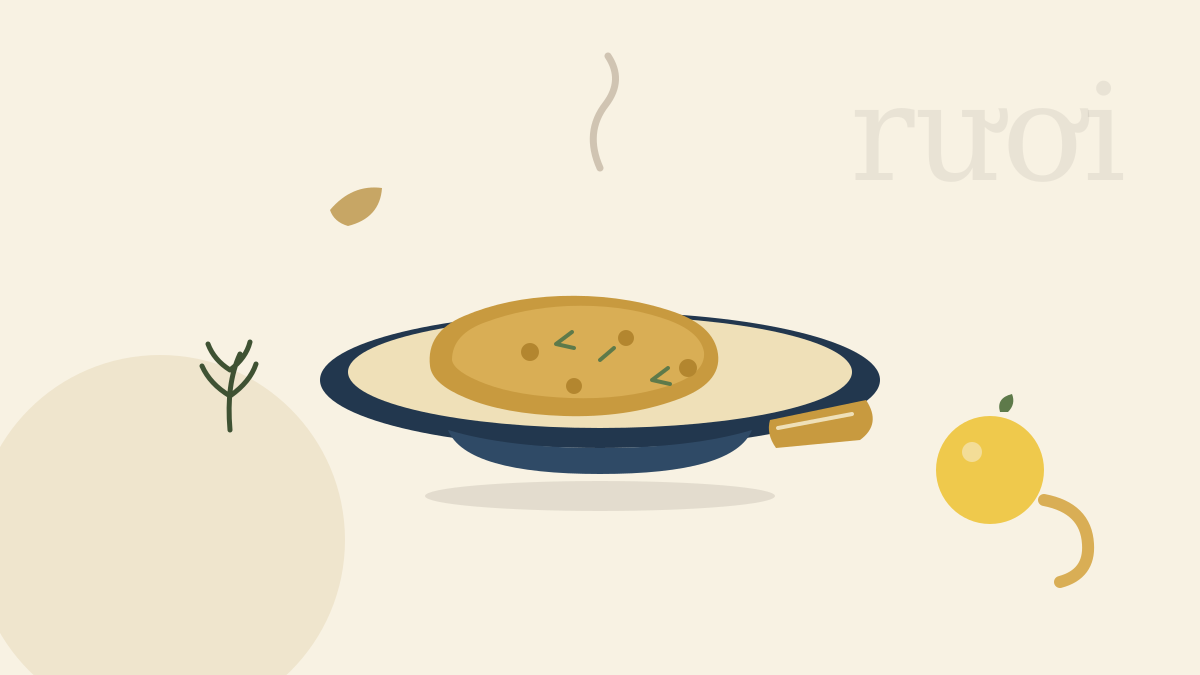
The November omelet — brackish-water rươi bound with egg, pork, dill, and tangerine peel, fried to a custard-hearted crisp. Nothing substitutes.
By Vietnamese Cookbook Kitchen · May 6, 2026
Hải Phòng & the Northern CoastThe Lê Dynasty era, 1428–1789
 Phố
Phố- Prep
- 25 min
- Cook
- 20 min
- Serves
- 4
- Level
- Intermediate
The rươi keep an old calendar. "Tháng chín đôi mươi, tháng mười mùng năm," runs the northern rhyme — the twentieth of the ninth lunar month, the fifth of the tenth — the handful of autumn days when sandworms rise out of the brackish estuaries of Hải Dương and Hải Phòng to spawn, and whole districts turn out with nets. For a few weeks, markets from Tứ Kỳ to Hanoi sell them by the bowl, and kitchens do one main thing with them: chả rươi, the worms folded into egg and pork with dill and tangerine peel and fried into rounds. Vũ Bằng gave the dish a loving chapter in his 1950s hymn to northern eating, Miếng ngon Hà Nội, and the queues outside good chả rươi stalls each November suggest nothing has changed.
Yes, they are worms; no, you will not taste anything wormlike — cooked rươi read as a rich, briny custard somewhere between crab and egg yolk. The frying is where the dish is won: medium heat, generous oil, and a center pulled just to set, so the crust shatters into something barely solid. Between the lace of the edge, the dill, and the tangerine peel doing its quiet work, this is one of the great textures of the northern year — worth planning a November around.
Fry it in more oil than an omelet and less than a fritter, over patient medium heat — the outside should go deep gold and lacy while the middle stays barely set, closer to custard than egg.
Lời đầu bếp · A word from the kitchen
Ingredientsnguyên liệu
Serves 4
Rươi
- 300 grươi (sandworms) — about 10 oz — abroad, look for frozen blocks labeled rươi in Vietnamese markets from late autumn onward; thaw slowly in the fridge and handle gently, they are fragile
- As neededhot water for cleaning — just off the boil, about 80°C
Omelet
- 3eggs
- 150 gground pork — about 5 oz, with some fat
- 1 tspfinely minced dried tangerine peel (vỏ quýt) — or the grated zest of half a fresh tangerine — non-negotiable either way; this is the dish's signature
- 1small bunch dill — chopped, stems included
- 2scallions — finely sliced
- 20 mlfish sauce — 4 tsp
- ½ tspground black pepper
- As neededneutral oil for shallow frying — about 1 cm deep in the pan
Methodcách làm
Step 1: Clean the rươi
Put the thawed rươi in a bowl, pour hot (not boiling) water over, and stir gently for thirty seconds until the fine bristles loosen and float; drain carefully. This step — làm lông rươi, "de-furring" — is traditional and worth doing properly; skipped, the omelet has a prickle no amount of frying fixes.
Step 2: Make the batter
Beat the eggs, then fold in the rươi, pork, tangerine peel, dill, scallions, fish sauce, and pepper. Stir just to combine — the rươi should break up only partially, thickening the batter to a loose, speckled paste.
Step 3: Fry in rounds
Heat the oil over medium and ladle in the batter to form rounds about 12 cm across and finger-thick. Fry 4 to 5 minutes a side until deep gold with lacy edges, turning once with a spatula and a little faith.
Step 4: Check it is cooked through
There is raw pork and egg in this batter, so the center must be set and steaming — cut the first round open to check before the rest leave the pan. Drain on a rack, not paper, to keep the crust.
Step 5: Serve hot and fast
Cut into wedges and eat immediately with herbs, a bowl of nước chấm sharpened with extra lime, and rice or bún. Chả rươi holds for exactly as long as it stays hot, which is one more argument for frying in batches at the table's pace.
Đồ nghề · The tools
Equipment
Portable gas burner
Bếp ga miniLẩu is not lẩu if someone has to keep walking to the stove. The tabletop butane burner turns a pot of broth into a two-hour dinner party.
Shop on Amazon →Spider strainer
Vợt chiênThe wide wire basket that lifts fried food out of the oil in one pass and blanched noodles out of the pot in the next. One tool, half the site.
Shop on Amazon →
Equipment links are Amazon affiliate links. As an Amazon Associate we earn from qualifying purchases, at no cost to you. Disclosure.
Questions from the kitchen
What actually are rươi, and can I really get them abroad?
Ragworms — brackish-water relatives of the earthworm that surface in brief late-autumn swarms in the estuaries around Hải Phòng and Hải Dương. Harvested for a few weeks, they are frozen and shipped, and Vietnamese markets in diaspora cities do carry the frozen blocks in season — ask at the freezer case, and expect them to cost like the delicacy they are. Some years the market has none. That, too, is part of the dish.
Is there any substitute?
No, and we won't pretend otherwise. Without rươi you have a perfectly nice pork-and-dill omelet with tangerine peel — worth eating, not worth the name. The rươi bring a savory depth and a custardy richness nothing else replicates; wait for November rather than counterfeit it.
Why tangerine peel?
Every northern cook will give you a slightly different answer — it cuts the richness, it perfumes the batter, folk wisdom says it settles the stomach against so rich a food. What no cook disputes is that chả rươi without vỏ quýt is wrong in a way you can smell across the room. The dried peel from a Chinese grocer works; so does fresh zest.
Nấu tiếp · Cook next
Keep the burner on
 Phố
PhốStreet Food·55 min·Intermediate
Bánh Mì ThịtBánh mì thịt
The full Saigon cold-cuts bánh mì built at home — crackly baguette, a quick chicken-liver pâté, đồ chua, and a shake of Maggi, assembled in the right order.
 Phố
PhốStreet Food·75 min·Intermediate
Hội An Chicken RiceCơm gà Hội An
Hội An's chicken rice — rice cooked golden in the poaching broth, hand-torn chicken tossed with rau răm and onion, a Hainanese idea gone thoroughly Vietnamese.
 Phố
PhốStreet Food·35 min·Beginner
Đà Lạt Grilled Rice PaperBánh tráng nướng
Đà Lạt's night-market rice paper grill — egg, scallion, and dried shrimp crisped onto bánh tráng. The 'Vietnamese pizza,' translated to a home stove.