Chicken & É-Basil Hotpot
Lẩu gà lá é
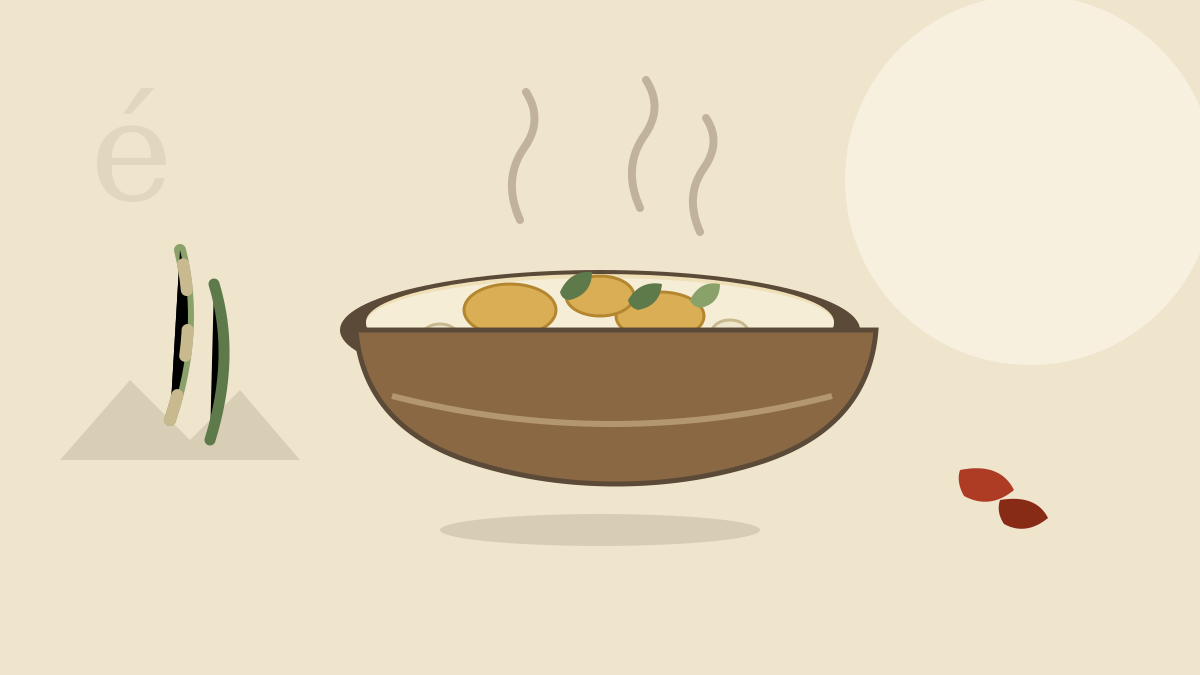
Đà Lạt's cool-night table centerpiece — chicken simmered in a clear, peppery broth and finished with fistfuls of fragrant é leaf, a highland basil found almost nowhere else.
By Vietnamese Cookbook Kitchen · March 17, 2026
The Central HighlandsĐổi Mới era, 1986–2008
 Kho
Kho- Prep
- 30 min
- Cook
- 45 min
- Serves
- 4
- Level
- Intermediate
Đà Lạt sits at nearly 1,500 meters, and it is the one place in Việt Nam where a hot pot on the table isn't a special-occasion indulgence but a straight response to the weather. Evenings there drop into sweater territory even in the dry season, and lẩu gà lá é — chicken hotpot with é-basil — is what families and street vendors alike put over a tabletop burner once the sun goes down. The dish leans on lá é, a fragrant, peppery leaf that grows almost nowhere outside these highlands; you will not find an authentic version of this pot anywhere the plant doesn't grow.
The broth stays deliberately spare — charred shallot, bruised lemongrass, chicken, and time — because the point of a clear broth is that it has nowhere to hide. Every element has to earn its place. É goes in last and barely cooks, thrown into the boiling pot in the final minute so it keeps its color and its bite; simmer it any longer and you've made spinach. Ladled into a bowl over rice noodles, with chili on the side for anyone who wants more than the pepper already gives it, this is Đà Lạt on a cold night in one bowl.
Add the é in the last minute, at the table, not in the kitchen. It goes from fragrant to grey in about ninety seconds of hard simmer, and grey é tastes like nothing at all.
Lời đầu bếp · A word from the kitchen
Ingredientsnguyên liệu
Serves 4
Broth
- 1.5 kgwhole chicken, cut into pieces — about 3 lb, bone-in — a stewing hen gives more flavor if you can find one, though a young bird is faster
- 2shallots, halved and charred — charring them dry in a pan first is the whole trick to a broth that doesn't taste boiled
- 3lemongrass stalks, bruised — smash the base with the flat of a knife so it splits along the grain
- 1.5 Lwater — about 6 cups, enough to cover the chicken by a finger's width
- As neededfish sauce, salt, and white pepper to season
The pot
- 200 gfresh straw mushrooms or oyster mushrooms — 7 oz, halved if large
- 300 grice vermicelli or egg noodles — 10 oz, blanched separately and added to bowls, not the pot
- 100 glá é (é basil) — about 3 packed cups — a highland basil with a peppery, almost citrus bite; see the note below if you can't find it
- 4bird's-eye chilies, sliced — for the table, not the pot — let diners choose their own heat
Methodcách làm
Step 1: Char the aromatics
Dry-char the shallots in a hot, ungreased pan until the skins blacken in spots, about 4 minutes, then peel. This one step is the difference between a broth that tastes like a highland kitchen and one that tastes like a hospital.
Step 2: Build the broth
Combine the chicken, charred shallots, and lemongrass in a pot with the water. Bring to a boil, skim thoroughly, then drop to a gentle simmer for 35 to 40 minutes, until the chicken is cooked through and the broth tastes like more than water.
Step 3: Season with restraint
Season with fish sauce, a pinch of salt, and white pepper. Đà Lạt hotpot broth is meant to taste clean and peppery, not sweet or heavy — hold back on anything that would make it taste like phở.
Step 4: Move to the tabletop pot
Transfer the broth and chicken to a portable burner at the table. This is a cook-as-you-eat dish; the mushrooms go in first to soften, diners add noodles to their own bowls.
Step 5: Finish with é at the table
Once the broth returns to a boil, drop in the é leaves in two or three handfuls and let them wilt for barely a minute before ladling. The leaves should still look green and alive when they hit the bowl.
Đồ nghề · The tools
Equipment
Tall stockpot (12 qt+)
Nồi hầmPhở is a marathon of bones and water, and a wide pot evaporates your broth away. Go tall and narrow — the depth keeps a lazy simmer lazy for six hours.
Shop on Amazon →Claypot
Thố đấtThe vessel kho was invented in — clay heats slowly, holds a caramel simmer without scorching, and goes straight to the table still bubbling. Season it once with rice water and it outlives you.
Shop on Amazon →Portable gas burner
Bếp ga miniLẩu is not lẩu if someone has to keep walking to the stove. The tabletop butane burner turns a pot of broth into a two-hour dinner party.
Shop on Amazon →Charcoal grill / grill pan
Vỉ nướngNướng means fire, and lemongrass pork wants char and smoke. A small charcoal grill is the true answer; a screaming-hot cast-iron grill pan under a cracked window is the honest apartment one.
Shop on Amazon →Fine-mesh skimmer
Vợt vớt bọtClear phở broth is not a trick, it is patience with a skimmer — take the scum off early and often and the pot rewards you with glass.
Shop on Amazon →
Equipment links are Amazon affiliate links. As an Amazon Associate we earn from qualifying purchases, at no cost to you. Disclosure.
Questions from the kitchen
What is lá é and where do I find it?
É basil (Hyptis suaveolens, sometimes called "wild spider flower" in English) grows almost exclusively in Việt Nam's central highlands and is central to Đà Lạt cooking, from lẩu gà to the dipping salt muối é. Outside Việt Nam it's essentially unavailable fresh.
What can I use if I can't find é?
Lemon basil (húng quế chanh, or Thai lemon basil where sold) is the closest stand-in — it shares é's citrus lift, if not its sharper, almost minty bite. Use the same volume; the broth will taste good, just not identical to the Đà Lạt original. Regular Thai basil works in a pinch but trades away the citrus note entirely.
Can I make this ahead?
The broth can be made a day ahead and reheated — it actually deepens overnight. Keep the é, mushrooms, and noodles separate until the pot is on the table; none of them improve with time.
Nấu tiếp · Cook next
Keep the burner on
 Kho
KhoKho & the Claypot·35 min·Beginner
Tamarind-Glazed SquidMực rim me
Squid lacquered in sticky tamarind and fish sauce — the central coast's great beer snack, plus the science of keeping squid tender, not rubbery.
 Kho
KhoKho & the Claypot·180 min·Intermediate
Beef Stew with Star Anise & LemongrassBò kho
Saigon's French-Vietnamese beef stew — chuck braised with lemongrass, star anise, and annatto until the broth is the point, eaten with torn baguette or noodles.
 Kho
KhoKho & the Claypot·60 min·Intermediate
Claypot Caramel FishCá kho tộ
Catfish braised in bittersweet nước màu caramel and fish sauce until the sauce turns mahogany — the Mekong Delta's claypot standard, saucepan route included.