Phở Bò, the Hanoi Way
Phở bò
Hanoi's morning bowl built the slow way — charred onion and ginger, toasted spices, and a beef broth kept at a shiver, never a boil, for three hours.
By Vietnamese Cookbook Kitchen · July 8, 2026
Hà Nội & the Red River DeltaFrench Indochina era, 1883–1945
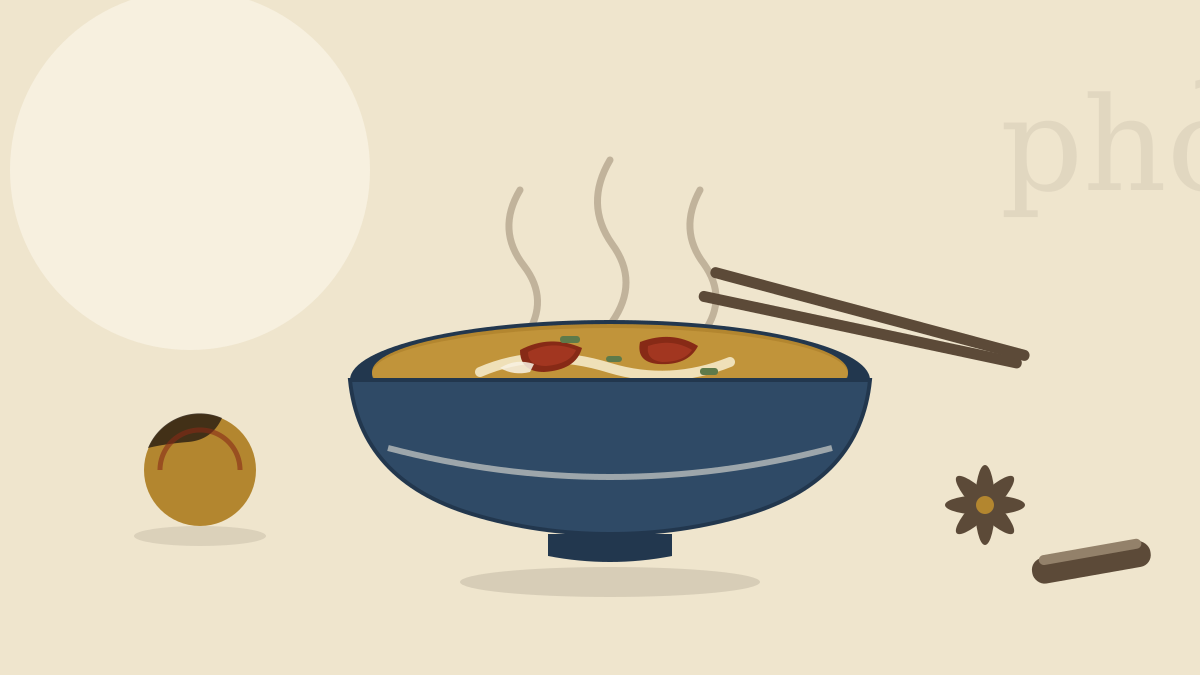 Phở
Phở- Prep
- 45 min
- Cook
- 210 min
- Serves
- 6
- Level
- Advanced
Phở is young. It shows up in the written record only around the turn of the twentieth century, in Hanoi and Nam Định, in the colonial years when French demand for beefsteak left the Red River Delta with bones and scraps someone clever thought to simmer. Everything Vietnam is argued about phở — north or south, chicken or beef, who owns it — but nobody argues about where it started. This is the bowl the argument is about.
The whole recipe is a single idea repeated for three hours: a clear broth is an honest broth. Clarity isn't a beauty contest — a broth you can see through is proof that nothing was rushed, boiled, or hidden. Every step above serves it: the parboil, the skimming, the shiver instead of the boil. Cloudy phở can still taste good; it just can't keep that particular promise.
Eat it the way Hanoi does — early, hot enough to fog your glasses, and mostly in silence. Taste the broth naked before the lime goes in. If you built it honestly, you'll find the char first, the cinnamon a beat later, and the black cardamom somewhere underneath like a struck match — and you'll understand why the north never saw a reason to add anything else.
A phở pot should never look busy — the surface just dimples, like the first minute of rain. The moment it rolls, the fat emulsifies and the clarity never comes back.
Lời đầu bếp · A word from the kitchen
Ingredientsnguyên liệu
Serves 6
The broth
- 1.5 kgbeef marrow and knuckle bones — about 3 lb — ask the butcher to split the knuckles
- 500 gbeef brisket — about 1 lb, in one piece; it becomes the cooked-beef layer of the bowl
- 2large yellow onions — halved through the root, skins left on for the char
- 100 gginger — one 10 cm / 4 in hand, split lengthwise, unpeeled
- 5star anise
- 1cinnamon stick — an 8 cm piece of cassia, the thick rough kind
- 1black cardamom pod — thảo quả — the big smoky one, not green cardamom
- 4cloves
- 1 tbspcoriander seeds
- 60 mlfish sauce (nước mắm) — 4 tbsp, added in the last 15 minutes so it stays fragrant
- 30 grock sugar — about 2 tbsp; plain sugar works, rock sugar rounds softer
- 1 tbspfine salt
- 5 Lcold water — about 5 quarts, plus more for the parboil
The bowl
- 500 gdried flat rice noodles (bánh phở) — about 1 lb, 3–4 mm wide; fresh sheets cut to ribbons if you can get them
- 250 gbeef sirloin or eye of round — about ½ lb — freeze 30 minutes, then slice paper thin across the grain
- 1small yellow onion — shaved into see-through half-moons, soaked 10 minutes in cold water
- 4scallions — thinly sliced, white parts and green
- 1 handfulcilantro — roughly chopped, stems included
- to serveblack pepper, lime wedges, sliced chili — that's the whole list — a Hanoi bowl is dressed this quietly
Methodcách làm
Step 1: Parboil the bones
Cover the bones and brisket with cold water, bring to a hard boil, and let it rage for five minutes while grey scum foams up. Dump the whole pot, rinse each bone under the tap, and scrub the pot clean. This is the only hard boil this recipe will ever see — an honest broth starts with a clean pot, not a clever trick later.
Step 2: Char the onions and ginger
Set the onion halves and ginger directly over a gas flame or under a hot broiler until the surfaces are genuinely blackened, about 10 minutes, turning once. Scrape off the loose ash under running water and leave the rest. The char is where the broth's sweetness and its faint smokiness both come from — pale gold isn't char.
Step 3: Toast the spices
In a dry pan over low heat, toast the star anise, cinnamon, black cardamom, cloves, and coriander until the star anise smells like itself, two to three minutes. Tie everything into a muslin knot or a spice ball. Loose spices work, but you will be fishing out cloves at hour three.
Step 4: Build the pot
Return the bones and brisket to the pot with 5 liters of cold water and bring it up slowly, uncovered. As it approaches a simmer, skim honestly — every raft of foam, every ten minutes, for the first half hour. Skimming is not fussy housekeeping; it is the difference between a broth you can see through and one you apologize for.
Step 5: Hold it at a shiver
Add the charred onion and ginger, the spice bundle, the salt, and the rock sugar. Set the heat so the surface barely dimples — around 93°C / 200°F, bubbles rising but never breaking into a roll — and hold it there for 3 hours, lid ajar. Add the fish sauce in the last 15 minutes; boiled fish sauce loses its perfume and keeps only its salt.
Step 6: Rescue the brisket
At about 90 minutes, when a chopstick slides into the brisket with only a little argument, lift it out and plunge it into cold water for 10 minutes — this keeps the outside from drying and darkening. Wrap it and refrigerate; cold brisket slices thin, warm brisket shreds.
Step 7: Strain and taste like a cook
Fish out the bones, then pass the broth through your finest sieve into a clean pot. Taste it with the bowl in mind, not the spoon — over plain noodles it will lose a step, so alone it should read just slightly too assertive. Adjust with fish sauce for depth, salt for edge.
Step 8: Assemble at a rolling boil
Now, and only now, the broth must boil hard. Blanch the noodles, divide them among warmed bowls, and lay on the sliced brisket, the raw sirloin, onion, scallions, and cilantro. Ladle violently boiling broth directly over the raw beef so it cooks in the bowl — this is why the slices must be paper thin. Pepper on top; lime and chili at the table.
Đồ nghề · The tools
Equipment
Tall stockpot (12 qt+)
Nồi hầmPhở is a marathon of bones and water, and a wide pot evaporates your broth away. Go tall and narrow — the depth keeps a lazy simmer lazy for six hours.
Shop on Amazon →Portable gas burner
Bếp ga miniLẩu is not lẩu if someone has to keep walking to the stove. The tabletop butane burner turns a pot of broth into a two-hour dinner party.
Shop on Amazon →Charcoal grill / grill pan
Vỉ nướngNướng means fire, and lemongrass pork wants char and smoke. A small charcoal grill is the true answer; a screaming-hot cast-iron grill pan under a cracked window is the honest apartment one.
Shop on Amazon →Fine-mesh skimmer
Vợt vớt bọtClear phở broth is not a trick, it is patience with a skimmer — take the scum off early and often and the pot rewards you with glass.
Shop on Amazon →Noodle blanching basket
Vợt trụng búnOne long-handled basket, one pot of boiling water, one bowl at a time — noodles dunked, shaken dry, and dropped into the bowl still steaming. The street-stall rhythm at home.
Shop on Amazon →Mandoline
Bàn bàoĐồ chua lives or dies on evenness — carrot and daikon cut to the same whisper-thin matchstick pickle at the same speed. Use the guard; every Vietnamese grandmother has the scar that says otherwise.
Shop on Amazon →
Equipment links are Amazon affiliate links. As an Amazon Associate we earn from qualifying purchases, at no cost to you. Disclosure.
Questions from the kitchen
Can I make this in a pressure cooker?
Yes, with honest trade-offs. Parboil, char, and toast exactly as written, then pressure-cook 45 minutes with natural release. You get the depth of hour three but lose the skimming, so the broth runs a shade cloudier. Still add the fish sauce at the end, off pressure.
Why did my broth turn cloudy?
One of three sins — the parboil was skipped, the pot boiled hard somewhere in hour two, or you stirred it. Cloudiness is irreversible but cosmetic; the bowl will still taste right. Skim what you can, serve it anyway, and keep the flame lower next time.
How is this different from the phở I get in most restaurants abroad?
Most diaspora phở is southern-style — sweeter broth, bean sprouts, a hedge of Thai basil, hoisin and sriracha on the table. The Hanoi bowl is leaner and quieter — wider noodles, more scallion, and nothing to squeeze into it. Try the broth alone before you reach for anything.
Nấu tiếp · Cook next
Keep the burner on
 Phở
PhởPhở & Noodle Soups·220 min·Intermediate
Hủ Tiếu Nam VangHủ tiếu Nam Vang
The Phnom Penh–style noodle soup of the Mekong world — clear pork-and-dried- seafood broth, chewy noodles, shrimp, quail eggs, and a slick of fried garlic oil.
 Phở
PhởPhở & Noodle Soups·225 min·Intermediate
Bún Bò HuếBún bò Huế
Huế's lemongrass-annatto noodle soup — beef shank, pork hock, and a fermented-shrimp depth handled honestly for kitchens far from the Perfume River.
 Phở
PhởPhở & Noodle Soups·85 min·Intermediate
Lạng Sơn Sour PhởPhở chua
Lạng Sơn's cold sweet-sour phở — rice noodles, crisp pork, fried sweet potato, and peanuts under a garlicky tangy dressing, no broth pot required.