Vietnamese Crab Soup
Súp cua
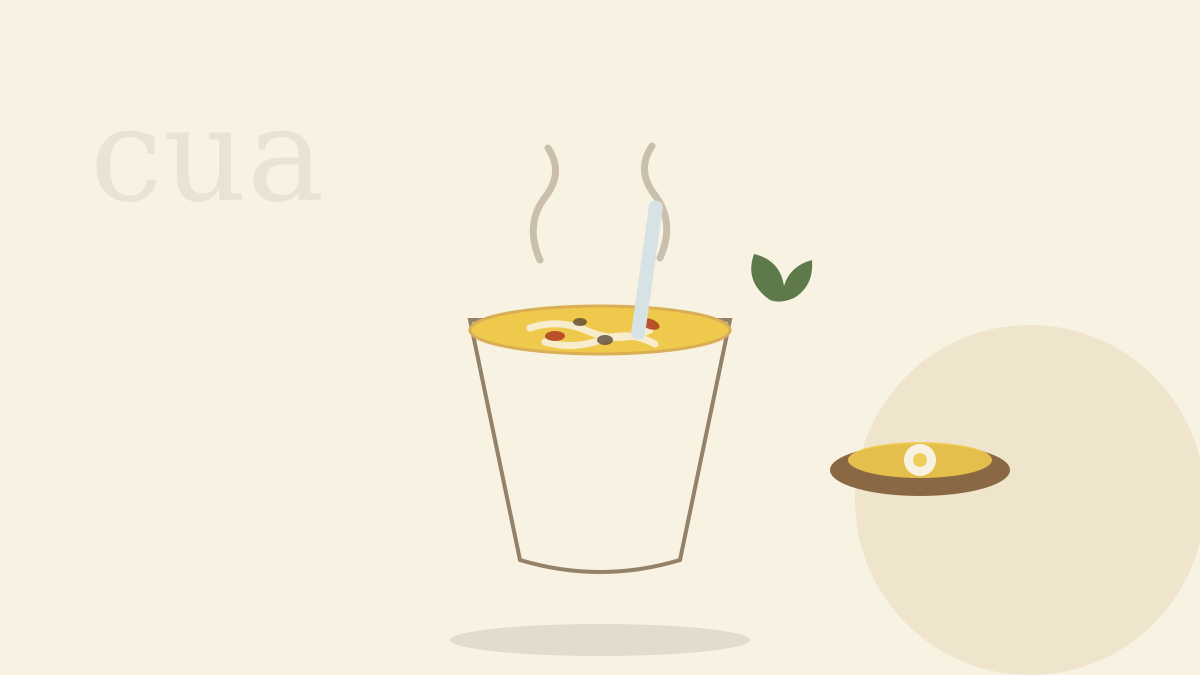
Saigon's after-school cup — silky cornstarch-thickened broth, ribbons of egg, shredded crab, and a whole quail egg waiting at the bottom of every bowl.
By Vietnamese Cookbook Kitchen · April 5, 2026
Sài Gòn & the SoutheastĐổi Mới era, 1986–2008
 Phố
Phố- Prep
- 20 min
- Cook
- 20 min
- Serves
- 4
- Level
- Beginner
Súp cua belongs to a specific Saigon institution: the after-school cart, parked outside gates from three o'clock on, ladling hot soup into plastic cups for kids walking home. It's a dish with one foot in French-influenced Vietnamese restaurant cooking — the technique is straight from Chinese and French egg-drop and thickened-soup traditions — and one foot in the street economy that opened up during Đổi Mới, Vietnam's late-1980s market reforms, when small private food stalls multiplied across the city and a once-fancier soup became a coin-cheap daily habit. Crab, once a special-occasion protein, got stretched with mushrooms and cornstarch until a cup of it cost less than a bus fare.
The whole soup is an exercise in controlled thickening and gentle motion: cornstarch slurry for a cling that coats a spoon without turning gluey, egg poured in a thin, patient stream so it sets into ribbons instead of clumps. Then the quail egg waits at the bottom, always a small surprise no matter how many times you've had the soup before. It asks for almost no skill and rewards patience completely — which is probably why it survived a transition from restaurant plate to street-corner cup without losing an ounce of what made it good.
Pour the egg in a thin, slow stream over the back of a fork or ladle held just above the simmering surface. Dump it in a lump and you get scrambled clumps; feather it in and you get ribbons.
Lời đầu bếp · A word from the kitchen
Ingredientsnguyên liệu
Serves 4
Soup base
- 1.2 lchicken stock — 5 cups, good and clear — this soup has nowhere to hide a weak stock
- 150 gshredded crab meat — about 5 oz; canned or picked lump crab both work — imitation crab (surimi) is the honest budget stand-in street stalls also use
- 80 gshiitake mushrooms, finely diced — about 1 cup; fresh or rehydrated dried
- 60 gcanned straw mushrooms, halved — optional but common — for texture contrast against the diced shiitake
- 2 tbspcornstarch — mixed with 60 ml (4 tbsp) cold water, for thickening
- 2eggs, beaten — for the ribbons
- 1 tbspfish sauce (nước mắm)
- 0.5 tspwhite pepper
- 1pinch salt, to taste
To finish each bowl
- 8cooked quail eggs, peeled — 2 per bowl — boil 3 minutes, shock in ice water, peel while warm; the classic surprise at the bottom of the cup
- As neededfresh cilantro, chopped
- As neededsliced scallion
- As neededwhite pepper, extra — for the table — súp cua is meant to arrive under-peppered and get finished by the eater
Methodcách làm
Step 1: Build the base
Bring the stock to a simmer and add the shiitake and straw mushrooms. Cook 5 minutes until the shiitake softens — this is where the soup picks up its earthy backbone under the crab.
Step 2: Add the crab
Stir in the shredded crab, fish sauce, and white pepper, and simmer 3 minutes more. Taste and adjust salt now, before the cornstarch goes in and the texture stops being easy to judge by eye.
Step 3: Thicken to a light cling
Restir the cornstarch slurry — it settles fast — and pour it into the simmering soup in a thin stream, stirring constantly, until the broth turns glossy and coats a spoon lightly. Stop there; súp cua is silky, not gluey, and more slurry than this turns it into wallpaper paste.
Step 4: Feather in the egg ribbons
Lower the heat until the soup barely moves, then drizzle the beaten egg in a thin stream over a fork held just above the surface, letting it set into ribbons for 15 to 20 seconds before stirring once, gently. Do not stir while pouring — that's what turns ribbons into scramble.
Step 5: Ladle and hide the surprise
Set two quail eggs in the bottom of each bowl before ladling the hot soup over them, so diners find them midway through the cup the way street stalls have always served it. Finish with cilantro and scallion.
Questions from the kitchen
Can I use a whole chicken egg instead of quail eggs?
You can quarter one hard-boiled chicken egg per bowl in a pinch, but you'll lose the specific pleasure of an intact whole egg surfacing in the spoon. Quail eggs are sold pre-boiled and peeled in cans at most Asian groceries, which is the shortcut nearly every home cook actually takes.
My soup came out gluey instead of silky. What happened?
Too much cornstarch slurry, added too fast, or a soup that kept simmering hard afterward. Add the slurry gradually and pull the pot off high heat the moment it coats a spoon — cornstarch keeps thickening slightly as it sits, so a soup that looks perfectly silky at the stove is exactly right, not thin.
What makes this a doi-moi era dish specifically?
Súp cua's rise as a citywide street and after-school snack tracks with Vietnam's economic opening from the late 1980s onward, when private food stalls multiplied and a once-restaurant dish — built on once-scarce crab and eggs — became affordable enough to sell by the cup on a street corner. It's a newer classic than most of this site's soups, and its ubiquity is the proof.
Nấu tiếp · Cook next
Keep the burner on
 Phố
PhốStreet Food·55 min·Intermediate
Bánh Mì ThịtBánh mì thịt
The full Saigon cold-cuts bánh mì built at home — crackly baguette, a quick chicken-liver pâté, đồ chua, and a shake of Maggi, assembled in the right order.
 Phố
PhốStreet Food·75 min·Intermediate
Hội An Chicken RiceCơm gà Hội An
Hội An's chicken rice — rice cooked golden in the poaching broth, hand-torn chicken tossed with rau răm and onion, a Hainanese idea gone thoroughly Vietnamese.
 Phố
PhốStreet Food·35 min·Beginner
Đà Lạt Grilled Rice PaperBánh tráng nướng
Đà Lạt's night-market rice paper grill — egg, scallion, and dried shrimp crisped onto bánh tráng. The 'Vietnamese pizza,' translated to a home stove.