White Rose Dumplings
Bánh bao bánh vạc
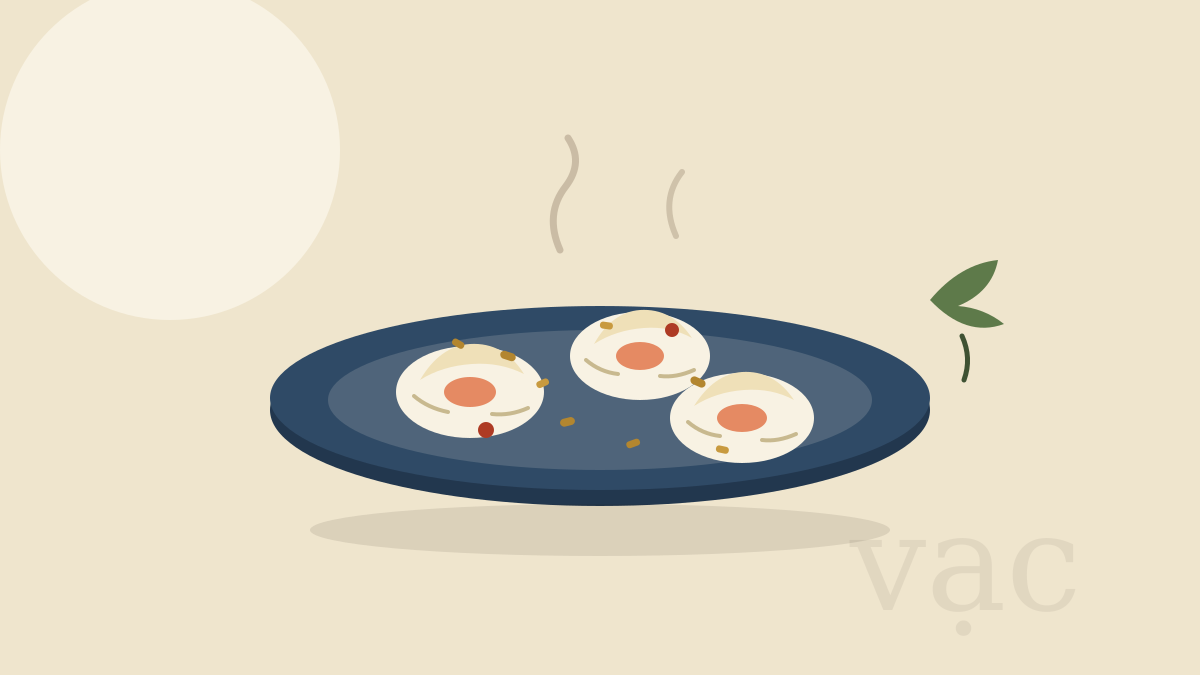
Hội An's white rose dumplings — translucent rice-flour petals around shrimp, showered with fried shallots. The one-family secret, approximated honestly at home.
By Vietnamese Cookbook Kitchen · March 15, 2026
Quảng Nam & Đà NẵngThe Lê Dynasty era, 1428–1789
 Bánh
Bánh- Prep
- 75 min
- Cook
- 20 min
- Serves
- 4
- Level
- Advanced
Hội An earned its kitchen in the 16th and 17th centuries, when the Thu Bồn river mouth was one of Southeast Asia's great ports and Japanese, Chinese, and later European traders kept houses in town. The white rose is a child of that mixing — a Chinese-style dumpling logic executed in Vietnamese rice flour — though its documented history is much shorter than the port's. What is verifiable is stranger than legend: for generations, virtually every plate of bánh bao bánh vạc in Hội An has come from a single family workshop, delivered to the town's restaurants each morning. A dish famous everywhere and made, essentially, at one address.
The family keeps its full method private, and this recipe does not pretend otherwise — it is an honest home approximation built on scalded rice dough. The technique that matters most is patience with moisture: rice dough is only workable while it is warm and damp, so shape under a towel's shelter and steam without delay. What you lose in secret well-water you recover with fried shallots, which is the kind of trade a home cook can live with.
Keep the dough under a damp towel at all times and work one dumpling to the end before starting the next. Rice dough has no gluten to forgive you — it dries and cracks in the minute your attention wanders.
Lời đầu bếp · A word from the kitchen
Ingredientsnguyên liệu
Serves 4
The dough
- 200 grice flour — about 1⅔ cups — plain rice flour, not the glutinous kind
- 40 gtapioca starch — about ⅓ cup; this is what buys the translucence
- 240 mlboiling water — about 1 cup, plus a spoonful more if the dough stays crumbly
- ½ tspsalt
- 1 tspneutral oil
The shrimp filling
- 250 graw shrimp, peeled and deveined — about 9 oz; the freshest you can buy — this filling has nowhere to hide
- 2garlic cloves, minced
- 2scallions, white parts, minced
- 1 tspfish sauce (nước mắm)
- ¼ tspground white pepper
- 1 pinchsugar
To finish
- 4 tbspcrispy fried shallots — the non-negotiable crown; store-bought is fine if fresh and fragrant
- 120 mlnước chấm — 8 tbsp of our foundations sauce, thinned with a spoon of water and pointed sweeter with a pinch of sugar
- 1red chili, sliced thin
Methodcách làm
Step 1: Make the filling first
Chop the shrimp to a coarse paste — knife, not machine, so some pieces stay whole. Mix with garlic, scallion, fish sauce, white pepper, and sugar, and chill. A cold, firm filling is far easier to seat on a petal of soft dough.
Step 2: Scald the dough
Whisk the rice flour, tapioca starch, and salt, then pour in the boiling water, stirring with chopsticks until shaggy. When cool enough to touch, knead with the oil for 5 minutes until smooth and putty-like. Boiling water part-cooks the starch — that is what makes the dough pliable now and translucent later.
Step 3: Press the petals
Rest the dough 15 minutes under a damp towel, then roll into a log and cut 24 pieces. Roll each to a ball and press into a disc about 7 cm (2¾ in) across, thinner at the rim than the center — the thin rim is what will ruffle like a petal.
Step 4: Shape the roses
Set a scant teaspoon of filling on a disc, then pinch the rim up around it in small overlapping folds, leaving the center open like a rose seen from above. Perfection is not the goal; in Hội An they are shaped at speed and no two match. Keep finished dumplings under the towel.
Step 5: Steam and dress
Steam on oiled parchment over hard-boiling water for 8–10 minutes, until the dough turns from white to nearly clear. Slide onto a plate, shower generously with fried shallots and chili, and serve warm with the sweetened nước chấm poured over, not alongside.
Đồ nghề · The tools
Equipment
Bamboo steamer
Xửng hấpFor bánh bao, xôi, and fish steamed whole — bamboo breathes, so nothing drips condensation back onto your work. Line it with a cabbage leaf, not parchment, and steal the leaf after.
Shop on Amazon →Long cooking chopsticks
Đũa bếpExtra-long chopsticks for turning frying rolls, loosening noodles, and plucking herbs — the Vietnamese kitchen’s default hand, kept a safe distance from the oil.
Shop on Amazon →
Equipment links are Amazon affiliate links. As an Amazon Associate we earn from qualifying purchases, at no cost to you. Disclosure.
Questions from the kitchen
Is it true one family makes them for all of Hội An?
Essentially, yes. The Trần family workshop on Nhị Trưng street has made white rose dumplings for generations and supplies most of the restaurants in the old town, which order rather than compete. The story that the dough owes its texture to water from the ancient Bà Lễ well is told all over town — a lovely claim, and an unverifiable one.
Why are mine cloudy instead of translucent?
Usually undercooking or not enough tapioca. The dough only clears once the starch fully gelatinizes, so steam a test dumpling the full 10 minutes before judging. And measure the tapioca by weight — it is doing the optical work here.
What are the two dumplings in the name?
Bánh vạc is the open rose with shrimp; bánh bao here is its round sibling, traditionally filled with pork and wood-ear mushroom and pleated shut. Restaurants serve them mixed on one plate under the same shallot-and-sauce treatment. This recipe teaches the rose; pleat a few closed with leftover filling and you have made both.
Nấu tiếp · Cook next
Keep the burner on
 Bánh
BánhThe World of Bánh·85 min·Intermediate
Hải Phòng Bánh BèoBánh bèo Hải Phòng
Hải Phòng's square bánh bèo — banana-leaf steamed rice cakes under a pork and wood ear topping, dunked in a peppery bone-broth dipping sauce.
 Bánh
BánhThe World of Bánh·40 min·Beginner
Smashed Rice Crackers with Baby ClamsBánh đập hến xào
Cẩm Nam's two-texture trick — a wet rice sheet smacked onto a crisp cracker, broken by hand, and dipped beside baby clams sautéed hot with lemongrass.
 Bánh
BánhThe World of Bánh·70 min·Intermediate
Sizzling CrêpesBánh xèo
The south's giant turmeric-and-coconut crêpe, fried lacy-crisp around shrimp and pork, then torn, rolled in lettuce with herbs, and dragged through nước chấm.