Hải Phòng Bánh Bèo
Bánh bèo Hải Phòng
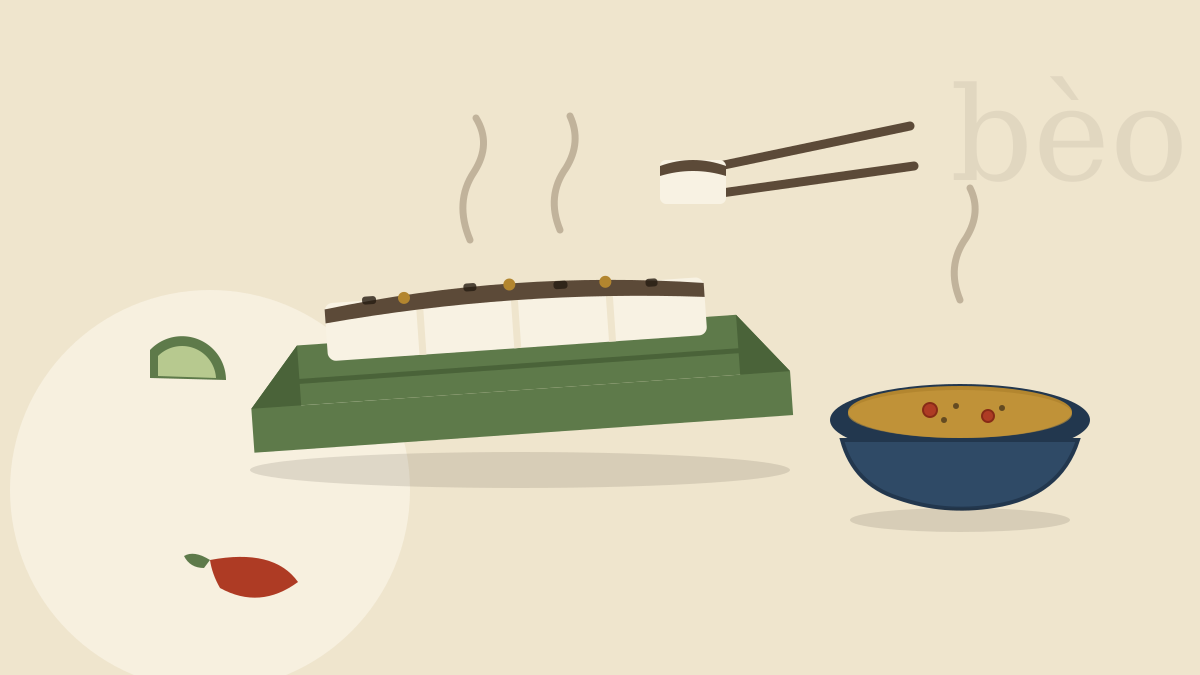
Hải Phòng's square bánh bèo — banana-leaf steamed rice cakes under a pork and wood ear topping, dunked in a peppery bone-broth dipping sauce.
By Vietnamese Cookbook Kitchen · July 3, 2026
Hải Phòng & the Northern CoastThe Subsidy Era era, 1975–1986
 Bánh
Bánh- Prep
- 40 min
- Cook
- 45 min
- Serves
- 6
- Level
- Intermediate
Say bánh bèo to most of the world and they picture Huế's porcelain thimbles of shrimp-dusted rice. Say it in Hải Phòng and you get something else entirely — a thick, wobbling slab steamed in a banana-leaf box, dark with a topping of pork and wood ear, cut into squares and dunked into a bowl of warm, peppery broth. It's the market-stall afternoon snack of the port city, and the version that fed schoolkids through the lean subsidy years, when a leaf, some rice flour, and a spoonful of pork could still be made to feel like abundance.
Two techniques carry the dish. The first is on the stove: cook the batter to a thick paste before it goes into the steamer — that half-cooking is what gives the cake its dense-yet-tender wobble, and raw batter poured into the leaf sets into something closer to a paving stone. The second is in the bowl. The dipping sauce is not nước chấm; it's seasoned bone broth, warm and peppered, and if it tastes good enough to sip on its own, you've made it correctly.
The banana leaf earns its place too. Steamed against the batter, it tints the underside faintly green and leaves a whisper of its tea-like scent — the smell every northern market shopper knows before the vendor lifts the lid. Foil will get you dinner; the leaf gets you Hải Phòng. Serve the squares warm, the sauce warmer, and put the pepper mill on the table for the people who know.
Cook the batter on the stove until your spoon leaves a slow-closing trail before it ever sees the steamer — raw batter poured straight into the leaf steams into a brick, not a bèo.
Lời đầu bếp · A word from the kitchen
Ingredientsnguyên liệu
Serves 6
The rice cakes
- 250 grice flour (bột gạo) — about 2 cups — plain rice flour, not the glutinous green-label bag
- 50 gtapioca starch (bột năng) — about 6 tbsp — the wobble and sheen of the cake live here
- 900 mlwater — about 3¾ cups
- 1 tspfine salt
- 1 tbspneutral oil
- 6banana-leaf squares, about 12 cm — fresh or frozen, wiped and passed over a flame until glossy; foil boats work — see the FAQ
The pork and wood ear topping
- 300 gground pork — about 10½ oz, with some fat
- 6dried wood ear mushrooms — soaked 20 minutes in warm water, stemmed, chopped fine — the crunch against the soft cake is the point
- 3shallots — minced
- 1.5 tbspfish sauce (nước mắm)
- 0.5 tspground black pepper
- 1 tbspneutral oil
- 3 tbspfried shallots — for the top, plus more at the table
The bone-broth dipping sauce
- 500 gpork bones — about 1 lb, rinsed — or use 750 ml good unsalted chicken stock and skip the simmer
- 1 literwater — about 4¼ cups, simmering down to roughly 750 ml
- 2.5 tbspfish sauce
- 1 tbspsugar
- 0.5 tspground black pepper — generous and visible — this sauce should taste warmly peppery
- 1bird's-eye chili — sliced, plus a squeeze of lime or kumquat at the table
Methodcách làm
Step 1: Start the bone broth
Cover the rinsed pork bones with the water, bring to a boil, skim the grey foam, and simmer gently, half-covered, for 45 minutes while you do everything else. You want about 750 ml of clean, lightly bodied broth. This sauce is what separates Hải Phòng's bánh bèo from every other — it's a soup masquerading as a dip, so treat it like one.
Step 2: Rest the batter, then cook it to a paste
Whisk the rice flour, tapioca starch, salt, and 900 ml water; rest 30 minutes so the flour drinks. Add the oil, then cook in a heavy pot over medium-low heat, stirring constantly with a flat-edged spoon, 6 to 8 minutes — it will catch at the bottom first, so keep the spoon moving. Stop when it's a thick, glossy, half-cooked paste that mounds briefly and your spoon leaves a slow-closing trail.
Step 3: Make the topping
Heat the oil and fry the minced shallots until golden at the edges. Add the pork, breaking it fine, then the wood ear, fish sauce, and pepper, and cook 6 to 8 minutes until the pork has browned spots and the pan is nearly dry — the topping should be crumbly and dark-flecked, not saucy, and the pork fully cooked through with no pink.
Step 4: Fill the leaf boats
Fold each banana-leaf square into a shallow open box, pinning the corners with toothpicks, and brush lightly with oil. Spoon in the warm paste about 2 cm deep and level it, then press a generous layer of topping over the whole surface so every future bite carries pork. The leaf isn't packaging — it steams a faint green tea note into the cake's underside.
Step 5: Steam until set
Steam the boats over rolling steam, lid wrapped in a towel so no condensation drips, for 20 to 25 minutes, until the cake is uniformly translucent at the edges and a toothpick in the center comes out clean. Rest 10 minutes — like all rice cakes it sets as it cools, and cutting it hot smears the squares you worked for.
Step 6: Finish the sauce and serve
Strain the broth, season it with the fish sauce, sugar, and that deliberate quantity of black pepper, and keep it warm — taste it; it should drink like a peppery light soup, not sting like nước chấm. Cut the cakes into squares in their leaves, scatter with fried shallots, and serve each person a bowl of warm sauce with chili and lime. The move is dunk, don't drizzle.
Đồ nghề · The tools
Equipment
Heavy pot / Dutch oven
Nồi dàyDeep, heat-retentive, and stable — for deep-frying without temperature crashes, and for bò kho and cà ri when the claypot is too small for the crowd.
Shop on Amazon →Portable gas burner
Bếp ga miniLẩu is not lẩu if someone has to keep walking to the stove. The tabletop butane burner turns a pot of broth into a two-hour dinner party.
Shop on Amazon →Fine-mesh skimmer
Vợt vớt bọtClear phở broth is not a trick, it is patience with a skimmer — take the scum off early and often and the pot rewards you with glass.
Shop on Amazon →Bamboo steamer
Xửng hấpFor bánh bao, xôi, and fish steamed whole — bamboo breathes, so nothing drips condensation back onto your work. Line it with a cabbage leaf, not parchment, and steal the leaf after.
Shop on Amazon →Fine sieve / muslin
Rây lọcFor straining broth crystal-clear, squeezing coconut milk, and working tamarind pulp through into pure sour. Line it with muslin when the recipe says “clear” and means it.
Shop on Amazon →
Equipment links are Amazon affiliate links. As an Amazon Associate we earn from qualifying purchases, at no cost to you. Disclosure.
Questions from the kitchen
How is this different from the bánh bèo I've had at Huế restaurants?
Almost completely — they share a name and rice flour, and part ways there. Huế's are bite-sized discs steamed in tiny saucers, topped with dried-shrimp floss and eaten with a spoon and nước chấm. Hải Phòng's is a thick square cut from a banana-leaf slab, topped with pork and wood ear, and dunked into a warm bone-broth sauce that eats more like a light soup. Order one expecting the other and you'll think the kitchen made a mistake.
I can't find banana leaves — what do I use?
Check the freezer aisle of any Southeast Asian or Latin American grocery first; frozen leaves are cheap, and a quick pass over a gas flame or a hot pan makes them supple and glossy. Failing that, steam the cake in an oiled 20 cm square pan or foil boats and cut it the same way. You lose the leaf's faint aroma and the green-tinted underside, but the texture survives intact.
Can I make any of this ahead?
All three parts, separately. The steamed cake keeps 2 days refrigerated in its leaves — re-steam 5 minutes to bring back the softness, since the fridge stales rice cakes fast. The topping keeps 3 days and re-crisps in a dry pan. The broth keeps 3 days or freezes for a month; season it only on serving day, and always serve it warm. Assembled leftovers, though, sog by the hour.
Nấu tiếp · Cook next
Keep the burner on
 Bánh
BánhThe World of Bánh·40 min·Beginner
Smashed Rice Crackers with Baby ClamsBánh đập hến xào
Cẩm Nam's two-texture trick — a wet rice sheet smacked onto a crisp cracker, broken by hand, and dipped beside baby clams sautéed hot with lemongrass.
 Bánh
BánhThe World of Bánh·70 min·Intermediate
Sizzling CrêpesBánh xèo
The south's giant turmeric-and-coconut crêpe, fried lacy-crisp around shrimp and pork, then torn, rolled in lettuce with herbs, and dragged through nước chấm.
 Bánh
BánhThe World of Bánh·60 min·Intermediate
Bánh CănBánh căn
Phan Rang's mini rice-flour cakes, a Cham inheritance baked in bare clay molds — crisp-edged, tender-centered, made at home in an aebleskiver pan.