Bánh Bao
Bánh bao
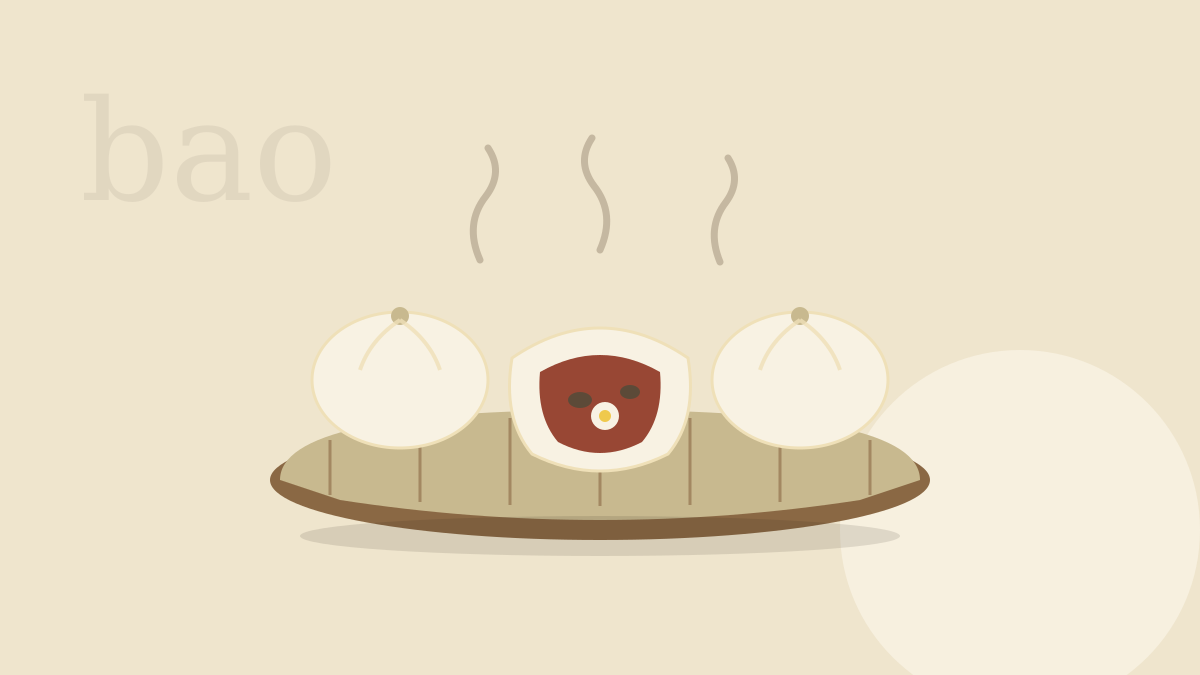
Vietnam's steamed pork bun — Chợ Lớn's Cantonese char siu bao reworked with sausage, quail egg, and mushroom, from a dough proofed and shaped by hand.
By Vietnamese Cookbook Kitchen · April 14, 2026
Sài Gòn & the SoutheastFrench Indochina era, 1883–1945
 Bánh
Bánh- Prep
- 50 min
- Cook
- 20 min
- Serves
- 8
- Level
- Advanced
Bánh bao is Chợ Lớn's steamed bun, carried into Vietnam by the Cantonese and broader Chinese immigrant communities who built Saigon's largest Chinatown across the nineteenth and twentieth centuries and never stopped cooking the way they had at home. The bones are pure Cantonese char siu bao — a soft, faintly sweet steamed dough wrapped around a savory filling — but the filling itself drifted local: fish sauce joins or replaces oyster sauce, five-spice sits alongside shallot and shiitake, and somewhere along the way a whole quail egg found its way into the center, a Vietnamese addition few Cantonese versions carry. By the French colonial period it had become a citywide breakfast and late-night habit, sold from carts and now from convenience-store steamers on every block.
Everything about the finished bun depends on patience with the dough at two separate moments — the first long rise for flavor and structure, then a second, shorter proof after shaping that most home bakers skip and shouldn't. Skip it and you get a wrinkled, dense bun; respect it and the dough balloons smooth and cloud-white under steam, splitting open to a filling still warm with sausage fat and a quail egg no one ever expects on the first bite, even after a hundred of them.
Let the buns rest on their paper squares for a full 20 minutes before steaming, not just after shaping. A bun steamed straight off the shaping board wrinkles instead of ballooning — that second proof is not optional.
Lời đầu bếp · A word from the kitchen
Ingredientsnguyên liệu
Serves 8
Dough
- 500 gall-purpose flour — 4 cups; a low-protein or cake-and-pastry blend gives the palest, softest crumb if you can find it
- 7 ginstant yeast — 1 packet
- 60 gsugar — about ¼ cup
- 6 gbaking powder — about 1½ tsp — added at shaping, for extra lift under steam
- 260 mlwarm milk or water — about 1 cup, 40°C (105°F) — hot enough to wake the yeast, not kill it
- 30 mlneutral oil — 2 tbsp
- 1pinch salt
Filling
- 300 gground pork — about 10 oz, not too lean — this filling wants some fat for moisture under steam
- 2Chinese pork sausages (lạp xưởng), diced — the sweet-cured Chợ Lớn sausage; slice thin if you can't dice easily
- 4dried shiitake mushrooms, rehydrated and diced
- 40 gwood ear mushroom, rehydrated and chopped — optional, for the traditional crunch against the soft pork
- 2shallots, minced
- 1 tbspfish sauce (nước mắm)
- 1 tspsugar
- 0.5 tspfive-spice powder
- 1 tspcornstarch — binds the filling so it doesn't weep and split the bun as it steams
- 8cooked quail eggs, peeled — 1 per bun, boiled 3 minutes and shocked in ice water
Methodcách làm
Step 1: Proof the dough
Whisk the yeast and sugar into the warm milk and let it foam 5 minutes — no foam means dead yeast, start over. Mix in the flour, oil, and salt, then knead 8 to 10 minutes until smooth and elastic. Cover and let rise in a warm spot until doubled, about an hour.
Step 2: Cook the filling
Sauté the shallots until fragrant, then add the pork and cook until it just loses its pink, breaking it into small pieces. Off the heat, stir in the sausage, mushrooms, fish sauce, sugar, five-spice, and cornstarch. Cool completely before filling — warm filling melts the dough as you shape.
Step 3: Shape the buns
Knead the baking powder into the risen dough, then divide into 8 pieces. Flatten each into a disc thicker at the center than the edges, spoon in filling and a quail egg, and gather the edges up and twist to seal at the top. Set each on a square of parchment.
Step 4: Second proof
Rest the shaped buns on their parchment squares, loosely covered, for 20 minutes until visibly puffed. This second rise is what makes a bun balloon smooth under steam instead of staying dense and wrinkled.
Step 5: Steam in batches
Steam over briskly boiling water, buns spaced well apart, for 12 to 15 minutes without lifting the lid. Turn off the heat and let them sit covered 2 minutes before opening the steamer — a sudden temperature drop is what collapses a perfectly risen bun.
Đồ nghề · The tools
Equipment
Bamboo steamer
Xửng hấpFor bánh bao, xôi, and fish steamed whole — bamboo breathes, so nothing drips condensation back onto your work. Line it with a cabbage leaf, not parchment, and steal the leaf after.
Shop on Amazon →
Equipment links are Amazon affiliate links. As an Amazon Associate we earn from qualifying purchases, at no cost to you. Disclosure.
Questions from the kitchen
Why did my buns turn out yellow or wrinkled?
Yellowing usually means the water simmering underneath touched the buns, or too much heat browned the surface — keep a real gap between water and steamer basket. Wrinkling is a shock-cooling problem: always crack the lid and wait before fully opening, and never steam in a cold or drafty kitchen.
Can I substitute regular pork sausage or skip it?
You can skip lạp xưởng entirely for an all-pork filling — it's simply less traditional. A mild Chinese or Portuguese-style cured sausage is the closer substitute; American breakfast sausage brings the wrong spice profile and will taste out of place.
Where does bánh bao's filling recipe come from?
Directly from Cantonese char siu bao, brought to Vietnam by Chợ Lớn's Chinese-Vietnamese community and adapted with local touches — fish sauce instead of oyster sauce alone, and the quail egg, which Cantonese versions rarely include. It's one of the clearest examples on this site of a dish that crossed into Vietnamese cooking wholesale and then quietly became something else.
Nấu tiếp · Cook next
Keep the burner on
 Bánh
BánhThe World of Bánh·85 min·Intermediate
Hải Phòng Bánh BèoBánh bèo Hải Phòng
Hải Phòng's square bánh bèo — banana-leaf steamed rice cakes under a pork and wood ear topping, dunked in a peppery bone-broth dipping sauce.
 Bánh
BánhThe World of Bánh·40 min·Beginner
Smashed Rice Crackers with Baby ClamsBánh đập hến xào
Cẩm Nam's two-texture trick — a wet rice sheet smacked onto a crisp cracker, broken by hand, and dipped beside baby clams sautéed hot with lemongrass.
 Bánh
BánhThe World of Bánh·70 min·Intermediate
Sizzling CrêpesBánh xèo
The south's giant turmeric-and-coconut crêpe, fried lacy-crisp around shrimp and pork, then torn, rolled in lettuce with herbs, and dragged through nước chấm.