Bánh Bèo Chén
Bánh bèo chén
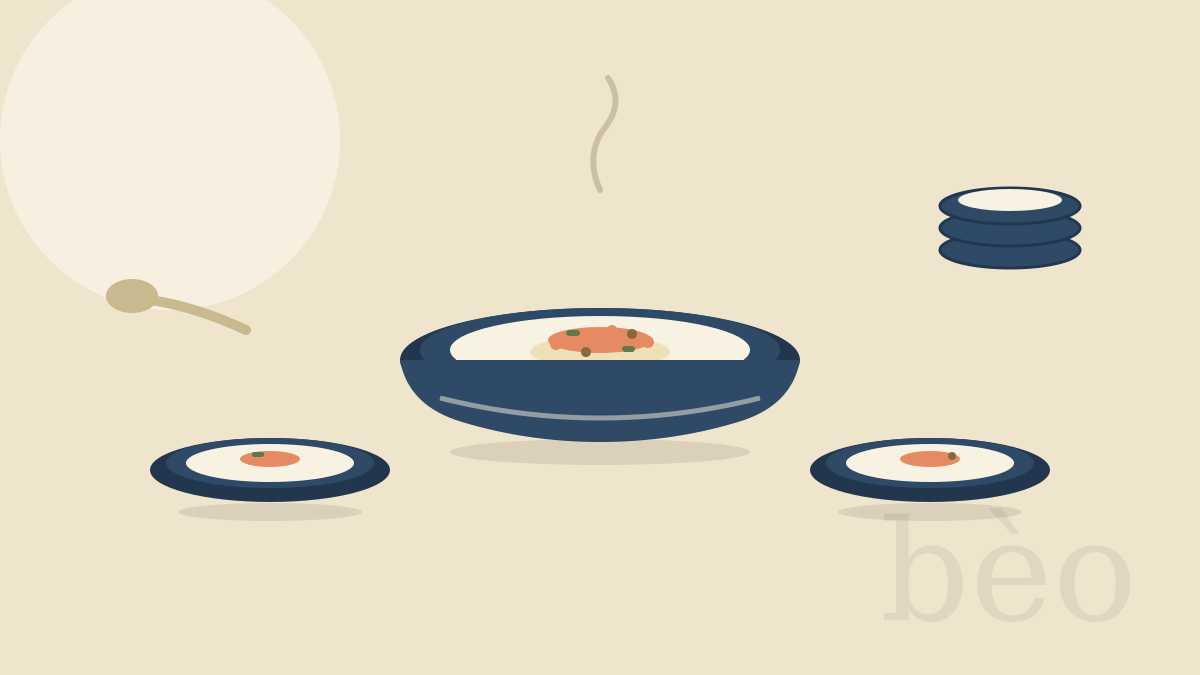
Huế's steamed rice cakes in little dishes — each with its dimple of dried-shrimp floss, scallion oil, and pork crackling, eaten by the dozen with a spoon.
By Vietnamese Cookbook Kitchen · June 6, 2026
Huế & the Imperial CourtNguyễn & the Huế Court era, 1802–1883
 Bánh
Bánh- Prep
- 40 min
- Cook
- 25 min
- Serves
- 4
- Level
- Intermediate
Bèo is the water fern that carpets ponds across central Vietnam, and the cakes are named for it — small, round, dimpled, floating in their dishes like leaves on still water. The comparison is the whole etymology; no legend required. What Huế adds is the chén, the individual little dish each cake is steamed and served in. This is the former imperial capital's signature move: under the Nguyễn court, which ruled from the city between 1802 and 1945, refinement meant many small things rather than one large one, and that aesthetic soaked outward from the palace into the market stalls. Bánh bèo was never royal food. It just has royal manners.
The cake itself is barely a recipe — rice flour, water, salt, steam — which is exactly why details decide everything. Rest the batter, preheat the dishes, and steam one tester before the batch. The toppings carry the flavor: sweet-savory shrimp floss, grassy scallion oil, cracklings for noise, nước chấm to pull it together. A proper serving is a tray of ten or twenty, and the empty dishes stack up like an honest scorecard. Nobody in Huế has ever eaten just one.
The dimple is the diploma. If your cakes steam flat, the batter is too thick; if they crater and crack, too thin. Adjust with a spoonful of water or flour and steam one test cake before committing the batch.
Lời đầu bếp · A word from the kitchen
Ingredientsnguyên liệu
Serves 4
Batter
- 200 grice flour — about 1⅔ cups — plain rice flour, not glutinous; Thai bags from an Asian market behave most predictably
- 20 gtapioca starch — 2 tbsp — for a gentle spring; more makes the cakes rubbery
- 600 mlwater — 2½ cups, room temperature
- 0.5 tspfine salt
Toppings
- 80 gdried shrimp — about ¾ cup — the small orange kind; soak 15 minutes before pounding
- 60 gpork fat or fatty bacon, diced small — for tóp mỡ, the cracklings; store-bought chicharrón crushed small is a fair shortcut
- 4scallions, green parts, thinly sliced
- 60 mlneutral oil — 4 tbsp, for the scallion oil
- 120 mlnước chấm — made on the sweeter, more dilute side — see the foundations recipe, and thin it with an extra spoonful or two of water
Methodcách làm
Step 1: Rest the batter
Whisk both flours, salt, and water until smooth and let it stand at least 30 minutes, then stir well — rice flour settles hard. The rest lets the grains hydrate so the cakes steam silky instead of chalky.
Step 2: Make the shrimp floss
Drain the soaked shrimp, pound or pulse them to coarse fluff, then toast in a dry pan over medium-low heat, stirring, until dry, orange, and light as sawdust — about 8 minutes. This is tôm cháy, and it keeps for weeks, which is why Huế cooks make double.
Step 3: Render the crackling and scallion oil
Fry the diced pork fat slowly until the pieces are golden and rustle against the spoon; lift them out. Warm the neutral oil, pour it over the sliced scallions in a heatproof bowl, and add a pinch of salt — they should sizzle and go brilliant green, not brown.
Step 4: Steam the cakes
Set small shallow dishes — sauce dishes, sake cups, even a mini-muffin tin — in a steamer to heat, then stir the batter and fill each three-quarters. Steam over confident heat for 6 to 8 minutes, until set with a shallow dimple in the center. Work in batches; they hold.
Step 5: Dress in the dish
Leave the cakes in their dishes — that's the chén in the name. Top each with shrimp floss, a few cracklings, a spoonful of scallion oil, and a teaspoon of nước chấm poured right over. Eat with a small spoon, one dish per bite, and count your stack at the end like they do in Huế.
Đồ nghề · The tools
Equipment
Bamboo steamer
Xửng hấpFor bánh bao, xôi, and fish steamed whole — bamboo breathes, so nothing drips condensation back onto your work. Line it with a cabbage leaf, not parchment, and steal the leaf after.
Shop on Amazon →Mortar & pestle
Cối chàyLemongrass, garlic, and chilies pounded release oils a blender never finds — it bruises where blades slice. The sound of a Vietnamese kitchen starting dinner.
Shop on Amazon →Mandoline
Bàn bàoĐồ chua lives or dies on evenness — carrot and daikon cut to the same whisper-thin matchstick pickle at the same speed. Use the guard; every Vietnamese grandmother has the scar that says otherwise.
Shop on Amazon →
Equipment links are Amazon affiliate links. As an Amazon Associate we earn from qualifying purchases, at no cost to you. Disclosure.
Questions from the kitchen
I don't own thirty tiny dishes. Now what?
A mini-muffin tin steams a dozen at a time and unmolds cleanly if you oil it lightly. You lose the ritual of the stacked empty dishes but none of the flavor. Full-size ramekins work too — fill them shallow, not deep, or the centers stay soft.
Why did my cakes stick to the dishes?
Two usual causes — the dishes weren't preheated in the steamer, or they weren't oiled. Hot, lightly oiled dishes release with a nudge of the spoon. And let them sit a minute after steaming; they tighten as they cool and let go on their own.
Can I make anything ahead?
Everything but the steaming. Shrimp floss keeps for weeks airtight, scallion oil and cracklings a few days, batter overnight in the fridge (whisk well before using). Bánh bèo itself is best warm within the hour — it's a dish that waits for no one.
Nấu tiếp · Cook next
Keep the burner on
 Bánh
BánhThe World of Bánh·85 min·Intermediate
Hải Phòng Bánh BèoBánh bèo Hải Phòng
Hải Phòng's square bánh bèo — banana-leaf steamed rice cakes under a pork and wood ear topping, dunked in a peppery bone-broth dipping sauce.
 Bánh
BánhThe World of Bánh·40 min·Beginner
Smashed Rice Crackers with Baby ClamsBánh đập hến xào
Cẩm Nam's two-texture trick — a wet rice sheet smacked onto a crisp cracker, broken by hand, and dipped beside baby clams sautéed hot with lemongrass.
 Bánh
BánhThe World of Bánh·70 min·Intermediate
Sizzling CrêpesBánh xèo
The south's giant turmeric-and-coconut crêpe, fried lacy-crisp around shrimp and pork, then torn, rolled in lettuce with herbs, and dragged through nước chấm.