Black Bánh Chưng
Bánh chưng đen
The Tày and Nùng New Year cake of the northeast — glutinous rice dyed black with rice-straw ash, wrapped around pork and mung bean, boiled through the night.
By Vietnamese Cookbook Kitchen · March 12, 2026
The Northern HighlandsĐông Sơn & Văn Lang era, c. 2000–111 BCE
 Bánh
Bánh- Prep
- 120 min
- Cook
- 480 min
- Serves
- 8
- Level
- Advanced
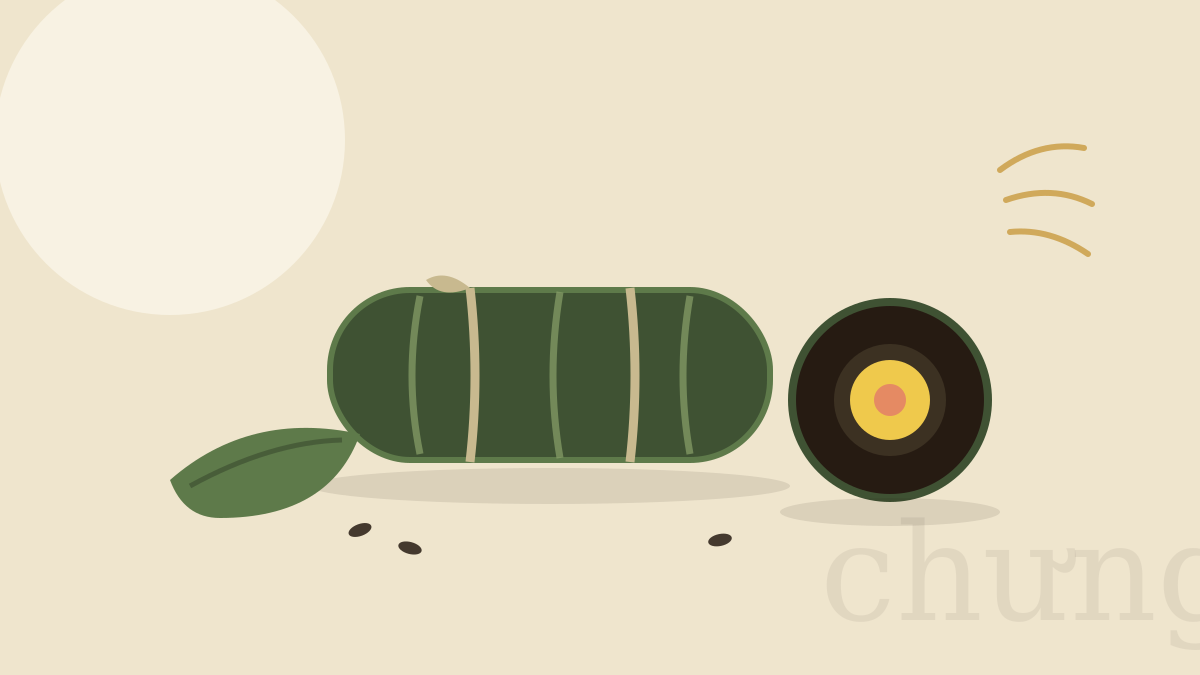
Every schoolchild in Vietnam knows the legend: Prince Lang Liêu, poorest son of a Hùng king, dreamed up a square cake for the earth and a round one for the sky, and won the throne with rice. It is a legend — written down in the fourteenth-century Lĩnh Nam chích quái, some two thousand years after the Đông Sơn bronze-drum culture it reaches back toward — but it tells a true thing: sticky rice cakes are as old as anything on this table. In the limestone northeast, in Lạng Sơn and Bắc Kạn, the Tày and Nùng peoples make theirs black, the rice massaged with the sieved ash of burned rice straw before wrapping, and often rolled long as a forearm rather than squared.
The ash is not decoration. It is alkaline, like the lye water in a mooncake or the lime in a tortilla, and it changes the cake — deeper color, faint smoke, a crumb that stays supple for days on a New Year altar. The eight-hour boil is the actual recipe; everything before it is assembly, and everything after is waiting. Make it once in December, slice it black and gleaming with a gold seam of bean at the center, and the green kind will start to look underdressed.
Weight the boiled cakes under a cutting board and a heavy pot for a few hours while they cool. Pressing squeezes out trapped water and knits the rice into a slice that holds its edge.
Lời đầu bếp · A word from the kitchen
Ingredientsnguyên liệu
Serves 8
The black rice
- 800 gglutinous rice — about 4 cups; short-grain sticky rice labeled nếp, soaked overnight
- 40 grice-straw ash — from a handful of clean rice straw burned to soft black-grey ash and sieved fine; garden-supply straw works. No honest substitute exists — skipping it makes a good green bánh chưng, not a black one
- 1 tbspfine salt
The filling
- 300 gsplit mung beans — about 1½ cups, the peeled yellow kind, soaked 2 hours
- 400 gpork belly — about 1 lb, skin on, cut into thick fingers
- 2 tspcoarsely ground black pepper
- 1 tspfine salt
Wrapping
- 8–10dong leaves or banana leaves — frozen banana leaves, thawed and wiped, are the standard abroad; blanch 10 seconds to make them fold without cracking
- As neededkitchen twine
Methodcách làm
Step 1: Make and work in the ash
Burn clean rice straw in a metal bucket until it collapses to ash, cool it completely, and sieve out every hard fleck. Drain the soaked rice, then massage the ash and salt through it with your hands until each grain wears an even charcoal coat. The ash is alkaline — it seasons and tenderizes as much as it dyes.
Step 2: Ready the filling
Steam the drained mung beans 20 minutes until mashable, season with salt, and press into 8 small logs. Toss the pork belly with pepper and salt. The pepper is the only spice here; it has eight hours to bloom, so resist adding more.
Step 3: Wrap the cakes
For each cake, lay two leaves glossy-side down in a cross, mound on a bed of black rice, then bean, pork, bean, and rice again to bury the filling. Fold into a snug cylinder — the Tày shape — or a square if that is the fold your hands know, and tie firmly with twine in both directions.
Step 4: Boil through the night
Pack the cakes upright in your largest pot, cover fully with water, and hold a gentle boil for 8 hours, topping up with boiling water every hour or so. The long boil is what fuses rice, ash, fat, and bean into one sliceable whole; there is no shortcut worth taking.
Step 5: Press and rest
Lift the cakes out, rinse briefly in cool water, and press them under a board and a weight for 3–4 hours as they cool. Rest overnight before slicing; the cake needs the time more than you do.
Đồ nghề · The tools
Equipment
Heavy pot / Dutch oven
Nồi dàyDeep, heat-retentive, and stable — for deep-frying without temperature crashes, and for bò kho and cà ri when the claypot is too small for the crowd.
Shop on Amazon →Charcoal grill / grill pan
Vỉ nướngNướng means fire, and lemongrass pork wants char and smoke. A small charcoal grill is the true answer; a screaming-hot cast-iron grill pan under a cracked window is the honest apartment one.
Shop on Amazon →Bamboo steamer
Xửng hấpFor bánh bao, xôi, and fish steamed whole — bamboo breathes, so nothing drips condensation back onto your work. Line it with a cabbage leaf, not parchment, and steal the leaf after.
Shop on Amazon →Fine sieve / muslin
Rây lọcFor straining broth crystal-clear, squeezing coconut milk, and working tamarind pulp through into pure sour. Line it with muslin when the recipe says “clear” and means it.
Shop on Amazon →
Equipment links are Amazon affiliate links. As an Amazon Associate we earn from qualifying purchases, at no cost to you. Disclosure.
Questions from the kitchen
What does the ash actually taste like?
Almost nothing, and that is the point — a faint mineral depth, a whisper of smoke, and a softer, longer-keeping crumb, because the alkaline ash slows the rice's staling. Tày cooks will tell you a black cake stays tender days past a green one, and they are right.
Can I use a pressure cooker?
You can cut the boil to about 2 hours at high pressure, and the cake will be cooked — but the texture is looser and the flavors less married. For a first attempt it is a fair trade; for Tết, do the eight hours.
How do I store and reheat it?
Wrapped and refrigerated, the cakes keep a week. Slice cold and pan-fry in a little oil until the cut faces crisp — bánh chưng rán is not a compromise, it is arguably the best way to eat the second half of any cake.
Nấu tiếp · Cook next
Keep the burner on
 Bánh
BánhThe World of Bánh·85 min·Intermediate
Hải Phòng Bánh BèoBánh bèo Hải Phòng
Hải Phòng's square bánh bèo — banana-leaf steamed rice cakes under a pork and wood ear topping, dunked in a peppery bone-broth dipping sauce.
 Bánh
BánhThe World of Bánh·40 min·Beginner
Smashed Rice Crackers with Baby ClamsBánh đập hến xào
Cẩm Nam's two-texture trick — a wet rice sheet smacked onto a crisp cracker, broken by hand, and dipped beside baby clams sautéed hot with lemongrass.
 Bánh
BánhThe World of Bánh·70 min·Intermediate
Sizzling CrêpesBánh xèo
The south's giant turmeric-and-coconut crêpe, fried lacy-crisp around shrimp and pork, then torn, rolled in lettuce with herbs, and dragged through nước chấm.