Bánh Cuốn
Bánh cuốn
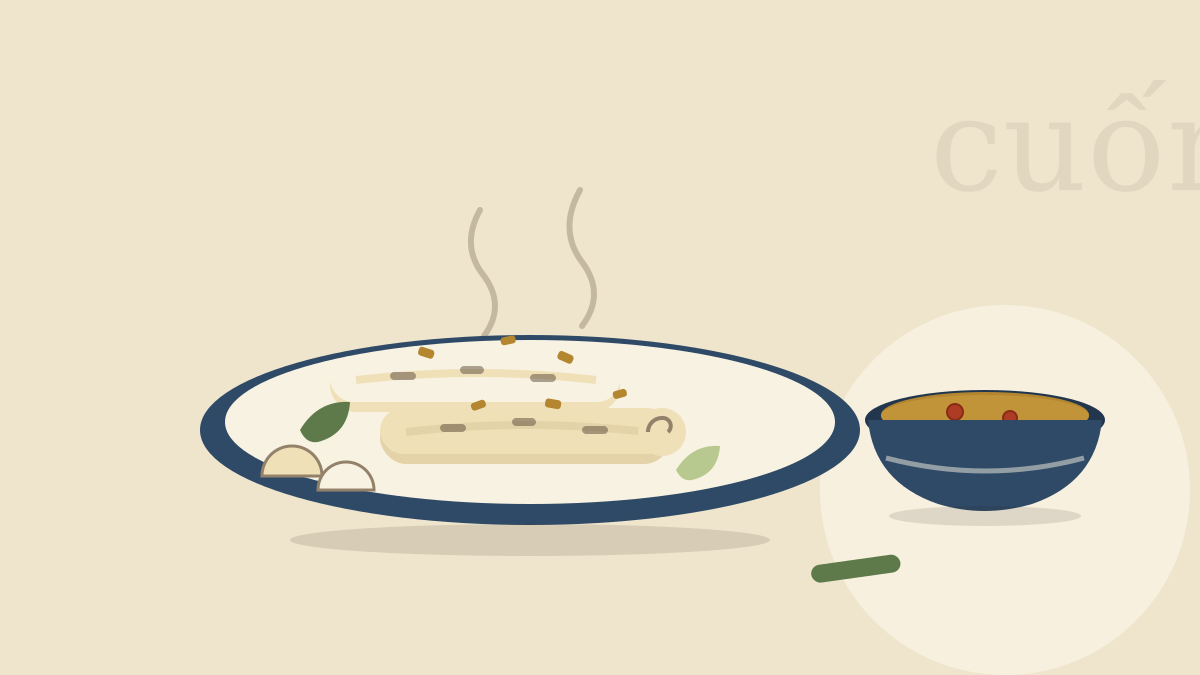
Hanoi's breakfast rice rolls without a steamer — a thin batter set in a covered nonstick pan, rolled around pork and wood ear, showered in fried shallots.
By Vietnamese Cookbook Kitchen · June 19, 2026
Hà Nội & the Red River DeltaThe Chinese Millennium era, 111 BCE–938 CE
 Bánh
Bánh- Prep
- 40 min
- Cook
- 45 min
- Serves
- 4
- Level
- Intermediate
The idea of pouring a rice-flour batter and steaming it into a supple sheet is one of the oldest techniques in the Vietnamese kitchen — part of the cooking that took root during the thousand years of Chinese rule, and a close cousin of the rice rolls still made across the border in Guangdong. What Vietnam did with the sheet is its own: wood ear and pork, fish sauce instead of soy, and a snowfall of fried shallots that no Cantonese cheung fun would recognize.
Traditionally the sheet is steamed on cloth stretched over a pot, a technique that takes months to learn. The covered nonstick pan is the honest home shortcut, and it works because of the one principle worth bolding: the lid is your steamer. The batter doesn't fry — the film of oil only prevents sticking, and the trapped steam under the lid cooks the sheet from above. If your rolls taste like crêpes, the pan was too oily or the lid came off too soon.
Bánh cuốn is breakfast food in Hanoi, eaten warm rather than hot, and it teaches a patience of a different kind than phở — not hours of simmering but twenty small repetitions of the same minute. Somewhere around the sixth sheet, the swirl stops being a decision and becomes a motion, and you understand why the women who make these on the street can hold a conversation while doing it.
Stir the batter before every single ladle — the rice flour settles in seconds, and the sheet that tears is always the one poured off the top of an unstirred bowl.
Lời đầu bếp · A word from the kitchen
Ingredientsnguyên liệu
Serves 4
The batter
- 150 grice flour — about 1 cup — plain rice flour, not glutinous; Thai brands in the red bag work
- 60 gtapioca starch — about ½ cup — this is what gives the sheet its stretch and shine
- 20 gcornstarch — about 2½ tbsp, for tenderness
- 650 mlwater — about 2¾ cups, room temperature
- 1 tbspneutral oil — plus more for the pan and the rolling board
- 0.5 tspfine salt
The filling
- 250 gground pork — about 9 oz — a fattier grind stays juicy through the second warming
- 20 gdried wood ear mushrooms — about ¾ oz — soaked in hot water 20 minutes, then minced fine
- 3shallots — minced
- 1 tbspfish sauce (nước mắm)
- 0.5 tspblack pepper
The table
- 4 tbspfried shallots — store-bought is honorable; the rolls disappear under them
- 150 gchả lụa (Vietnamese pork sausage) — about 5 oz, sliced into half-moons — optional but classic
- 2 handfulsbean sprouts and cucumber — sprouts blanched 30 seconds, cucumber cut into batons
- 1 bowlwarm nước chấm — mixed a touch lighter than for spring rolls — these rolls are delicate
- to servecilantro and mint
Methodcách làm
Step 1: Rest the batter
Whisk the rice flour, tapioca starch, cornstarch, water, oil, and salt until smooth, then rest it at least 30 minutes — overnight in the fridge is better, and a faint sourness after a day is not a flaw but the flavor of the old fermented-batter versions. The rest lets the flour hydrate so the sheets set supple instead of brittle.
Step 2: Cook the filling
Fry the shallots in a little oil until fragrant, add the pork and break it fine, then the wood ear, fish sauce, and pepper. Cook until fully done — no pink, 71°C / 160°F — and slightly drier than seems generous, since a wet filling turns the wrapper to mush. Season it a touch loud; the wrapper it's about to live in is nearly plain.
Step 3: Set up the rolling station
Before any batter hits the pan, arrange your line — the batter bowl with its ladle, the covered nonstick pan, and directly beside the stove an oiled cutting board or the oiled back of a baking sheet. Once sheets start coming they cannot wait, and the cook who has to go hunting for a spatula loses the sheet.
Step 4: Set a sheet
Heat a 20 cm / 8 in nonstick pan over medium heat and wipe it with the thinnest film of oil. Stir the batter, pour in a small ladle — about 45 ml — and swirl fast to coat the base thinly, then lid on for 30 to 40 seconds. The sheet is done when it turns from milky to translucent and the surface looks set. No flipping, ever — the lid's trapped steam cooks the top, and that is the whole trick of the pan-as-steamer.
Step 5: Invert, fill, roll
Turn the pan upside down over the oiled board and let the sheet fall — a confident flip lands it flat; a hesitant one folds it. Lay a finger-thick line of filling along one edge, fold in the sides, and roll it loose like a cigar. The first two sheets will tear. This is tuition, not failure — every bánh cuốn cook pays it, then the pan settles into rhythm.
Step 6: Sauce and shower
Slide the rolls onto plates seam-side down, scatter chả lụa and the blanched sprouts alongside, and bury everything in fried shallots and herbs. Serve with a bowl of warm nước chấm for spooning over or dipping — warm, because a cold sauce on a warm roll dulls the whole plate. Eat them the temperature of a cooling breakfast, not piping hot.
Đồ nghề · The tools
Equipment
Nonstick frying pan
Chảo chống dínhFor ốp la, fried rice, searing tofu, and toasting a bánh mì flat — the everyday pan between the grill and the fryer.
Shop on Amazon →Bamboo steamer
Xửng hấpFor bánh bao, xôi, and fish steamed whole — bamboo breathes, so nothing drips condensation back onto your work. Line it with a cabbage leaf, not parchment, and steal the leaf after.
Shop on Amazon →
Equipment links are Amazon affiliate links. As an Amazon Associate we earn from qualifying purchases, at no cost to you. Disclosure.
Questions from the kitchen
My sheets keep tearing — what am I doing wrong?
Usually one of three things — the batter wasn't stirred before that ladle (the flour settles fast), the sheet is too thin at the edges from a slow swirl, or the pan is too hot, setting the batter before it spreads. A tear rate of one in five is normal even in Hanoi; eat the evidence.
Can I just use the boxed bánh cuốn flour mix?
Yes — bột bánh cuốn blends from Vietnamese brands are exactly this ratio done for you, and nobody at your table will file a complaint. Follow the water quantity on the bag, still rest the batter, and still stir before every ladle.
Can I make them ahead?
They hold a few hours at room temperature, loosely covered — refrigeration turns the rice sheet firm and waxy. If you must chill them, revive with 20 seconds covered in the microwave with a sprinkle of water, or a brief steam. Freezing is where bánh cuốn goes to die.
Nấu tiếp · Cook next
Keep the burner on
 Bánh
BánhThe World of Bánh·85 min·Intermediate
Hải Phòng Bánh BèoBánh bèo Hải Phòng
Hải Phòng's square bánh bèo — banana-leaf steamed rice cakes under a pork and wood ear topping, dunked in a peppery bone-broth dipping sauce.
 Bánh
BánhThe World of Bánh·40 min·Beginner
Smashed Rice Crackers with Baby ClamsBánh đập hến xào
Cẩm Nam's two-texture trick — a wet rice sheet smacked onto a crisp cracker, broken by hand, and dipped beside baby clams sautéed hot with lemongrass.
 Bánh
BánhThe World of Bánh·70 min·Intermediate
Sizzling CrêpesBánh xèo
The south's giant turmeric-and-coconut crêpe, fried lacy-crisp around shrimp and pork, then torn, rolled in lettuce with herbs, and dragged through nước chấm.