Hải Phòng Crab Noodle Soup
Bánh đa cua
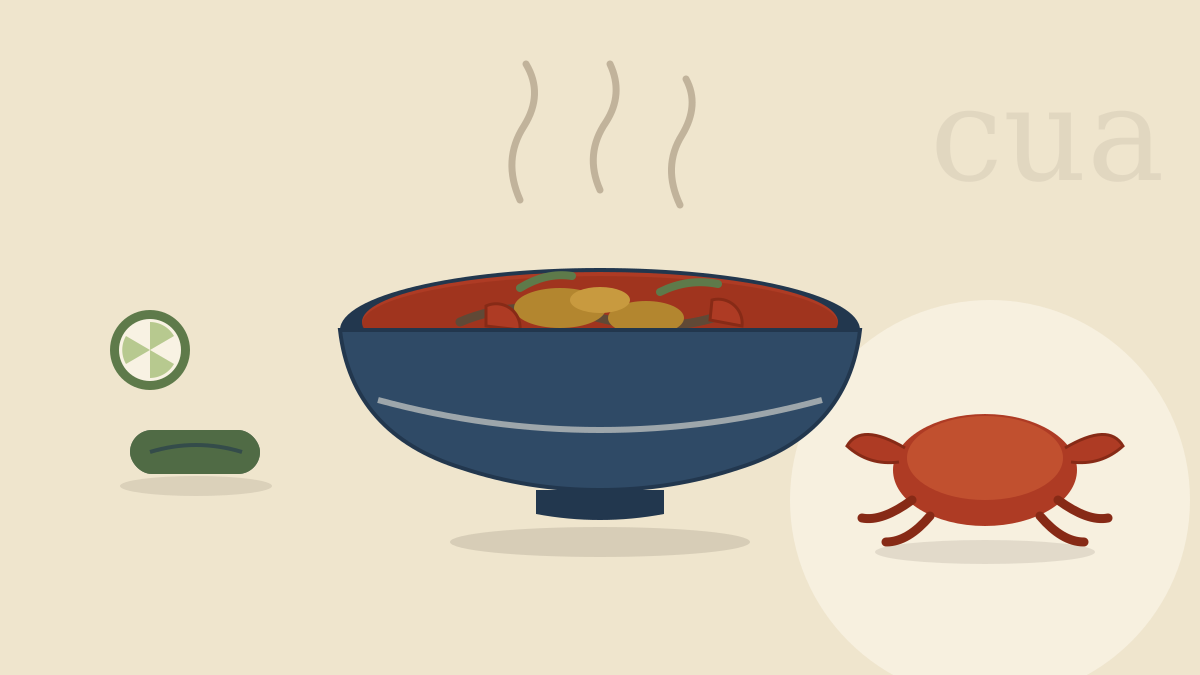
Hải Phòng's brick-red crab noodle soup — a blue-crab riêu broth over chewy brown bánh đa noodles, with betel-leaf pork and crisp morning glory.
By Vietnamese Cookbook Kitchen · June 4, 2026
Hải Phòng & the Northern CoastĐổi Mới era, 1986–2008
 Phở
Phở- Prep
- 45 min
- Cook
- 90 min
- Serves
- 6
- Level
- Advanced
Every city in Vietnam has a soup it would riot for, and Hải Phòng's is this one: a brick-red crab broth over wide brown noodles made nowhere else, crowned with a raft of crab so dense the spoon stands up in it. Bánh đa cua is dockworker food — big, loud, and unfussy — and when the sidewalk stalls multiplied after the reforms of the eighties, it became the port city's morning anthem.
The version here makes one honest trade. In Hải Phòng the broth begins with paddy crabs pounded whole; abroad you have blue crabs, so the shells build the stock, the picked meat builds the raft, and shrimp paste restores the ferment. What cannot be traded is the method: the crab is the broth, not a garnish on it — if the crab in your bowl arrives only as a topping, you've made a different soup.
The noodle deserves its own sentence. Bánh đa đỏ is cut from a batter of rice darkened with a caramel of sorts, dried in sheets in villages around the city, and it tastes faintly toasted, like the crust of good rice. It also overcooks in the time it takes to find your ladle. Soak it, blanch it, and serve immediately — in Hải Phòng the noodles meet the broth in the last ten seconds of the dish's life, and that timing is the recipe.
Once the riêu goes in, the pot never boils again — a simmer sets the crab into a raft you can lift with a spoon, a boil shreds it into sand you'll chase all night.
Lời đầu bếp · A word from the kitchen
Ingredientsnguyên liệu
Serves 6
The broth
- 1.2 kglive or freshly steamed blue crabs — about 2⅔ lb, 4 to 5 crabs — the honest stand-in abroad for Vietnam's paddy crab; keep them cold and cook them the day you buy them
- 500 gpork neck bones or rib tips — about 1 lb, rinsed well — paddy crabs make a richer liquor than blue crabs, and the pork quietly makes up the difference
- 2.5 literswater — about 10½ cups
- 1 tbspfine shrimp paste (mắm tôm) — the fermented depth blue crab can't supply on its own; it dissolves into the broth and disappears
- 2 tbspfish sauce (nước mắm) — plus more at the end, to taste
- 1 tspsugar
The riêu and the color
- 250 gpicked crab meat — about 9 oz, from the steamed crabs above, tomalley included — the orange fat is the flavor, don't rinse it away
- 100 gfatty ground pork — about 3½ oz — it binds the raft and keeps it tender
- 1egg — lightly beaten
- 2 tbspcrab paste in soybean oil (gạch cua ngâm dầu) — the small jar with the red lid at any Vietnamese grocery; its annatto-stained oil is half the soup's color
- 3tomatoes — ripe, cut into sixths
- 3shallots — thinly sliced
- 2 tbspneutral oil
- 1 tbspannatto seeds (hạt điều màu) — or 1 tsp annatto powder — Hải Phòng's broth is famously brick red, not pale
Chả lá lốt
- 250 gground pork — about 9 oz
- 12betel leaves (lá lốt) — from the Vietnamese grocery, fresh or frozen; perilla leaves are the nearest substitute, different but good
- 1shallot — minced
- 2 tspfish sauce
- 0.5 tspblack pepper
The bowl
- 400 gdried bánh đa đỏ (wide brown rice noodles) — about 14 oz — sold in flat bundles labeled bánh đa cua Hải Phòng; see the FAQ if your market has none
- 1 bunchwater spinach (rau muống) — stems split, blanched 30 seconds — morning glory at some markets
- 4scallions — sliced, white and green
- 4 tbspfried shallots
- 2limes — in wedges, with sliced bird's-eye chili alongside
Methodcách làm
Step 1: Steam and pick the crabs
Steam the crabs over high heat for 12 minutes until fully red and cooked through, then cool just until you can handle them. Pick every scrap of meat and all the orange tomalley into a bowl, and keep every shell. Work with cold hands and a clean board — crab is the least forgiving thing in this recipe, so it goes from fridge to steamer to pot with no waiting around on the counter.
Step 2: Build the base broth
Crush the shells lightly with a pestle, then simmer them with the pork bones and 2.5 liters of water, uncovered, for 60 to 75 minutes, skimming the first grey foam. This is the step that stands in for pounded paddy crab — the shells give up a sweetness the meat alone never would. Strain into a clean pot and discard the solids.
Step 3: Make the red oil and soften the tomatoes
Warm the neutral oil with the annatto seeds over low heat until the oil turns the color of a tile roof, about 3 minutes, then scoop out the seeds. Fry the sliced shallots in the red oil until fragrant, add the tomatoes and a pinch of salt, and cook 5 minutes until their edges slump but the wedges still hold. Slide all of it into the strained broth.
Step 4: Mix and set the riêu
Stir the picked crab and tomalley with the ground pork, egg, and jarred crab paste until it holds together loosely. Bring the broth to the barest simmer — lazy bubbles, never a boil — and spoon the mixture onto the surface in rough islands. Do not stir for 6 to 8 minutes. The raft will set, rise, and hold; then you can nudge it gently apart into spoon-sized clouds.
Step 5: Season the pot
Put the mắm tôm in a ladle, lower it into the broth, and stir within the ladle until it dissolves before letting it join the pot — no clumps, no ambush. Season with the fish sauce and sugar, then taste. It should be sweet from crab, faintly funky, and a shade under-salted; the toppings and the table will finish it.
Step 6: Fry the chả lá lốt
Mix the pork with the minced shallot, fish sauce, and pepper. Lay a betel leaf shiny-side down, put a thumb of pork at the stem end, and roll into a snug cigar; the leaf's own tip seals it. Pan-fry seam-side down in a film of oil over medium heat, turning, 8 to 10 minutes until the leaf is dark and the pork registers 71°C (160°F) inside.
Step 7: Blanch the noodles and build the bowls
Soak the bánh đa in room-temperature water for 15 minutes, then blanch 60 to 90 seconds — they go from chewy to gone faster than any noodle you know, so pull them the moment they relax. Divide among bowls with the blanched rau muống, ladle the broth so each bowl gets tomatoes and a cloud of riêu, and top with chả lá lốt, scallions, and fried shallots. Limes and chilies at the table.
Đồ nghề · The tools
Equipment
Tall stockpot (12 qt+)
Nồi hầmPhở is a marathon of bones and water, and a wide pot evaporates your broth away. Go tall and narrow — the depth keeps a lazy simmer lazy for six hours.
Shop on Amazon →Portable gas burner
Bếp ga miniLẩu is not lẩu if someone has to keep walking to the stove. The tabletop butane burner turns a pot of broth into a two-hour dinner party.
Shop on Amazon →Spider strainer
Vợt chiênThe wide wire basket that lifts fried food out of the oil in one pass and blanched noodles out of the pot in the next. One tool, half the site.
Shop on Amazon →Fine-mesh skimmer
Vợt vớt bọtClear phở broth is not a trick, it is patience with a skimmer — take the scum off early and often and the pot rewards you with glass.
Shop on Amazon →Noodle blanching basket
Vợt trụng búnOne long-handled basket, one pot of boiling water, one bowl at a time — noodles dunked, shaken dry, and dropped into the bowl still steaming. The street-stall rhythm at home.
Shop on Amazon →Bamboo steamer
Xửng hấpFor bánh bao, xôi, and fish steamed whole — bamboo breathes, so nothing drips condensation back onto your work. Line it with a cabbage leaf, not parchment, and steal the leaf after.
Shop on Amazon →
Equipment links are Amazon affiliate links. As an Amazon Associate we earn from qualifying purchases, at no cost to you. Disclosure.
Questions from the kitchen
My market doesn't carry bánh đa đỏ — what's the closest noodle?
Check the dried-noodle aisle of a Vietnamese grocery for flat brown bundles labeled bánh đa cua or bánh đa Hải Phòng — they keep for months, so buy several. Failing that, use the widest flat rice noodle you can find (bánh phở loại lớn). You'll lose the russet color and some of the chew, but the bowl still makes sense.
What exactly is the paddy crab this recipe replaces?
Cua đồng — small freshwater crabs from the rice fields, pounded whole and strained, so the broth and the riêu come from the same animal. Abroad, blue crab gives you the sweet meat and shells for stock, and the spoonful of mắm tôm plus the jarred gạch cua puts back the ferment and the orange richness the field crabs would have carried.
Can I skip the mắm tôm? The smell scares my kitchen.
You can — add an extra tablespoon of fish sauce and the soup will still be good. But one tablespoon dissolved into two and a half liters doesn't taste like the open jar smells; it reads as depth, not funk. It's also the single most Hải Phòng thing in the pot. Try half the amount before you vote no.
Nấu tiếp · Cook next
Keep the burner on
 Phở
PhởPhở & Noodle Soups·255 min·Advanced
Phở Bò, the Hanoi WayPhở bò
Hanoi's morning bowl built the slow way — charred onion and ginger, toasted spices, and a beef broth kept at a shiver, never a boil, for three hours.
 Phở
PhởPhở & Noodle Soups·220 min·Intermediate
Hủ Tiếu Nam VangHủ tiếu Nam Vang
The Phnom Penh–style noodle soup of the Mekong world — clear pork-and-dried- seafood broth, chewy noodles, shrimp, quail eggs, and a slick of fried garlic oil.
 Phở
PhởPhở & Noodle Soups·225 min·Intermediate
Bún Bò HuếBún bò Huế
Huế's lemongrass-annatto noodle soup — beef shank, pork hock, and a fermented-shrimp depth handled honestly for kitchens far from the Perfume River.