Bánh Dày
Bánh dày
The round white sky-cake of the Hùng-king legend — steamed glutinous rice pounded to a satin chew, made honestly at home with a stand mixer and oiled hands.
By Vietnamese Cookbook Kitchen · March 21, 2026
The Northern HighlandsĐông Sơn & Văn Lang era, c. 2000–111 BCE
 Bánh
Bánh- Prep
- 30 min
- Cook
- 45 min
- Serves
- 6
- Level
- Intermediate
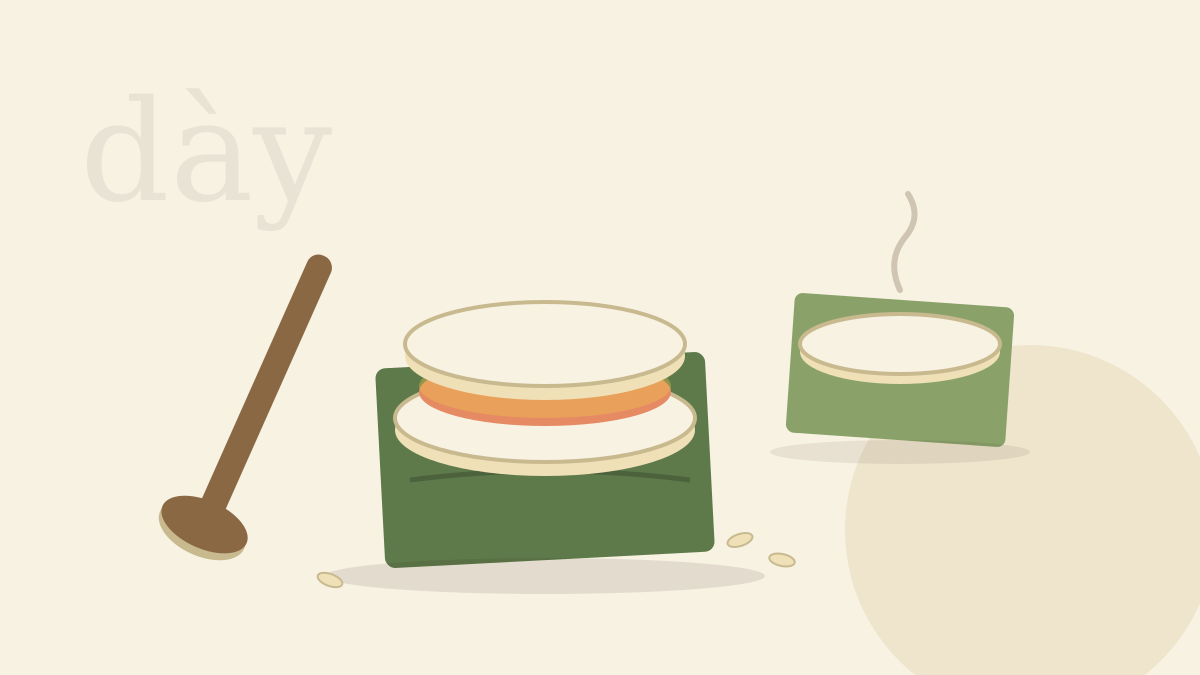
Bánh dày is the other half of the oldest story in Vietnamese food. In the legend — recorded in the fourteenth-century Lĩnh Nam chích quái, reaching back toward the Hùng kings of the Đông Sơn age — Prince Lang Liêu molded a square cake for the earth and a round one for the heavens, and the round one is this: pounded glutinous rice, white as cloud, utterly plain. That plainness is the argument. No filling, no dye, no leaf-wrapped drama — just rice, transformed by labor. Villages around the Hùng temples in Phú Thọ still pound it with long wooden pestles for the kings' death anniversary each spring, two people striking in alternation like a drum pattern.
Your stand mixer is those two villagers, and it will not be offended by the comparison. The whole game is texture: pound the rice while it is steaming hot, because heat is what lets crushed grains fuse into that dense, satin, faintly elastic chew — cooled rice merely smears. Eaten the classic way, sandwiching a cool slice of giò lụa, it is bland the way fresh bread is bland, which is to say not at all. The sky-cake asks a little sweat and gives back the most honest mouthful in the canon.
Keep a bowl of oiled water beside you and re-slick your hands before every touch. Pounded rice grabs anything dry — skin, spoons, banana leaf — and lets go of nothing.
Lời đầu bếp · A word from the kitchen
Ingredientsnguyên liệu
Serves 6
- 500 gglutinous rice — about 2½ cups, labeled nếp; soak overnight in cold water. Flour is not the same recipe — see the FAQ
- 1 tspfine salt
- 60 mlneutral oil — 4 tbsp, in a small bowl with a splash of water, for hands and leaf
- 6banana leaf squares, about 10 cm — 4 inches; parchment squares work, with less perfume
- 200 ggiò lụa (Vietnamese pork sausage) — about 7 oz, cut into 6 thick slices; optional but traditional — sold refrigerated at any Vietnamese market
Methodcách làm
Step 1: Steam the rice
Drain the soaked rice, toss with the salt, and steam over hard-boiling water for 40–45 minutes until every grain is translucent and completely tender. Undercooked centers will never pound smooth, so taste from the middle of the pile, not the edge.
Step 2: Pound it hot
Tip the hot rice straight into a stand mixer fitted with the paddle and beat on low, then medium, for 10–15 minutes, scraping down with an oiled spatula. You are standing in for two villagers with wooden pestles; the mixer takes it from grains to a stretchy, opaque mass that pulls in ropes.
Step 3: Judge the pound
Stop when you can no longer see individual grains and a pinch stretched between oiled fingers pulls to a smooth sheet. A few flecks of grain are rustic; large streaks mean keep beating. Heat is your friend — work before it cools and stiffens.
Step 4: Shape the cakes
With well-oiled hands, divide the mass into 12 pieces and shape each into a plump disc on an oiled banana leaf square, doming the center slightly — the sky, after all, is not flat. Work fast; they set as they cool.
Step 5: Serve as sandwiches
Press a slice of giò lụa between two cakes and eat the same day, at room temperature. Yesterday's cakes firm up — steam them 5 minutes or sear them in a lightly oiled pan until they slump and gloss again.
Đồ nghề · The tools
Equipment
Bamboo steamer
Xửng hấpFor bánh bao, xôi, and fish steamed whole — bamboo breathes, so nothing drips condensation back onto your work. Line it with a cabbage leaf, not parchment, and steal the leaf after.
Shop on Amazon →Mortar & pestle
Cối chàyLemongrass, garlic, and chilies pounded release oils a blender never finds — it bruises where blades slice. The sound of a Vietnamese kitchen starting dinner.
Shop on Amazon →
Equipment links are Amazon affiliate links. As an Amazon Associate we earn from qualifying purchases, at no cost to you. Disclosure.
Questions from the kitchen
Can I just use glutinous rice flour?
You can make a fine mochi-style cake from flour and water, and plenty of home cooks do. But pounded whole rice has a bounce and a faint grain structure the flour version lacks — the difference between fresh pasta and good dried. The mixer method costs one soak and one steam; it earns its keep.
Why is my bánh dày rock-hard the next day?
Nothing went wrong — pure glutinous rice retrogrades fast at room temperature and faster in the fridge. Steam or pan-fry to bring it back. In Vietnam these cakes are made before dawn and eaten by noon, which tells you the intended shelf life.
Is there a filled version?
Yes — bánh dày đỗ, with a sweetened mung bean paste sealed inside and a roll in cooked mung crumbs. Same dough, plus the filling from our black bánh chưng, sweetened to taste. Start with the plain one; it is the harder cake to hide flaws in.
Nấu tiếp · Cook next
Keep the burner on
 Bánh
BánhThe World of Bánh·85 min·Intermediate
Hải Phòng Bánh BèoBánh bèo Hải Phòng
Hải Phòng's square bánh bèo — banana-leaf steamed rice cakes under a pork and wood ear topping, dunked in a peppery bone-broth dipping sauce.
 Bánh
BánhThe World of Bánh·40 min·Beginner
Smashed Rice Crackers with Baby ClamsBánh đập hến xào
Cẩm Nam's two-texture trick — a wet rice sheet smacked onto a crisp cracker, broken by hand, and dipped beside baby clams sautéed hot with lemongrass.
 Bánh
BánhThe World of Bánh·70 min·Intermediate
Sizzling CrêpesBánh xèo
The south's giant turmeric-and-coconut crêpe, fried lacy-crisp around shrimp and pork, then torn, rolled in lettuce with herbs, and dragged through nước chấm.