Bánh Đúc Tàu
Bánh đúc tàu
Savory rice-flour pudding squares under fried shrimp, pork, and papaya, sharpened with vinegared fish sauce — a Hải Phòng Hoa community original.
By Vietnamese Cookbook Kitchen · March 22, 2026
Hải Phòng & the Northern CoastFrench Indochina era, 1883–1945
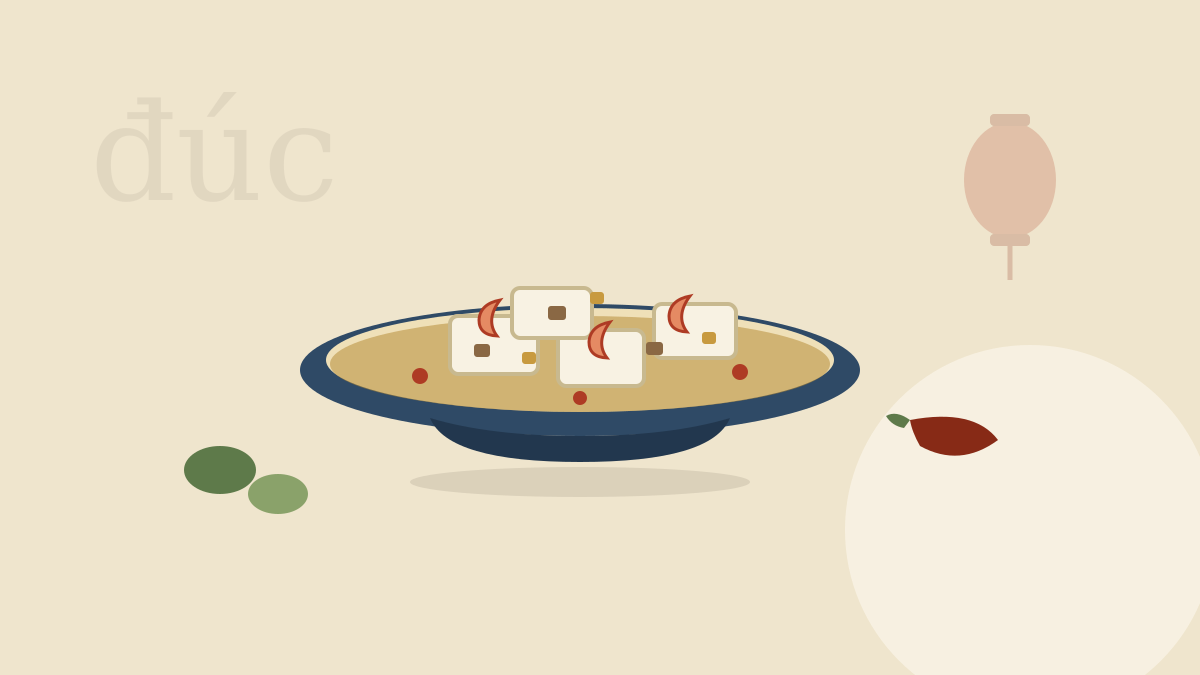 Bánh
Bánh- Prep
- 30 min
- Cook
- 45 min
- Serves
- 4
- Level
- Intermediate
Hải Phòng became a treaty port in 1874 and grew under the French into the north's industrial harbor — and where colonial-era ports grew, Chinese merchant communities grew with them. The city's Hoa quarter ran shipping agencies, pharmacies, and food stalls, and bánh đúc tàu is the stall food that stayed: a soft steamed rice pudding in the southern-Chinese manner, cut into squares and buried under fried shrimp, pork, and papaya, then flooded with a hot-sour vinegar sauce. The name says it plainly — tàu means Chinese — and the dish remains a Hải Phòng particular; even Hanoi, two hours away, mostly knows bánh đúc as something else.
The pleasure is architectural: bland, trembling pudding; salty, crisp-edged topping; a sauce that cuts through both. Everything rides on the pudding's texture, and the rule is simple — cook the batter on the stove until it thickens before it ever sees the steamer. Pour raw batter into a pan and you get a dense, chalky slab; pre-cook it and the squares come out quivering and glossy. The vinegar-forward sauce is not a variation to tame. It is the point of the dish, and Hải Phòng would notice.
Serve it warm, never hot and never cold. The pudding needs to be set enough to cut and soft enough to quiver — straight off the steamer it smears, and from the fridge it turns to a rubber tile.
Lời đầu bếp · A word from the kitchen
Ingredientsnguyên liệu
Serves 4
Pudding
- 200 grice flour — about 1⅔ cups; plain rice flour, not glutinous
- 40 gtapioca starch — about ⅓ cup — the source of the bounce
- 900 mlwater — about 3¾ cups
- ½ tspsalt
- 15 mlneutral oil — 1 tbsp, to keep the surface from skinning
Topping
- 200 gsmall shrimp — about 7 oz, peeled and roughly chopped
- 150 gpork belly — about 5 oz, cut into small dice
- 200 ggreen papaya or daikon — about 7 oz, cut to the same dice; daikon is the easier find abroad
- 3garlic cloves — minced
- 15 mlfish sauce — 1 tbsp
Sauce
- 60 mlrice vinegar — 4 tbsp
- 45 mlfish sauce — 3 tbsp
- 30 gsugar — 2½ tbsp
- 120 mlwarm water — 8 tbsp
- 1–2bird's-eye chilies — sliced — this dish is traditionally served on the fierce side
Methodcách làm
Step 1: Cook the batter first
Whisk both flours, salt, and water in a heavy pot until lump-free, then set over medium-low heat and stir constantly until the mixture thickens to a heavy paste that holds a trail, 8 to 10 minutes. This pre-cook is what separates a silken bánh đúc from a grainy one — the starch must begin setting under your spoon, not unattended in the steamer.
Step 2: Steam it set
Scrape the paste into an oiled 20 cm pan, smooth the top with the oiled back of a spoon, and steam over rolling water for 25 minutes, until a knife comes out clean. Cool until barely warm, then cut into 3 cm squares.
Step 3: Fry the topping
Render the pork belly dice until the edges brown, add the garlic, then the papaya or daikon, and stir-fry until the vegetable turns translucent at the corners. Add the shrimp and fish sauce and cook just until the shrimp lose their gray. Pork and shrimp must both be cooked through — no pink, no translucence.
Step 4: Mix the sauce
Dissolve the sugar in the warm water, add vinegar and fish sauce, and taste — it should run sourer and sharper than a table nước chấm, because it has a bland pudding to wake up. Add the chilies last.
Step 5: Assemble in the bowl
Squares in shallow bowls, a generous spoonful of topping with its fat, then enough sauce to flood the bottom third. Eat with a spoon, catching pudding, topping, and sauce in each pass.
Đồ nghề · The tools
Equipment
Heavy pot / Dutch oven
Nồi dàyDeep, heat-retentive, and stable — for deep-frying without temperature crashes, and for bò kho and cà ri when the claypot is too small for the crowd.
Shop on Amazon →Bamboo steamer
Xửng hấpFor bánh bao, xôi, and fish steamed whole — bamboo breathes, so nothing drips condensation back onto your work. Line it with a cabbage leaf, not parchment, and steal the leaf after.
Shop on Amazon →Julienne peeler
Dao bào sợiThe three-dollar tool that shreds green papaya and mango into long, springy threads for gỏi. Look for the Thai Kiwi brand — it hangs in every Southeast Asian market for a reason.
Shop on Amazon →
Equipment links are Amazon affiliate links. As an Amazon Associate we earn from qualifying purchases, at no cost to you. Disclosure.
Questions from the kitchen
What does the tàu in the name mean?
It's the colloquial Vietnamese word for Chinese — the dish came with Hải Phòng's Hoa community, and the name simply records the debt. Order bánh đúc elsewhere in the north and you'll get a different dish entirely, often a soft peanut-studded cake; the tàu matters.
Green papaya or daikon?
Papaya is the classic and holds a faint crunch through the frying; daikon is softer, sweeter, and available in every Asian market abroad. Both are correct answers. Whichever you use, keep the dice small and uniform so it cooks in step with the pork.
Can I make the components ahead?
The pudding can be steamed a few hours ahead and held at room temperature, loosely covered — refrigeration is what ruins it. The topping reheats well in its own fat, and the sauce keeps for days. Assemble only when everyone is sitting down.
Nấu tiếp · Cook next
Keep the burner on
 Bánh
BánhThe World of Bánh·85 min·Intermediate
Hải Phòng Bánh BèoBánh bèo Hải Phòng
Hải Phòng's square bánh bèo — banana-leaf steamed rice cakes under a pork and wood ear topping, dunked in a peppery bone-broth dipping sauce.
 Bánh
BánhThe World of Bánh·40 min·Beginner
Smashed Rice Crackers with Baby ClamsBánh đập hến xào
Cẩm Nam's two-texture trick — a wet rice sheet smacked onto a crisp cracker, broken by hand, and dipped beside baby clams sautéed hot with lemongrass.
 Bánh
BánhThe World of Bánh·70 min·Intermediate
Sizzling CrêpesBánh xèo
The south's giant turmeric-and-coconut crêpe, fried lacy-crisp around shrimp and pork, then torn, rolled in lettuce with herbs, and dragged through nước chấm.