Bánh Flan
Bánh flan
The crème caramel Vietnam kept and made its own — steamed silky, drowned in dark caramel, and finished with a bracing shot of coffee. Saigon's café dessert since the colonial kitchen.
By Vietnamese Cookbook Kitchen · March 18, 2026
Sài Gòn & the SoutheastFrench Indochina era, 1883–1945
 Chè
Chè- Prep
- 20 min
- Cook
- 40 min
- Serves
- 6
- Level
- Intermediate
The French brought crème caramel to Vietnam in the colonial kitchens of the late nineteenth century, and Vietnam kept it, renamed it — "flan," borrowed from the French flan, took on a Vietnamese tone as bánh flan — and quietly improved on it. Condensed milk stood in for the cream and sugar French recipes called for, since fresh cream was a colonial import and condensed milk a tinned staple that never spoiled in the heat. What survived the swap was the technique; what changed was everything around it, right down to the Saigon café habit of drowning the finished custard in cold black coffee.
The whole dessert turns on gentleness: eggs cook into velvet only under low, steady heat, and every shortcut — a rolling boil, an unstrained custard, an oven run too hot — turns silk into rubber and lace. Steam it low, chill it patiently, and the caramel does the rest, pooling into a bittersweet sauce that argues, gently, against how sweet the custard underneath actually is. Order it in Saigon and it usually arrives already swimming in coffee and ice, the city's way of saying a French dessert wasn't quite finished yet.
Strain the custard twice, no matter how careful you were cracking eggs. A banh flan with even one thread of cooked egg white is the difference between a café dessert and a home-kitchen apology.
Lời đầu bếp · A word from the kitchen
Ingredientsnguyên liệu
Serves 6
Caramel
- 100 gsugar — ½ cup, for the bottom of each mold
- 30 mlwater — 2 tbsp, to start the caramel
- 15 mlhot water — 1 tbsp, to loosen the caramel before it sets rock-hard in the mold
Custard
- 4whole eggs — room temperature — cold eggs seize the warm milk into flecks
- 400 mlwhole milk — about 1⅔ cups
- 100 mlsweetened condensed milk — 6 tbsp — Vietnam's answer to the custard's usual sugar and cream
- 1vanilla pod, split, or 1 tsp extract — the pod is worth it for a dessert this plain-spoken otherwise
- 1pinch fine salt
To serve
- 60 mlstrong brewed Vietnamese coffee, cooled — 4 tbsp; a phin-dripped robusta, unsweetened — see cà phê sữa đá on this site
- As neededcrushed ice — optional, for the café-style glass presentation
Methodcách làm
Step 1: Cook the caramel
Melt the sugar and water over medium heat without stirring, swirling the pan only, until it turns a deep amber just short of smoking. Off the heat, stand back and stir in the hot water — it will spit — then pour a thin layer into each mold before it sets.
Step 2: Build the custard
Warm the milk with the vanilla pod until steaming but not boiling, then remove from heat and let it cool five minutes. Whisk the eggs, condensed milk, and salt gently — the goal is combined, not foamy, since whipped air becomes ugly bubbles on the finished custard.
Step 3: Temper and strain
Pour the warm milk into the eggs in a thin stream, whisking the whole time, then strain the custard through a fine sieve twice into a jug with a spout. This double strain is what buys the glass-smooth texture a good bánh flan is judged on.
Step 4: Steam gently
Pour the custard over the set caramel in each mold, cover with foil to keep condensation out, and steam over gently simmering — not boiling — water for 18 to 22 minutes. The custard is done when the center jiggles like set jelly, not liquid; a knife should come out clean.
Step 5: Chill and unmold
Cool to room temperature, then refrigerate at least 4 hours — overnight is better, and lets the caramel loosen into sauce. Run a thin knife around the edge, invert onto a plate, and let the caramel run down the sides on its own.
Step 6: Serve the café way
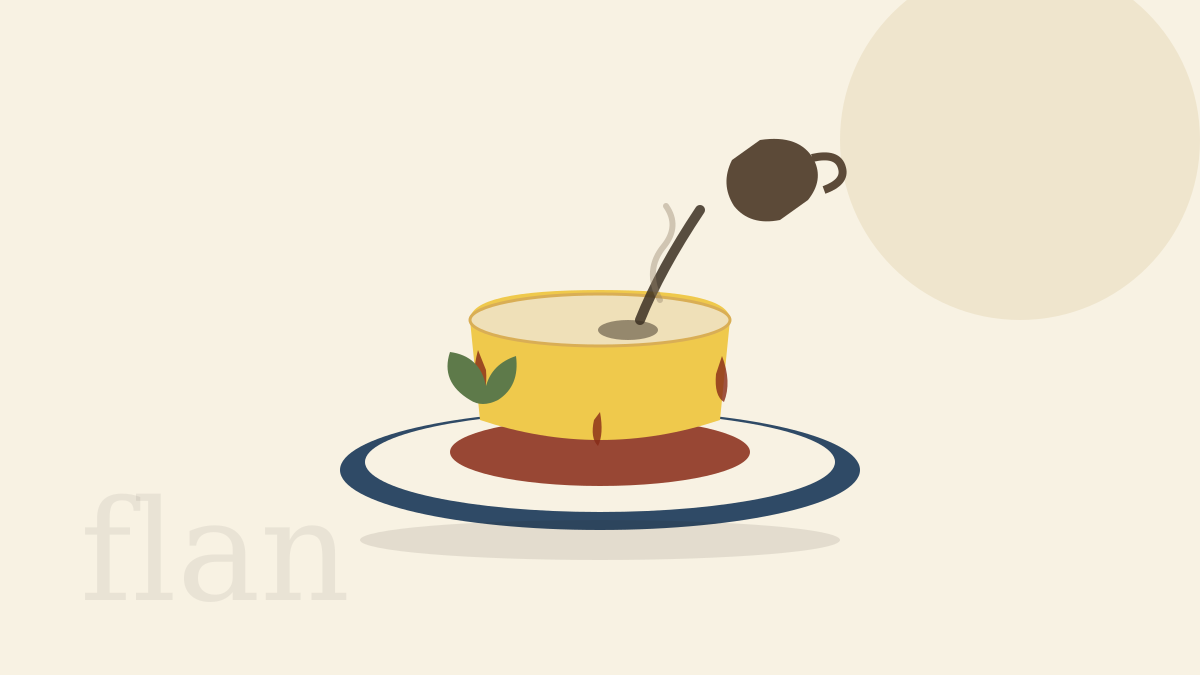
Set the unmolded flan in a small glass or on a plate and pour a shot of cold black coffee over the top just before eating, with or without ice underneath. The bitterness cuts the sweetness the way nothing else at the table does.
Đồ nghề · The tools
Equipment
Portable gas burner
Bếp ga miniLẩu is not lẩu if someone has to keep walking to the stove. The tabletop butane burner turns a pot of broth into a two-hour dinner party.
Shop on Amazon →Bamboo steamer
Xửng hấpFor bánh bao, xôi, and fish steamed whole — bamboo breathes, so nothing drips condensation back onto your work. Line it with a cabbage leaf, not parchment, and steal the leaf after.
Shop on Amazon →Fine sieve / muslin
Rây lọcFor straining broth crystal-clear, squeezing coconut milk, and working tamarind pulp through into pure sour. Line it with muslin when the recipe says “clear” and means it.
Shop on Amazon →Phin filter
Phin cà phêThe little metal chamber that drips coffee slowly enough to make you sit down — over ice and condensed milk, it is cà phê sữa đá and there is no shortcut. Four dollars, lasts decades.
Shop on Amazon →Ramekins
Khuôn bánh flanFor bánh flan — the French crème caramel Vietnam adopted, darkened the caramel on, and never gave back. Small metal moulds chill faster; ceramic unmoulds prettier.
Shop on Amazon →
Equipment links are Amazon affiliate links. As an Amazon Associate we earn from qualifying purchases, at no cost to you. Disclosure.
Questions from the kitchen
Can I bake it instead of steaming?
Yes — a water bath in a 150°C (300°F) oven for 40 to 50 minutes gets you there, and it's the gentler option if your steamer runs hot. Steaming is faster and the more common home method in Vietnam, but a controlled oven bain-marie is arguably more forgiving for a first try.
My custard has holes and a rubbery texture. What went wrong?
The heat was too high. Boiling water or an oven above 160°C (320°F) turns egg custard porous and tough instead of silk-smooth. Steam at a bare simmer, keep the lid vented slightly to control condensation, and pull it the moment the center sets.
Is the coffee topping traditional, or a Saigon thing specifically?
It's a Saigon café habit above all — bánh flan cà phê is a menu staple from sidewalk stalls to hotel restaurants there, though it travels countrywide now. Plain bánh flan with just caramel is the older, more universal version; the coffee pour is the city's signature addition.
Nấu tiếp · Cook next
Keep the burner on
 Chè
ChèChè & Sweets·15 min·Beginner
Đà Lạt Avocado CreamKem bơ
Đà Lạt's night-market original — chilled avocado blended dense as mousse under a scoop of coconut ice cream and toasted coconut. The highlands' proudest sweet.
 Chè
ChèChè & Sweets·55 min·Beginner
Lotus Seed ChèChè hạt sen
Lotus seeds simmered tender in rock-sugar syrup — a spare, temple-lineage Vietnamese sweet, served warm or iced, with an optional longan refinement from Huế.
 Chè
ChèChè & Sweets·60 min·Beginner
Sesame Rice Balls in Ginger SyrupSủi dìn
Warm glutinous rice balls with molten black sesame hearts in a ginger-hot syrup — the Hoa community's winter sweet from Hải Phòng's old Chinese quarter.