Sesame Rice Balls in Ginger Syrup
Sủi dìn
Warm glutinous rice balls with molten black sesame hearts in a ginger-hot syrup — the Hoa community's winter sweet from Hải Phòng's old Chinese quarter.
By Vietnamese Cookbook Kitchen · June 25, 2026
Hải Phòng & the Northern CoastThe Chinese Millennium era, 111 BCE–938 CE
 Chè
Chè- Prep
- 40 min
- Cook
- 20 min
- Serves
- 4
- Level
- Beginner
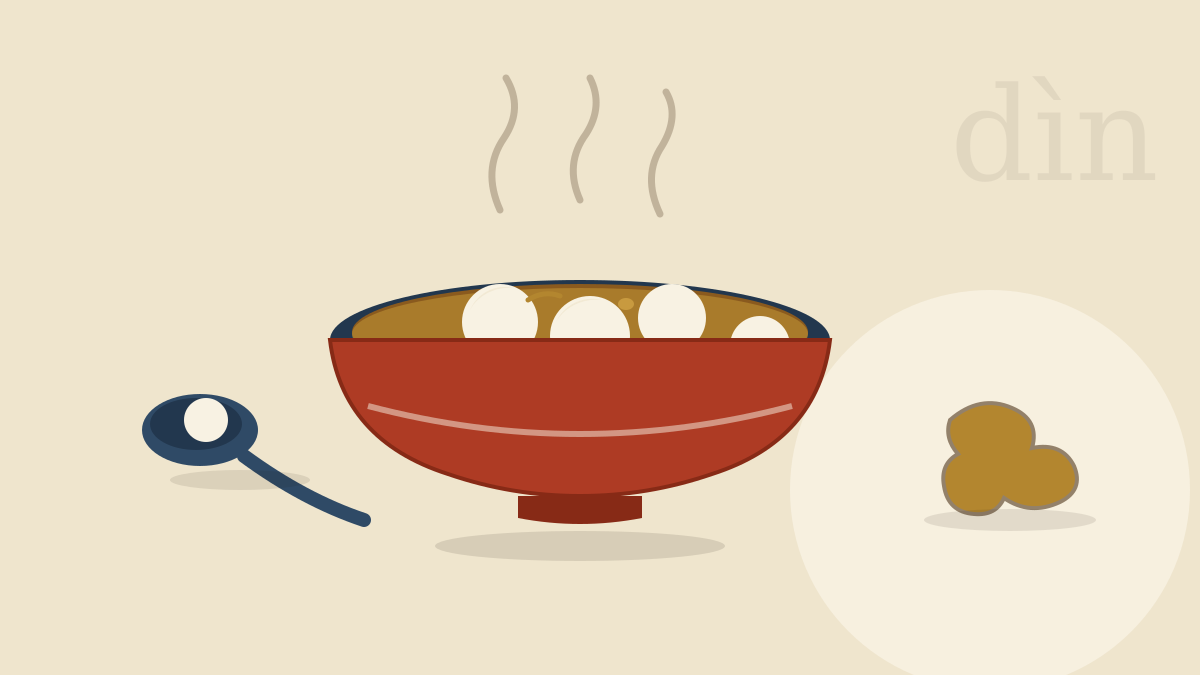
Walk Hải Phòng's old quarter on a cold December night and you will find the sủi dìn sellers by their steam before their signs — a pot of dark ginger syrup going like a chimney, a tray of white glutinous balls waiting their turn. The dish belongs to the city's Hoa community, ethnic Chinese families whose ancestors settled the port generations ago and brought tangyuan with them; the name itself is Cantonese worn smooth by Vietnamese mouths. It is winter food, full stop — locals will tell you it tastes wrong when it's warm out.
The pleasure of sủi dìn is an ambush: a plain white ball, soft as an earlobe, that breaks open into flowing black sesame with a syrup of real ginger heat behind it. Getting that flow is not luck. The filling must go in cold and firm, and the seal must be seamless — a chilled sesame marble wraps cleanly and melts in the pot, while a soft smear of paste contaminates the seam and opens it in the boil. Every burst ball you'll ever make traces back to one of those two words, cold or seamless.
Everything here tolerates a beginner generously. The dough is two ingredients and forgives re-kneading; the syrup is a ten-minute simmer; the balls tell you themselves when they're done by standing up and floating. Make a double batch of the raw balls for the freezer and you own the fastest real dessert in this book — eight minutes from a hard frost to a hot bowl.
The dough is right when it feels like an earlobe — press a thumb in and the dent should hold without cracking at the edges; cracks mean a splash more warm water, not more kneading.
Lời đầu bếp · A word from the kitchen
Ingredientsnguyên liệu
Serves 4
Black sesame filling
- 60 gblack sesame seeds — about 6 tbsp — buy them from an Asian grocery where turnover is fast; stale sesame tastes of cardboard
- 40 gsugar — about 3 tbsp
- 30 gunrefined coconut oil or unsalted butter — about 2 tbsp, softened — the fat is what melts into the molten center
- 1 pinchfine salt
The dough
- 200 gglutinous rice flour (bột nếp) — about 1⅔ cups — the green-labeled Thai bags abroad are exactly right; ordinary rice flour will not work
- 170 mlwarm water — about ¾ cup, hand-hot, added gradually — you may not need the last spoonful
Ginger syrup and topping
- 80 gfresh ginger — about a large thumb-and-a-half — half sliced into coins and bruised, half cut into fine threads
- 120 gdark palm sugar or brown sugar — about ⅔ cup packed — đường phên if your grocery has it; the syrup should be the color of strong tea
- 700 mlwater — about 3 cups
- 3 tbsproasted peanuts — roughly crushed
- 1 tbsptoasted white sesame seeds
- 2 tbspshredded coconut — optional but common at the Hải Phòng stalls
Methodcách làm
Step 1: Toast and grind the sesame
Toast the black sesame seeds in a dry pan over medium-low heat, shaking constantly, 3 to 4 minutes until they smell like dark toast and a few begin to pop. Grind them fine in a spice grinder or mortar, then work in the sugar, salt, and soft fat to a thick paste. Chill 20 minutes in the freezer until scoopable.
Step 2: Portion the filling
Roll the chilled paste into 16 marbles, about a teaspoon each, and return them to the fridge. Cold, firm filling is the entire trick to clean sealing — a soft filling smears onto the dough's edges and the ball opens in the pot exactly where the smear was.
Step 3: Make the earlobe dough
Pour the warm water into the glutinous rice flour a splash at a time, stirring, then knead 3 to 4 minutes to a smooth, matte dough that feels like an earlobe — soft, pliable, not sticky. A trick from the dumpling houses — flatten a small piece, boil it 2 minutes, and knead it back in; the cooked patch makes the raw dough noticeably easier to shape. Rest under a damp towel 15 minutes.
Step 4: Fill and seal the balls
Roll the dough into 16 pieces. Cup a piece in your palm, press a deep well with your thumb, drop in a sesame marble, and gather the dough over it like a purse, pinching off any excess. Roll between your palms until seamless — any visible crease now is a leak later. Keep finished balls under the damp towel.
Step 5: Build the ginger syrup
Simmer the bruised ginger coins with the sugar and water, uncovered, for 10 minutes, until the syrup smells hot in the back of the throat and has taken on real color. Fish out the coins if you like, or leave them in the pot the way the stalls do — chewing one at the bottom of the bowl is part of the experience.
Step 6: Boil the balls and serve them floating
Boil the balls in a separate pot of plain water, stirring once so nothing sticks, until they float, then 2 minutes more so the centers melt. Lift them straight into the warm ginger syrup with a slotted spoon. Serve hot in small bowls with syrup, a scatter of ginger threads, crushed peanuts, sesame, and coconut. Warn people about the molten middle — it means it.
Đồ nghề · The tools
Equipment
Mortar & pestle
Cối chàyLemongrass, garlic, and chilies pounded release oils a blender never finds — it bruises where blades slice. The sound of a Vietnamese kitchen starting dinner.
Shop on Amazon →
Equipment links are Amazon affiliate links. As an Amazon Associate we earn from qualifying purchases, at no cost to you. Disclosure.
Questions from the kitchen
How is sủi dìn different from tangyuan or chè trôi nước?
It's the same ancient family, wearing local clothes. Sủi dìn is the Hoa — ethnic Chinese — community's version in Hải Phòng, descended from tangyuan, and its name comes through Cantonese. Compared to the southern chè trôi nước it's smaller, filled with black sesame instead of mung bean, and finished with peanuts and a sharper, hotter ginger syrup — no coconut milk in the pot, only a scatter on top.
My dough keeps cracking when I shape it — what went wrong?
The dough is too dry, almost never anything else. Glutinous rice flours vary in thirst, so treat 170 ml as a starting bid — work in warm water a teaspoon at a time until a pressed thumbprint holds without splitting at the rim. Keep everything under a damp towel while you work; this dough dries out in the time it takes to answer a text.
Can I make them ahead?
Freeze them raw — that's what every dumpling-making culture concluded, and it holds here. Arrange the shaped balls on a floured tray, freeze solid, then bag them for up to a month. Boil straight from frozen, adding 2 to 3 minutes after they float. The syrup keeps a week refrigerated and reheats in a minute. Boiled balls, though, wait for no one; they toughen within the hour.
Nấu tiếp · Cook next
Keep the burner on
 Chè
ChèChè & Sweets·15 min·Beginner
Đà Lạt Avocado CreamKem bơ
Đà Lạt's night-market original — chilled avocado blended dense as mousse under a scoop of coconut ice cream and toasted coconut. The highlands' proudest sweet.
 Chè
ChèChè & Sweets·55 min·Beginner
Lotus Seed ChèChè hạt sen
Lotus seeds simmered tender in rock-sugar syrup — a spare, temple-lineage Vietnamese sweet, served warm or iced, with an optional longan refinement from Huế.
 Chè
ChèChè & Sweets·90 min·Intermediate
Five-Color Sticky RiceXôi ngũ sắc
Tày celebration sticky rice steamed in five natural colors — magenta leaf, turmeric, pandan, butterfly pea — with honest substitutes for every dye.