Bánh Ít Lá Gai
Bánh ít lá gai
Bình Định's small black pyramid cakes — glutinous rice dyed and flavored with ramie leaf, wrapped around sweet mung bean, folded into banana leaf by hand.
By Vietnamese Cookbook Kitchen · April 21, 2026
The South Central CoastNguyễn & the Huế Court era, 1802–1883
 Chè
Chè- Prep
- 90 min
- Cook
- 45 min
- Serves
- 12
- Level
- Advanced
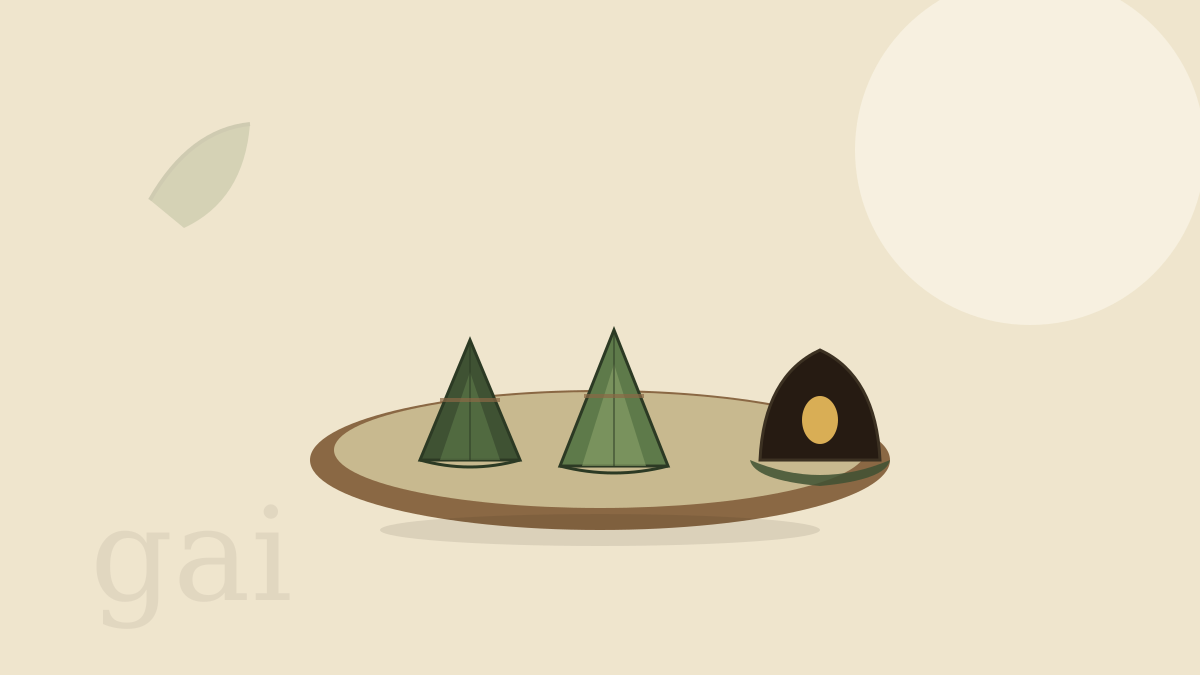
Bình Định claims bánh ít lá gai the way it claims bánh hỏi — as a wedding and death-anniversary offering with roots deep enough that locals will tell you it predates the province's more famous martial-arts schools. The cakes appear in Nguyễn-era court and folk poetry alike, small black pyramids of glutinous rice dyed and flavored with ramie leaf, wrapped tight in banana leaf, and steamed until glossy. Their color is not dye but ingredient: lá gai, boiled down and pounded into the dough itself, the same plant fiber once used to weave cloth and fishing nets along this coast.
Two textures are being managed at once here — a dough elastic enough to wrap without cracking, and a filling sweet and dense enough to anchor it — and both depend on patience the recipe can't shortcut: real kneading for the dough, real mashing for the mung bean. A well-made cake holds its pyramid shape when you peel back the leaf and gives with a slight, springy resistance before yielding to sweet, faintly mineral rice. Bình Định grandmothers used to judge a daughter-in-law's kitchen skill by this cake alone; nobody will judge you quite so harshly, but the bar they set was not a low one.
Knead the dough until it stops sticking to clean, dry hands — not until a timer says so. Lá gai dough is unusually elastic and will tell you when it's ready long before your arms agree.
Lời đầu bếp · A word from the kitchen
Ingredientsnguyên liệu
Serves 12
The dough
- 100 gdried lá gai (ramie leaf) — about 3.5 oz — sold frozen or dried at Vietnamese markets, often labeled bo bo leaf or ramie leaf; no substitute reproduces its color or bitterness-free earthiness, see the FAQ for the honest fallback
- 500 gglutinous rice flour — about 3½ cups
- 300 gsugar — about 1½ cups
- 60 mlneutral oil — 1/4 cup, kneaded into the dough for pliability
- 250 mlwater, approximate — for boiling the leaf and adjusting the dough; exact amount varies with the leaf's moisture
The mung bean filling
- 250 gsplit, peeled mung beans — about 1¼ cups, soaked at least 4 hours or overnight
- 150 gsugar — about ¾ cup
- 60 gfresh grated coconut — about ⅔ cup, or unsweetened dried, rehydrated briefly in warm water
- 1pinch salt
- 1 tspvanilla extract or 1/2 tsp ground vanilla — a modern touch common in home kitchens; omit for an older-style filling
To wrap
- 16banana leaf squares, about 20 cm — softened over a flame or in hot water until pliable, wiped clean
- 2 tbspneutral oil — for greasing hands and the banana leaf
Methodcách làm
Step 1: Boil and pound the lá gai
Boil the dried ramie leaves 20–25 minutes until fully soft, then drain and squeeze out as much water as you can. Pound or blend to a fine, almost paste-like consistency — any coarse fiber left behind will show up as a stringy bite in the finished cake, so this step rewards patience.
Step 2: Cook the mung bean filling
Steam or simmer the soaked mung beans until completely tender, about 20 minutes, then mash while hot with the sugar, coconut, and salt over low heat, stirring until the mixture pulls together into a thick paste that holds its shape. Cool completely before shaping — warm filling makes wrapping a mess.
Step 3: Build the dough
Knead the glutinous rice flour, sugar, oil, and pounded lá gai together, adding water a spoonful at a time, until you have a smooth, deep-black, elastic dough that no longer sticks to dry hands — expect ten minutes of real kneading. **The dough is ready when it stops sticking, not when the clock says so.**
Step 4: Shape and fill
Divide the dough into 16 balls, flatten each into a disc, and wrap around a walnut-sized ball of mung bean filling, pinching the seam closed and rolling into a smooth cone or teardrop — the traditional small pyramid shape that gives the cake its silhouette in the banana-leaf wrapper.
Step 5: Wrap in banana leaf
Oil each banana leaf square lightly, set a filled dough cone in the center, and fold the leaf up around it into a tight pyramid, securing with a thin strip of banana leaf or kitchen string. A slightly loose wrap steams unevenly; snug is correct.
Step 6: Steam
Steam the wrapped cakes over rapidly boiling water for 30–35 minutes, until the dough turns glossy and firm through the leaf. Cool at least 15 minutes before unwrapping — they finish setting as they cool, and a cake unwrapped too hot will look underdone even when it isn't.
Đồ nghề · The tools
Equipment
Bamboo steamer
Xửng hấpFor bánh bao, xôi, and fish steamed whole — bamboo breathes, so nothing drips condensation back onto your work. Line it with a cabbage leaf, not parchment, and steal the leaf after.
Shop on Amazon →Mortar & pestle
Cối chàyLemongrass, garlic, and chilies pounded release oils a blender never finds — it bruises where blades slice. The sound of a Vietnamese kitchen starting dinner.
Shop on Amazon →
Equipment links are Amazon affiliate links. As an Amazon Associate we earn from qualifying purchases, at no cost to you. Disclosure.
Questions from the kitchen
I can't find fresh or dried lá gai anywhere. What now?
Frozen lá gai, sold in bags at larger Vietnamese grocers or online, is the closest and most honest substitute — it boils and pounds the same as dried. Without any form of the real leaf, a dough colored with black sesame paste or activated charcoal will look similar but taste noticeably different; say so if you serve it that way; it is a good cake, just not this cake.
What does lá gai actually taste like?
On its own, faintly bitter and grassy — cooked into the dough with sugar, that edge disappears into a deep, slightly mineral sweetness that plain glutinous rice dough doesn't have. It's closer to what matcha does for a dessert than an obvious flavor most people would name unprompted.
Can these be made ahead and how long do they keep?
Yes — they keep 2–3 days at room temperature wrapped, or up to a week refrigerated, and steam beautifully for 5 minutes to refresh before serving. This shelf life is exactly why Bình Định families have long sent them as gifts and carried them on long bus and train trips.
Nấu tiếp · Cook next
Keep the burner on
 Chè
ChèChè & Sweets·15 min·Beginner
Đà Lạt Avocado CreamKem bơ
Đà Lạt's night-market original — chilled avocado blended dense as mousse under a scoop of coconut ice cream and toasted coconut. The highlands' proudest sweet.
 Chè
ChèChè & Sweets·55 min·Beginner
Lotus Seed ChèChè hạt sen
Lotus seeds simmered tender in rock-sugar syrup — a spare, temple-lineage Vietnamese sweet, served warm or iced, with an optional longan refinement from Huế.
 Chè
ChèChè & Sweets·60 min·Beginner
Sesame Rice Balls in Ginger SyrupSủi dìn
Warm glutinous rice balls with molten black sesame hearts in a ginger-hot syrup — the Hoa community's winter sweet from Hải Phòng's old Chinese quarter.