Bánh Tổ (Tết Molasses Cake)
Bánh tổ
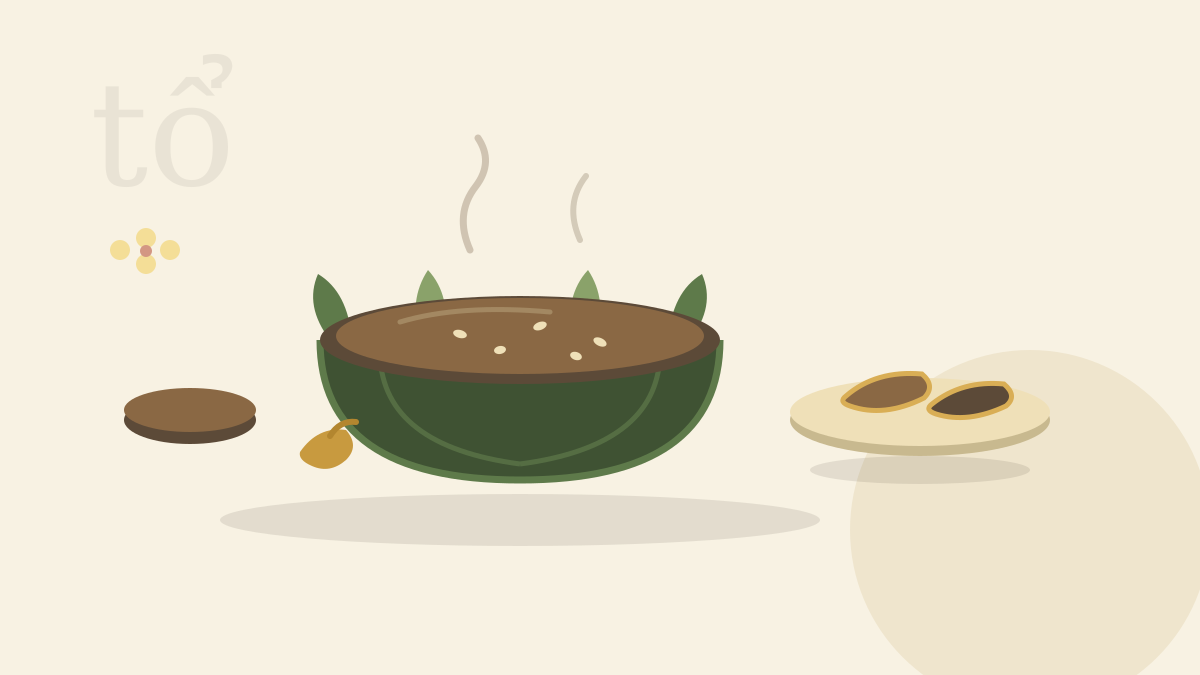
Quảng Nam's Tết molasses cake — glutinous rice and dark cane sugar steamed in a banana-leaf basket, then sliced and pan-fried into chewy golden coins.
By Vietnamese Cookbook Kitchen · May 17, 2026
Quảng Nam & Đà NẵngThe Lê Dynasty era, 1428–1789
 Chè
Chè- Prep
- 25 min
- Cook
- 90 min
- Serves
- 10
- Level
- Beginner
Bánh tổ arrived in Quảng Nam the way so much of its cooking did — by boat. The Hoa merchants who settled Hội An from the 17th century onward brought the sticky new-year cake of southern China with them, and it married the region's own product: đường bát, the dark discs of unrefined cane sugar that Quảng Nam pressed and boiled for centuries. The name is usually read as "ancestor cake," and it earns it — steamed before Tết in banana-leaf baskets, stacked on the family altar, and only eaten once the ancestors have had their look.
Technically it is the simplest recipe in this chapter and the most patient: a smooth batter and a long, honest steam, then a full night's cooling before the knife. The fresh cake is chewy, gingery, and grave. The fried slice — day-old cake blistered in oil until the center runs like caramel — is the version people actually dream about, which is why Quảng Nam families make the cake big on purpose. A dessert designed around its own leftovers is a dessert designed by people who knew what they were doing.
This cake is better in week two than on day one, and better fried than fresh. Plan for leftovers on purpose — the pan-fried slice is not the consolation, it is the destination.
Lời đầu bếp · A word from the kitchen
Ingredientsnguyên liệu
Serves 10
The cake
- 400 gglutinous rice flour — about 3⅓ cups — the bag labeled sweet or glutinous, often with green lettering
- 300 gdark palm or cane sugar — about 1½ cups packed — Quảng Nam uses đường bát, hard discs of unrefined cane sugar; dark muscovado plus 1 tbsp molasses is the faithful stand-in
- 380 mlwater — about 1⅔ cups
- 1 thumbginger, finely grated
- ¼ tspsalt
- 2 tbsptoasted sesame seeds
- As neededbanana leaf, for lining — thawed from frozen is fine; parchment works with no shame and less aroma
For frying the leftovers
- 2 tbspneutral oil
- 1egg, beaten — optional but traditional in many Quảng Nam homes — a thin batter jacket
Methodcách làm
Step 1: Make the ginger syrup
Simmer the sugar, water, ginger, and salt until fully dissolved, then cool until just warm. Hot syrup would cook the rice flour into lumps on contact; warm syrup slides in clean. Taste it — this is the entire flavor of the cake, so it should already be good.
Step 2: Whisk in the flour
Sift the glutinous rice flour into the syrup in three additions, whisking each smooth before the next. You want a thick, pourable batter like heavy cream with opinions — if it ribbons off the whisk and slowly disappears back into itself, it is right.
Step 3: Line and fill the basket
Line a deep bowl or small basket, about 18 cm (7 in), with softened banana leaf, shiny side in, and pour in the batter to two-thirds full — it barely rises but it does swell. Rap the bowl on the counter to chase out air bubbles.
Step 4: Steam long and level
Steam over steadily boiling water for 80–90 minutes, topping up the pot as needed, until a skewer comes out with sticky crumbs but no wet batter. Scatter the sesame over the hot surface. Then the hard part: cool completely, ideally overnight — warm bánh tổ cuts like glue.
Step 5: Slice and pan-fry
For the classic second act, cut the firm cake into slices a finger thick, dip in beaten egg if using, and fry in oil over medium heat 2–3 minutes per side until the edges blister and the middle turns molten and chewy. Fresh, the cake is dense and dignified; fried, it is caramel with a crust, and it disappears first.
Đồ nghề · The tools
Equipment
Bamboo steamer
Xửng hấpFor bánh bao, xôi, and fish steamed whole — bamboo breathes, so nothing drips condensation back onto your work. Line it with a cabbage leaf, not parchment, and steal the leaf after.
Shop on Amazon →Fine sieve / muslin
Rây lọcFor straining broth crystal-clear, squeezing coconut milk, and working tamarind pulp through into pure sour. Line it with muslin when the recipe says “clear” and means it.
Shop on Amazon →
Equipment links are Amazon affiliate links. As an Amazon Associate we earn from qualifying purchases, at no cost to you. Disclosure.
Questions from the kitchen
What does bánh tổ have to do with Chinese nian gao?
Everything and a few centuries of distance. It descends from the sticky new-year cake of the Hoa merchants who settled Hội An from the 17th century on — the same family as nian gao, in which the story goes that the sticky cake sweetens the Kitchen God's mouth, or seals it, before his report to heaven. In Quảng Nam it took on local dark cane sugar, ginger, and the banana-leaf basket, and became a Tết fixture with a Vietnamese name.
How long does it keep?
Remarkably — that is half its job as Tết food, made before the holiday and eaten through it. Wrapped well, it holds a week at cool room temperature or three in the fridge, where it firms up and gets slightly bloomed with sugar; frying erases all of that. If a spot of surface mold appears on an old cake, tradition says trim it, food-safety says discard it, and this site sides with food-safety.
My cake came out grainy instead of smooth. Why?
Either the syrup went in hot and seized the flour into micro-lumps, or the batter needed a final pass through a sieve, or the steam faltered mid-cook. Whisk into warm syrup, strain the batter into the basket if in doubt, and keep the water audibly boiling for the full count.
Nấu tiếp · Cook next
Keep the burner on
 Chè
ChèChè & Sweets·15 min·Beginner
Đà Lạt Avocado CreamKem bơ
Đà Lạt's night-market original — chilled avocado blended dense as mousse under a scoop of coconut ice cream and toasted coconut. The highlands' proudest sweet.
 Chè
ChèChè & Sweets·55 min·Beginner
Lotus Seed ChèChè hạt sen
Lotus seeds simmered tender in rock-sugar syrup — a spare, temple-lineage Vietnamese sweet, served warm or iced, with an optional longan refinement from Huế.
 Chè
ChèChè & Sweets·60 min·Beginner
Sesame Rice Balls in Ginger SyrupSủi dìn
Warm glutinous rice balls with molten black sesame hearts in a ginger-hot syrup — the Hoa community's winter sweet from Hải Phòng's old Chinese quarter.