Spicy Fish Bún
Bún cá cay
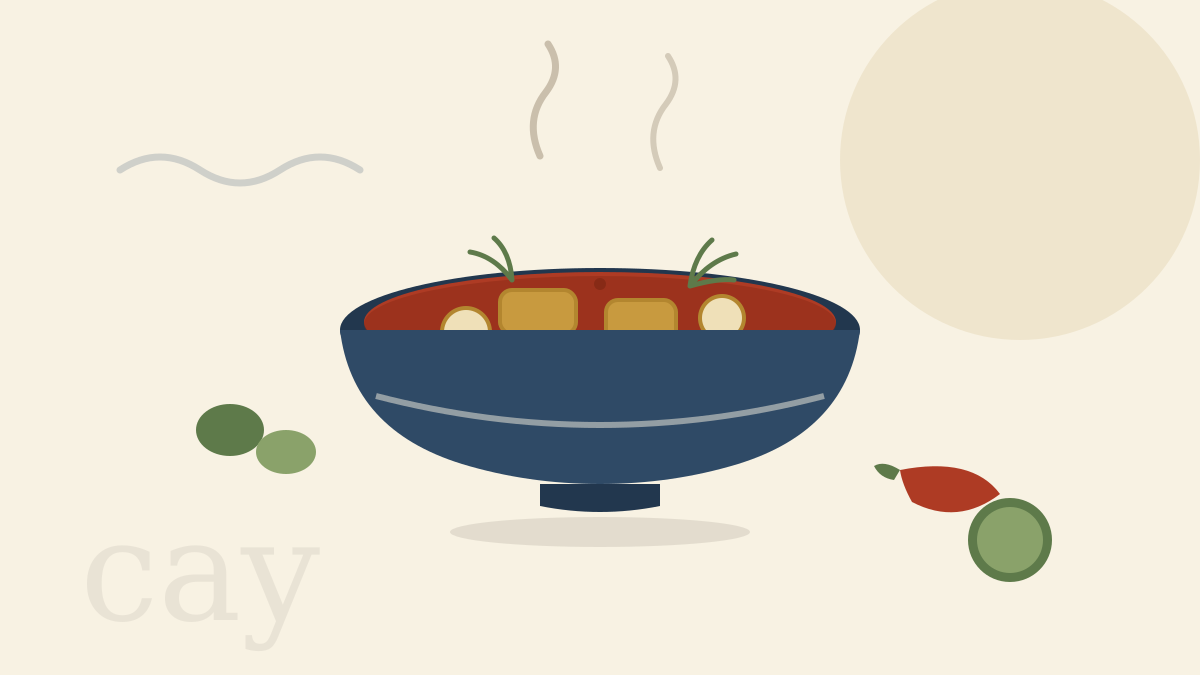
Hải Phòng's chili-forward fish noodle soup — golden fried fish and fish cake in a broth run red with chili oil, the port city's answer to polite phở.
By Vietnamese Cookbook Kitchen · March 4, 2026
Hải Phòng & the Northern CoastĐổi Mới era, 1986–2008
 Phở
Phở- Prep
- 30 min
- Cook
- 60 min
- Serves
- 4
- Level
- Intermediate
Hải Phòng has never cooked to impress anyone. The city grew up as the north's industrial port — dockworkers, shipyards, cement dust — and its kitchen is correspondingly blunt: bigger flavors, more chili, less ceremony than Hanoi, two hours up the road. Bún cá cay, the "spicy fish noodle soup," is the dish the city now hands visitors as its calling card. It came of age with the đổi mới street economy, when stalls could once again compete openly, and competition in Hải Phòng meant louder broth. Where Hanoi's fish noodles whisper dill and restraint, this bowl arrives glinting red and unapologetic.
The architecture is contrast: a clean, slow fish-and-pork broth underneath, crisp turmeric-fried fish and chewy fish cake on top, and a garlicky chili oil bridging them. Fry hard, simmer soft — the whole bowl depends on the fish and the broth arriving from opposite directions. Get that right and the dọc mùng, dill, and lime fall into place around it. Eat it fast, the way the port does, while the fried edges still argue with the spoon.
Fry the fish drier than looks right. It is headed into hot broth with one job — staying crisp-edged for the first three minutes of the bowl — and a timid fry turns to mush before the diner finds it.
Lời đầu bếp · A word from the kitchen
Ingredientsnguyên liệu
Serves 4
Broth
- 800 gfish heads and bones — about 1¾ lb — ask the fish counter, or save the frames from the fillets below; a mix of sea and river fish is the Hải Phòng way
- 400 gpork neck bones — about 14 oz; they give the broth a base the fish alone can't
- 2.5 Lwater — about 10 cups
- 3ripe tomatoes — quartered
- 2shallots — charred whole over a flame until the skins blister
- 30 gginger — a thumb, charred alongside the shallots
- 45 mlfish sauce — 3 tbsp, plus more to taste at the end
Fish
- 500 gfirm white fish fillets — about 1 lb — catfish, mackerel, or tilapia, cut into 4 cm chunks
- 1 tspground turmeric
- 15 mlfish sauce — 1 tbsp, for the marinade
- 200 gchả cá (fried fish cake) — 7 oz, sliced; the vacuum-packed rounds from a Vietnamese market are exactly what the stalls use
- As neededneutral oil for shallow frying
Chili oil and bowl
- 60 mlneutral oil — 4 tbsp
- 3 tbspcoarse chili flakes — Vietnamese ớt bột or Korean gochugaru both work
- 3garlic cloves — minced
- 400 gdried bún (rice vermicelli) — 14 oz, cooked per the packet and rinsed cool
- 150 gdọc mùng (taro stem) — about 5 oz, peeled, sliced, salted and squeezed; celery is the honest substitute abroad
- 1bunch dill and scallions — cut into 3 cm lengths
- 2limes — in wedges
Methodcách làm
Step 1: Set the broth going
Blanch the pork bones two minutes, rinse, and return them to the pot with the fish bones, charred shallots, ginger, and 2.5 liters of water. Simmer gently, uncovered, for 45 minutes, skimming — a hard boil turns fish-bone broth cloudy and sour-smelling, so keep it at a murmur.
Step 2: Make the chili oil
While the pot works, warm the oil with the garlic until it barely fizzes, kill the heat, and stir in the chili flakes. The residual heat blooms them without scorching; this red slick is the cay in the name, so make it while you have patience, not at assembly.
Step 3: Fry the fish
Toss the fish chunks with turmeric and fish sauce, rest ten minutes, then shallow-fry in 1 cm of oil until deeply golden and dry at the edges, about 4 minutes a side. Fry the fish cake slices in the same oil until blistered.
Step 4: Finish the broth
Strain the broth, return it to the pot with the tomatoes, and simmer ten minutes until they slump. Season with fish sauce until it tastes just past comfortable — broth destined for cold noodles has to be louder than broth eaten alone.
Step 5: Blanch and build
Dip the dọc mùng in the simmering broth for thirty seconds. Divide noodles among four bowls, top with fried fish, fish cake, and dọc mùng, and ladle the broth over.
Step 6: Paint it red
Spoon chili oil over each bowl until the surface glints, then finish with dill, scallions, and a lime wedge. The first spoonful should make you sit up; that is calibration, not a mistake.
Đồ nghề · The tools
Equipment
Tall stockpot (12 qt+)
Nồi hầmPhở is a marathon of bones and water, and a wide pot evaporates your broth away. Go tall and narrow — the depth keeps a lazy simmer lazy for six hours.
Shop on Amazon →Fine-mesh skimmer
Vợt vớt bọtClear phở broth is not a trick, it is patience with a skimmer — take the scum off early and often and the pot rewards you with glass.
Shop on Amazon →Fine sieve / muslin
Rây lọcFor straining broth crystal-clear, squeezing coconut milk, and working tamarind pulp through into pure sour. Line it with muslin when the recipe says “clear” and means it.
Shop on Amazon →
Equipment links are Amazon affiliate links. As an Amazon Associate we earn from qualifying purchases, at no cost to you. Disclosure.
Questions from the kitchen
Which fish should I actually buy?
The stalls mix whatever the port landed — often a river fish for the fry and a sea fish in the broth. Abroad, catfish or tilapia fillets fry beautifully, and mackerel gives the broth its marine depth. Avoid anything that flakes fine, like cod; it won't survive the bowl.
What is dọc mùng, and can I skip it?
The peeled stem of a giant taro — spongy, faintly crisp, there to carry broth into every bite. Vietnamese markets sell it fresh or frozen; celery cut on a hard bias is the accepted stand-in. Skipping it entirely leaves the bowl a texture short.
How spicy is authentic?
Spicier than any other northern noodle soup, but not punishing — the chili oil should warm the whole bowl, and the table jar is there for escalation. Start with a spoonful per bowl and let eaters argue upward.
Nấu tiếp · Cook next
Keep the burner on
 Phở
PhởPhở & Noodle Soups·255 min·Advanced
Phở Bò, the Hanoi WayPhở bò
Hanoi's morning bowl built the slow way — charred onion and ginger, toasted spices, and a beef broth kept at a shiver, never a boil, for three hours.
 Phở
PhởPhở & Noodle Soups·220 min·Intermediate
Hủ Tiếu Nam VangHủ tiếu Nam Vang
The Phnom Penh–style noodle soup of the Mekong world — clear pork-and-dried- seafood broth, chewy noodles, shrimp, quail eggs, and a slick of fried garlic oil.
 Phở
PhởPhở & Noodle Soups·225 min·Intermediate
Bún Bò HuếBún bò Huế
Huế's lemongrass-annatto noodle soup — beef shank, pork hock, and a fermented-shrimp depth handled honestly for kitchens far from the Perfume River.