Buôn Ma Thuột Bún Đỏ
Bún đỏ
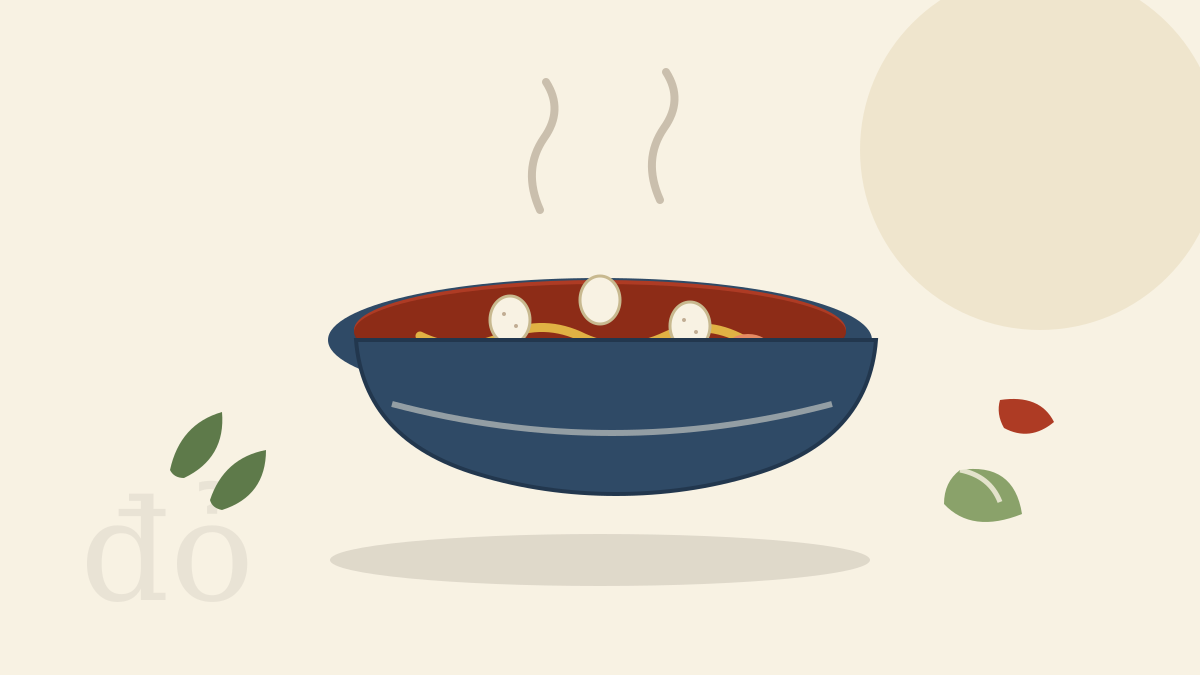
Buôn Ma Thuột's night-market bowl — thick rice noodles stained red with annatto in a pork-and-crab broth, crowned with quail eggs and crackling tóp mỡ.
By Vietnamese Cookbook Kitchen · March 8, 2026
The Central HighlandsĐổi Mới era, 1986–2008
 Phở
Phở- Prep
- 30 min
- Cook
- 90 min
- Serves
- 4
- Level
- Intermediate
Buôn Ma Thuột, capital of Đắk Lắk province and of Vietnamese coffee, works early and eats late. Bún đỏ is what late looks like: from mid-afternoon, sidewalk pots the color of a brick kiln start simmering near the night market, and by dark the low stools are full. The dish is young — it belongs to the boom decades after đổi mới, when the coffee economy turned a highland garrison town into a city of half a million — and no convincing inventor has ever been produced. What locals will tell you, correctly, is that it exists almost nowhere else; order bún đỏ in Sài Gòn and you will mostly get a shrug.
The name means simply "red noodles," and the red is the recipe. Annatto seeds bloomed in hot fat dye a pork-and-crab broth the color of a highland sunset, and the noodles — thick, round, and chewy, closer to bánh canh than to ordinary bún — go into the pot itself. The noodles finish cooking in the broth, drinking in the color and the crab as they soften. Quail eggs bob alongside clumps of riêu, and a spoonful of tóp mỡ lands on top like applause. It eats like bún riêu that moved to the mountains and got a tan.
The noodles take their color in the pot, not the package. Give them a full ten minutes in the annatto broth before serving — pale bún đỏ is a contradiction in terms.
Lời đầu bếp · A word from the kitchen
Ingredientsnguyên liệu
Serves 4
Broth
- 1 kgpork bones — about 2 lb — neck or leg bones; blanched first for a clear base
- 200 gground pork — 7 oz, for the riêu clumps
- 2 tbspcrab paste in soybean oil (gạch cua) — sold in small jars at Vietnamese markets; the soul of the broth
- 50 gdried shrimp — about 1/3 cup — soaked 15 minutes, then pounded
- 1egg
- As neededfish sauce, rock sugar, and salt to season
Annatto oil
- 3 tbspannatto seeds (hạt điều màu) — the red is non-negotiable; find them jarred near the dried chilies
- 60 mlneutral oil — 4 tbsp
The bowl
- 600 gthick round rice noodles — about 1 1/3 lb fresh — the bánh canh style, fat as udon; ordinary thin bún is the wrong dish
- 12quail eggs — boiled 4 minutes and peeled; a dozen sounds generous until you eat them
- 80 gtóp mỡ (crisp pork crackling) — about 3 oz — render diced pork fat until golden, or buy it bagged
- 200 gwater spinach and bean sprouts — 7 oz mixed, trimmed; scallions, lime, and sliced chili alongside
Methodcách làm
Step 1: Blanch and simmer the bones
Cover the bones with cold water, bring to a boil, drain, and rinse — the five minutes you spend here buys a clean broth. Return them to the pot with 2.5 liters of fresh water and hold at a bare simmer for 90 minutes, skimming when you pass by.
Step 2: Bloom the annatto oil
Warm the seeds in the oil over low heat until it turns the color of a monk's robe, 3 or 4 minutes, then strain out the seeds. Burnt annatto goes bitter and stays that way, so keep the heat gentle.
Step 3: Make the riêu
Mix the ground pork, pounded dried shrimp, crab paste, and egg into a loose paste. Spoon it in rough clumps onto the surface of the simmering broth and leave them alone — they set in about 5 minutes and float when they're ready.
Step 4: Season and dye the broth
Stir in the annatto oil and season with fish sauce, a small knuckle of rock sugar, and salt. You are aiming for a broth that looks hotter than it tastes — red-orange, savory, only faintly sweet.
Step 5: Stain the noodles
Add the noodles directly to the pot and simmer 8 to 10 minutes, until they are tender and have drunk the color through. This is the step that makes it bún đỏ rather than bún with red soup.
Step 6: Build the bowls
Lift noodles into bowls, ladle broth and riêu over, and top with quail eggs, tóp mỡ, and the greens. Lime and chili at the table; the first squeeze wakes the whole thing up.
Đồ nghề · The tools
Equipment
Tall stockpot (12 qt+)
Nồi hầmPhở is a marathon of bones and water, and a wide pot evaporates your broth away. Go tall and narrow — the depth keeps a lazy simmer lazy for six hours.
Shop on Amazon →Portable gas burner
Bếp ga miniLẩu is not lẩu if someone has to keep walking to the stove. The tabletop butane burner turns a pot of broth into a two-hour dinner party.
Shop on Amazon →Fine-mesh skimmer
Vợt vớt bọtClear phở broth is not a trick, it is patience with a skimmer — take the scum off early and often and the pot rewards you with glass.
Shop on Amazon →Mortar & pestle
Cối chàyLemongrass, garlic, and chilies pounded release oils a blender never finds — it bruises where blades slice. The sound of a Vietnamese kitchen starting dinner.
Shop on Amazon →Fine sieve / muslin
Rây lọcFor straining broth crystal-clear, squeezing coconut milk, and working tamarind pulp through into pure sour. Line it with muslin when the recipe says “clear” and means it.
Shop on Amazon →
Equipment links are Amazon affiliate links. As an Amazon Associate we earn from qualifying purchases, at no cost to you. Disclosure.
Questions from the kitchen
What are the right noodles?
A thick, round, chewy rice noodle — sold fresh as bánh canh or thick bún at Vietnamese markets. Dried Japanese udon looks the part but is wheat, and it turns the broth cloudy; a dried bánh canh works if you simmer it a few minutes longer.
Can I skip the crab paste?
You can, but name the cost — gạch cua carries the fermented depth that separates this from plain pork noodle soup. In a pinch, double the dried shrimp and add a teaspoon of fine shrimp paste (mắm ruốc), whisked into a ladle of broth first.
What is tóp mỡ and can I substitute?
Crisp cubes of rendered pork fat — the crunch that keeps every spoonful interesting. Render 150 g of diced pork fatback over low heat until golden, or use fried shallots instead; you lose the richness but keep the texture.
Nấu tiếp · Cook next
Keep the burner on
 Phở
PhởPhở & Noodle Soups·255 min·Advanced
Phở Bò, the Hanoi WayPhở bò
Hanoi's morning bowl built the slow way — charred onion and ginger, toasted spices, and a beef broth kept at a shiver, never a boil, for three hours.
 Phở
PhởPhở & Noodle Soups·220 min·Intermediate
Hủ Tiếu Nam VangHủ tiếu Nam Vang
The Phnom Penh–style noodle soup of the Mekong world — clear pork-and-dried- seafood broth, chewy noodles, shrimp, quail eggs, and a slick of fried garlic oil.
 Phở
PhởPhở & Noodle Soups·225 min·Intermediate
Bún Bò HuếBún bò Huế
Huế's lemongrass-annatto noodle soup — beef shank, pork hock, and a fermented-shrimp depth handled honestly for kitchens far from the Perfume River.