Bún Mắm
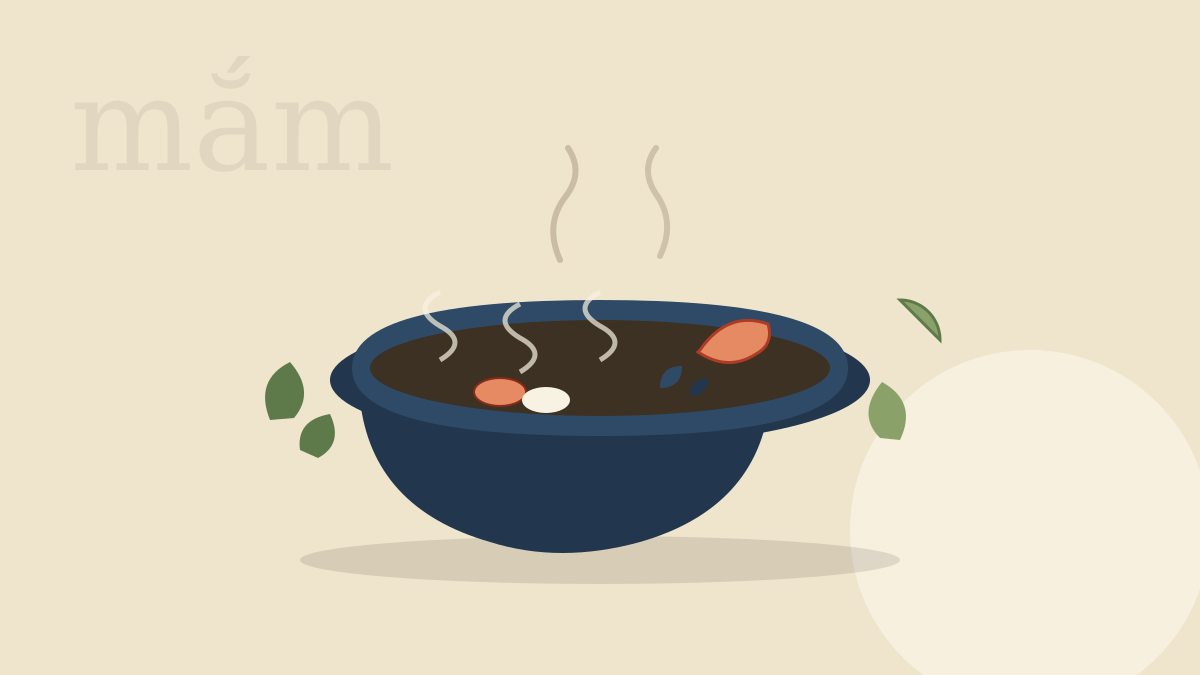
Bún mắm
The Mekong Delta's darkest, most fearless noodle bowl — a fermented-fish broth rooted in Khmer prahok, loaded with pork, shrimp, and eggplant.
By Vietnamese Cookbook Kitchen · March 28, 2026
The Mekong DeltaThe Lê Dynasty era, 1428–1789
 Phở
Phở- Prep
- 35 min
- Cook
- 60 min
- Serves
- 4
- Level
- Advanced
Bún mắm carries the Mekong Delta's oldest fermentation lineage in a bowl. Its backbone is prahok, the fermented fish paste at the center of Khmer cooking, and the delta's own descendants of it — mắm cá linh and mắm cá sặc, made from linh and sặc fish caught in the flooded canals — grew up alongside Cambodia's Khmer communities who have lived in this region for centuries before and after Vietnamese settlement arrived. Vietnamese, Khmer, and Hoa cooks in provinces like Trà Vinh, Sóc Trăng, and An Giang shared kitchens and markets long enough that bún mắm belongs to all of them, and no honest telling of the dish erases where the ferment came from.
The broth is the whole argument: mắm melted slowly into a pork-bone stock until its sharpest edges round off into something savory and deep, then balanced hard against sugar so the funk reads as flavor, not aggression. Hold one rule close — strain the broth thoroughly and season it last with salt, since the mắm already carries plenty. What lands in the bowl — tender pork belly, shrimp, squid, soft eggplant, a thicket of raw herbs — is built to answer that broth's intensity, spoonful by spoonful, until the bowl that scared you at first smell earns its place as a favorite.
Bún mắm smells stronger than it tastes — strain the broth well and taste it before you fear it. Every bowl balances that funk against sweetness and fresh herbs, and the funk is the least of the four.
Lời đầu bếp · A word from the kitchen
Ingredientsnguyên liệu
Serves 4
Broth
- 200 gmắm cá linh or mắm cá sặc — fermented fish paste, jarred — the delta's descendant of Khmer prahok; find it in the fermented-goods aisle of a Vietnamese or Cambodian grocery, or order it online (see the FAQ)
- 2 Lwater
- 500 gpork belly, in one piece
- 300 gpork bones — neck or rib bones, for body
- 3lemongrass stalks — bruised and cut into 8 cm lengths
- 1small yellow onion — halved, charred in a dry pan until blackened at the edges
- 30 gsugar — 2 tbsp — this broth needs real sweetness to answer the funk
- 1 tspfine salt — to taste, added last, since the mắm already carries salt
Additions
- 300 gmedium shrimp — peeled, deveined
- 200 gsquid — cleaned, scored, and cut into rings
- 1Asian eggplant — sliced into half-moons
- 100 gdried shrimp — soaked 15 minutes, blended or pounded to a coarse paste for extra depth
To serve
- 500 gfresh rice vermicelli (bún)
- 1 handfulwater lily stems (bông súng) or banana blossom — shredded — the classic crunch; bean sprouts and shredded cabbage are the honest stand-in
- 1 handfulmixed herbs — Thai basil, mint, rice-paddy herb, and perilla, plus a wedge of lime and sliced bird's-eye chili at the table
Methodcách làm
Step 1: Boil and skim the pork
Bring the water to a boil with the pork belly and bones, skim the scum that rises in the first five minutes, then drop the heat to a bare simmer. A clean skim now is the difference between a broth you're proud of and one that just smells strong.
Step 2: Melt the mắm into the pot
Add the mắm cá linh with its liquid, the charred onion, and the lemongrass, and simmer 45 minutes, uncovered, until the pork belly is tender and the fermented fish has broken down into the broth. Strain out any bones and fish debris through a fine sieve, keeping the pork belly aside to slice later.
Step 3: Season the broth
Stir in the sugar and the pounded dried shrimp paste, and simmer 10 minutes more. Taste — you're aiming for a broth that's savory and faintly sweet with the funk sitting underneath, not on top. Add salt only at the end, in small increments.
Step 4: Cook the eggplant and seafood
Slide in the eggplant and simmer until just tender, about 5 minutes, then add the shrimp and squid and cook until the shrimp turn pink and curl, 2 to 3 minutes. Overcooked squid turns to rubber fast — pull the pot the moment it's opaque.
Step 5: Slice the pork belly
While the seafood cooks, slice the reserved pork belly thin. It should be tender enough to cut cleanly but still hold its shape on the spoon.
Step 6: Assemble the bowls
Divide the bún among bowls, top with pork belly, shrimp, squid, and eggplant, and ladle the hot broth over everything. Pile the water lily stems and herbs on top or serve them alongside, with lime and chili for each diner to season their own bowl.
Đồ nghề · The tools
Equipment
Tall stockpot (12 qt+)
Nồi hầmPhở is a marathon of bones and water, and a wide pot evaporates your broth away. Go tall and narrow — the depth keeps a lazy simmer lazy for six hours.
Shop on Amazon →Portable gas burner
Bếp ga miniLẩu is not lẩu if someone has to keep walking to the stove. The tabletop butane burner turns a pot of broth into a two-hour dinner party.
Shop on Amazon →Fine-mesh skimmer
Vợt vớt bọtClear phở broth is not a trick, it is patience with a skimmer — take the scum off early and often and the pot rewards you with glass.
Shop on Amazon →Mortar & pestle
Cối chàyLemongrass, garlic, and chilies pounded release oils a blender never finds — it bruises where blades slice. The sound of a Vietnamese kitchen starting dinner.
Shop on Amazon →Fine sieve / muslin
Rây lọcFor straining broth crystal-clear, squeezing coconut milk, and working tamarind pulp through into pure sour. Line it with muslin when the recipe says “clear” and means it.
Shop on Amazon →
Equipment links are Amazon affiliate links. As an Amazon Associate we earn from qualifying purchases, at no cost to you. Disclosure.
Questions from the kitchen
Where does bún mắm's fermented fish come from?
The broth's backbone traces to prahok, the fermented fish paste central to Khmer cooking in Cambodia and the Khmer communities of the Mekong Delta. The delta's Vietnamese, Khmer, and Hoa cooks developed mắm cá linh and mắm cá sặc — fermented linh fish and sặc fish — as regional variants, and bún mắm grew from that shared fermentation tradition. It is not a Vietnamese invention wearing a Khmer ingredient; it is a dish this delta built together.
I can't find mắm cá linh where I live. What do I do?
Vietnamese, Cambodian, and Thai groceries increasingly stock it jarred, sometimes labeled prahok or as a "Vietnamese fermented fish sauce/paste" — check the shelf near fish sauce and shrimp paste, and several importers now ship it online. There is no honest substitute; this is the one dish on this site where skipping the signature ingredient means making a different soup. Buy a jar and keep it — it lasts a long time in the fridge.
Is fermented fish paste safe to cook with at home?
Yes, when it's commercially jarred and properly fermented — a shelf-stable product made the same way for generations, and the lengthy simmer here cooks it through. Once opened, refrigerate it and use a clean spoon each time, the same care you'd take with any fermented condiment.
Nấu tiếp · Cook next
Keep the burner on
 Phở
PhởPhở & Noodle Soups·255 min·Advanced
Phở Bò, the Hanoi WayPhở bò
Hanoi's morning bowl built the slow way — charred onion and ginger, toasted spices, and a beef broth kept at a shiver, never a boil, for three hours.
 Phở
PhởPhở & Noodle Soups·220 min·Intermediate
Hủ Tiếu Nam VangHủ tiếu Nam Vang
The Phnom Penh–style noodle soup of the Mekong world — clear pork-and-dried- seafood broth, chewy noodles, shrimp, quail eggs, and a slick of fried garlic oil.
 Phở
PhởPhở & Noodle Soups·225 min·Intermediate
Bún Bò HuếBún bò Huế
Huế's lemongrass-annatto noodle soup — beef shank, pork hock, and a fermented-shrimp depth handled honestly for kitchens far from the Perfume River.