Chả Cá Lã Vọng
Chả cá Lã Vọng
Hanoi's most famous single-dish meal — turmeric and galangal fish seared in oil, then finished at the table under a collapsing heap of dill and scallions.
By Vietnamese Cookbook Kitchen · June 12, 2026
Hà Nội & the Red River DeltaFrench Indochina era, 1883–1945
 Nướng
Nướng- Prep
- 30 min
- Cook
- 15 min
- Serves
- 4
- Level
- Intermediate
On a short street in Hanoi's Old Quarter, the Đoàn family started serving turmeric fish with dill in their front room in the 1870s, and the dish grew famous enough through the colonial decades that the street itself was renamed Chả Cá after it. It may be the only recipe in this book with a street to its name — a fair measure of what one family kitchen, cooking one thing well for a century and a half, can do.
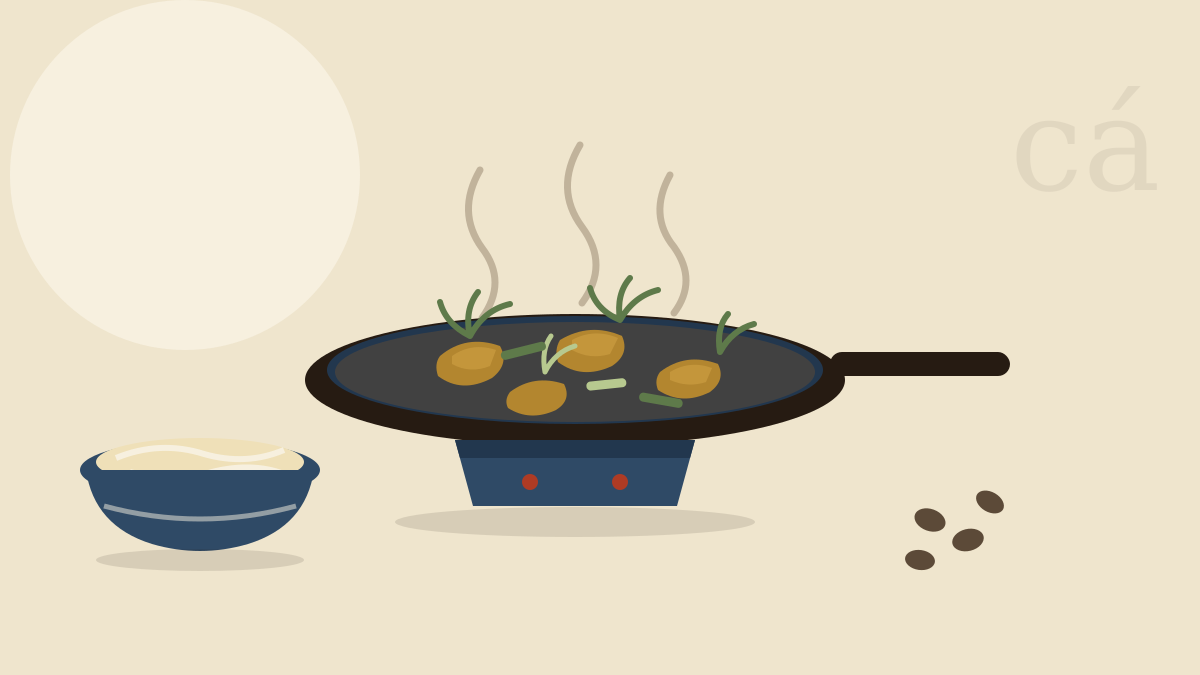
Everything unusual about the recipe follows from one design decision: the cooking finishes at the table, in front of the people eating. The kitchen only half-cooks; the pan arrives still violent, the greens go in with everyone watching, and each bite is assembled seconds after it stops sizzling. Respect that and the dish works in any kitchen on earth. Finish it quietly at the stove and plate it, and you've made a decent fish stir-fry instead.
The other lesson is proportion. A Western eye reads 150 grams of dill as a typo; here it is the vegetable course, the bed, and half the perfume of the dish. Dill and turmeric is an odd couple almost nowhere else in Asia — one of those combinations, like coffee and condensed milk, that Hanoi tried once and then simply never let go of.
The dill here is a vegetable, not a garnish — if the amount you're adding doesn't feel reckless, you haven't added enough.
Lời đầu bếp · A word from the kitchen
Ingredientsnguyên liệu
Serves 4
The fish and marinade
- 700 gfirm white fish fillets — about 1½ lb — catfish is traditional abroad, monkfish is luxurious; cod works if you turn it gently
- 3 tbspplain whole-milk yogurt — the home stand-in for mẻ, fermented rice — it brings the same lactic sourness and tenderizing
- 2 tbspfresh turmeric, grated — or 1 tbsp ground — fresh stains deeper and tastes greener
- 2 tbspgalangal, grated — the flavor that makes this dish itself; ginger is a last resort, not a substitute
- 2shallots — grated to a pulp
- 1 tbspfish sauce (nước mắm)
- 1 tspmắm tôm (fermented shrimp paste) — optional here, load-bearing in the sauce below
- 1 tbspsugar
- 2 tbspneutral oil
The pan
- 150 gdill — two fat bunches, about 5 oz, cut into 6 cm lengths, tender stems and all
- 6scallions — cut into 5 cm lengths, whites split
- 60 mlneutral oil — 4 tbsp — enough that the greens fry a little rather than steam
The table
- 400 gfresh bún (rice vermicelli) — about 14 oz cooked — or 200 g dried, boiled and rinsed cold
- 60 groasted peanuts — about ½ cup, roughly crushed
- 2 tbspmắm tôm, for the sauce — whisked with 1 tbsp sugar, juice of 1 lime, and a spoon of the hot frying oil until it foams and lightens
- to servenước chấm, sliced chili, extra herbs — nước chấm is the merciful option for anyone the shrimp paste alarms
Methodcách làm
Step 1: Marinate the fish
Cut the fish into generous 4 cm chunks — small pieces fall apart under the tabletop treatment. Massage in the yogurt, turmeric, galangal, shallot, fish sauce, mắm tôm if using, sugar, and oil. One hour minimum; overnight is better and stains the fish the deep monk's-robe yellow the dish is known for.
Step 2: Whisk the mắm tôm sauce
Beat the shrimp paste with the sugar and lime juice until it lightens in color and foams — the whisking civilizes it, mellowing raw funk into something rounder. Finish with a spoonful of hot oil from the pan when the fish is frying. Put nước chấm on the table too; conversion is voluntary.
Step 3: Sear the fish
Heat the oil in a wide pan — cast iron if it will visit the table — over high heat until it shimmers. Lay the fish in without crowding and leave it alone until the underside releases on its own and shows a proper turmeric-gold crust, about 3 minutes, then turn once. The fish should be nearly done; it finishes in the next act.
Step 4: Take the pan to the table
Set a portable burner at the table and move the pan onto it over medium heat, oil still audibly sizzling. This is not showmanship for its own sake — the dish was designed to be finished in front of the eaters, and greens wilted at the last second taste different from greens that waited in the kitchen.
Step 5: Collapse the dill
Add the dill and scallions in fistfuls on top of the fish and turn everything together for about 60 seconds, until the greens are glossy and half-wilted but still recognizably themselves. Check the thickest piece of fish — it should flake opaque, 63°C / 145°F. Kill the heat while the dill still has spring.
Step 6: Build each bowl
Everyone assembles their own — a nest of cold bún, fish and greens straight from the pan, a scatter of peanuts, and a spoon of mắm tôm sauce or nước chấm. Eat immediately, while the contrast the dish is built on — hot oil against cold noodles — still exists.
Đồ nghề · The tools
Equipment
Portable gas burner
Bếp ga miniLẩu is not lẩu if someone has to keep walking to the stove. The tabletop butane burner turns a pot of broth into a two-hour dinner party.
Shop on Amazon →Charcoal grill / grill pan
Vỉ nướngNướng means fire, and lemongrass pork wants char and smoke. A small charcoal grill is the true answer; a screaming-hot cast-iron grill pan under a cracked window is the honest apartment one.
Shop on Amazon →Bamboo steamer
Xửng hấpFor bánh bao, xôi, and fish steamed whole — bamboo breathes, so nothing drips condensation back onto your work. Line it with a cabbage leaf, not parchment, and steal the leaf after.
Shop on Amazon →Mortar & pestle
Cối chàyLemongrass, garlic, and chilies pounded release oils a blender never finds — it bruises where blades slice. The sound of a Vietnamese kitchen starting dinner.
Shop on Amazon →
Equipment links are Amazon affiliate links. As an Amazon Associate we earn from qualifying purchases, at no cost to you. Disclosure.
Questions from the kitchen
What is mắm tôm, and can I really skip it?
Fermented shrimp paste — purple-grey, loud, and the traditional soul of this dish. Whisked with lime and sugar it mellows dramatically, but yes, you can serve nước chấm instead and plenty of tables in Hanoi do. Try one brave spoonful of the real thing first.
Which fish should I buy outside Vietnam?
The Hanoi original uses a river catfish, so farmed catfish or basa fillets are the closest and cheapest. Monkfish is the upgrade — it holds together beautifully in the pan. Avoid thin flaky fillets like sole or tilapia; they disintegrate under the second cooking.
I don't have a tabletop burner — does that ruin it?
No. Do the whole finish in the kitchen over your highest heat and carry the pan straight to a trivet on the table — cast iron keeps it sizzling for a minute or two, which is all the theater requires. What matters is that the dill wilts seconds before eating, not where.
Nấu tiếp · Cook next
Keep the burner on
 Nướng
NướngGrills & Lemongrass·80 min·Intermediate
Mắc Khén Grilled ChickenGà nướng mắc khén
Spatchcocked chicken under a crust of wild mắc khén pepper, grilled or roasted hot, with chẳm chéo — the herbal dipping salt of the northwest.
 Nướng
NướngGrills & Lemongrass·55 min·Intermediate
Lemongrass Pork SkewersNem lụi
Huế's nem lụi — springy pork paste grilled on lemongrass stalks, wrapped in rice paper and herbs, and dragged through a peanut sauce with a secret.
 Nướng
NướngGrills & Lemongrass·100 min·Intermediate
Lemongrass Roast ChickenGà nướng sả
Highlands grilled chicken in the Bản Đôn style — a lemongrass-turmeric paste worked under the skin, roasted to burnished gold, with lime-chili salt.