Lemongrass Pork Skewers
Nem lụi
Huế's nem lụi — springy pork paste grilled on lemongrass stalks, wrapped in rice paper and herbs, and dragged through a peanut sauce with a secret.
By Vietnamese Cookbook Kitchen · June 13, 2026
Huế & the Imperial CourtNguyễn & the Huế Court era, 1802–1883
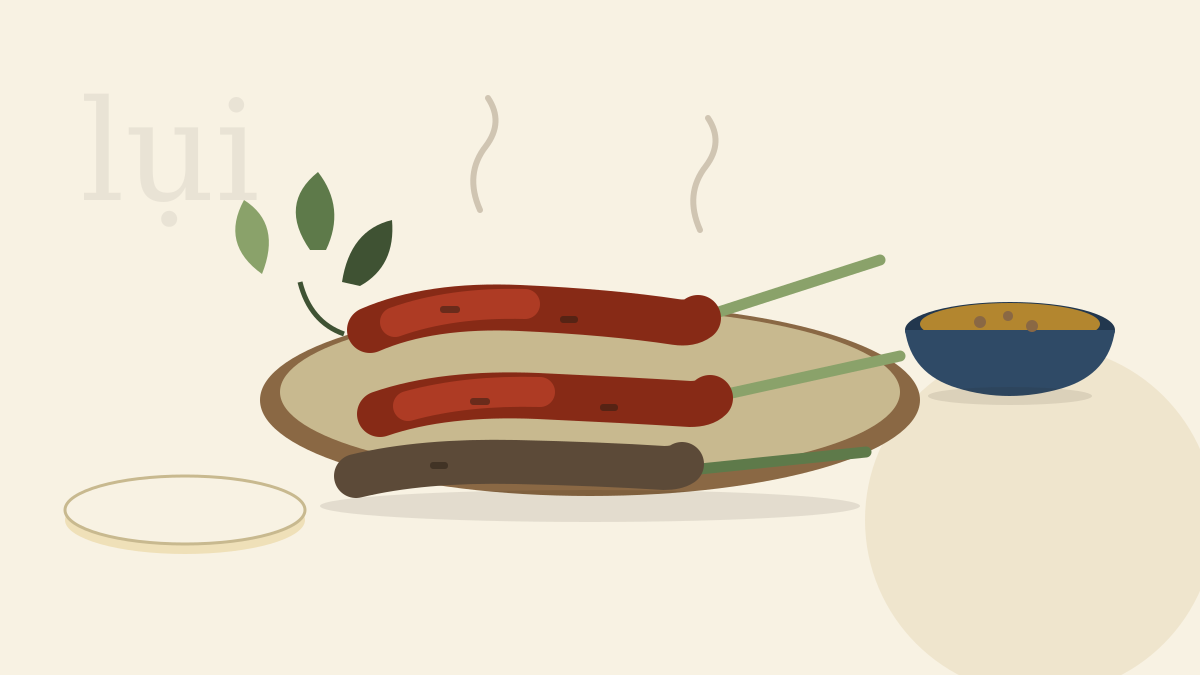 Nướng
Nướng- Prep
- 40 min
- Cook
- 15 min
- Serves
- 4
- Level
- Intermediate
Huế people will tell you their food is đậm đà — intense, concentrated — and credit the Nguyễn court, which ruled from the city from 1802 to 1945 and demanded dozens of small, perfect dishes per meal. Nem lụi is the street's answer to that standard: a commoner's skewer held to courtly specifications. The name is plain description — nem is seasoned pork, lụi is to skewer — and the genius is the skewer itself. A lemongrass stalk costs nothing, perfumes the meat from the inside as it grills, and hands you a built-in handle. Along the grill smoke of Huế's evening streets, it remains the dish visitors remember first.
Everything depends on the paste's texture — nem lụi should bounce gently against the tooth, not crumble like a meatball. The spring comes from beating: slap the cold paste against the bowl until it turns tacky and pale, and it will grip both the stalk and its shape. Then the table does the rest — rice paper, cool herbs, sour fruit, warm peanut sauce, and the small violence of sliding hot pork off a charred stalk. Dinner as participation sport; Huế wouldn't have it otherwise.
The stalk is skewer, handle, and aromatic at once — as the pork grills, the lemongrass steams it with perfume from the inside. Bruise the base of each stalk before molding so it has something to give.
Lời đầu bếp · A word from the kitchen
Ingredientsnguyên liệu
Serves 4
Pork paste
- 500 gground pork — about 1 lb, 20 to 25 percent fat — lean pork makes sad, pebbly skewers
- 100 gpork fatback, minced fine — 3½ oz; skip if your ground pork is properly fatty, but don't skip both
- 12fat lemongrass stalks — trimmed to 20 cm, outer leaf removed; plus 1 extra stalk, tender core minced, for the paste
- 3garlic cloves, minced
- 2shallots, minced
- 1.5 tbspfish sauce (nước mắm)
- 1 tbspsugar
- 0.5 tspground white pepper
Peanut dipping sauce (tương chấm)
- 3 tbsphoisin sauce — standing in for fermented soybean tương — see the FAQ for the full-tradition version
- 3 tbspsmooth peanut butter — unsweetened if you can
- 180 mlchicken stock or water — ¾ cup, to loosen
- 1 tspminced garlic
- 2 tbsproasted peanuts, crushed — plus more for the top
- 1bird's-eye chili, sliced — optional, for serving
To wrap
- 20rice paper sheets (bánh tráng) — the 16 cm size is easiest to roll one-handed
- As neededlettuce, mint, perilla, sliced cucumber, green banana or star fruit — the sour-crisp fruit is classic Huế; tart green apple is a clever stand-in abroad
Methodcách làm
Step 1: Beat the paste to a bounce
Mix pork, fatback, minced lemongrass core, garlic, shallot, fish sauce, sugar, and pepper, then beat it against the bowl with a wet hand — lift and slap, two full minutes, until tacky and pale. That slapping develops the spring nem lụi is judged on. Chill 30 minutes; cold paste holds the stalk.
Step 2: Mold onto the stalks
With oiled hands, press a golf-ball of paste around the top third of each lemongrass stalk, squeezing it into an even torpedo about 2 cm thick. Thin ends burn and fat middles stay raw — even is everything here.
Step 3: Make the peanut sauce
Sizzle the garlic in a teaspoon of oil, add hoisin, peanut butter, and stock, and simmer, whisking, until it coats a spoon — about 3 minutes. Stir in the crushed peanuts. It should pour lazily; loosen with stock if it stands up.
Step 4: Grill over live heat
Grill over medium charcoal or a grill pan, turning by the stalk every 2 minutes, until browned in patches and cooked through — 8 to 10 minutes, 71°C / 160°F at the center if you're checking. The lemongrass handle chars a little; that's flavor, not failure.
Step 5: Wrap at the table
Set out skewers, rice paper, herbs, and sauce, and let everyone build: dampened rice paper, lettuce, herbs, a swipe of the skewer to slide the pork off its stalk, roll, dip. The cook who pre-rolls for guests means well and robs them of the best part.
Đồ nghề · The tools
Equipment
Portable gas burner
Bếp ga miniLẩu is not lẩu if someone has to keep walking to the stove. The tabletop butane burner turns a pot of broth into a two-hour dinner party.
Shop on Amazon →Charcoal grill / grill pan
Vỉ nướngNướng means fire, and lemongrass pork wants char and smoke. A small charcoal grill is the true answer; a screaming-hot cast-iron grill pan under a cracked window is the honest apartment one.
Shop on Amazon →Mortar & pestle
Cối chàyLemongrass, garlic, and chilies pounded release oils a blender never finds — it bruises where blades slice. The sound of a Vietnamese kitchen starting dinner.
Shop on Amazon →
Equipment links are Amazon affiliate links. As an Amazon Associate we earn from qualifying purchases, at no cost to you. Disclosure.
Questions from the kitchen
What's the traditional sauce, really?
In Huế the sauce — often called nước lèo — is built on pork liver simmered and pounded with fermented soybean paste, peanuts, and sesame, thickened with sticky rice. It's deeper and less sweet than the hoisin-peanut version here. If you're game, blend 100 g of poached pork liver into the finished sauce; that's the flavor Huế means.
My lemongrass stalks are too skinny to hold paste.
Supermarket lemongrass often is. Double the stalks up two at a time, or use flat bamboo skewers and add an extra tablespoon of minced lemongrass to the paste so the perfume still shows up. Round skewers spin; flat ones don't.
Can I cook these without a grill?
A broiler works — 8 to 10 minutes close to the element, turning once — and so does a hot cast-iron pan with a film of oil. You lose the charcoal breath, which matters here, so take the pan version further into deep brown than looks polite.
Nấu tiếp · Cook next
Keep the burner on
 Nướng
NướngGrills & Lemongrass·80 min·Intermediate
Mắc Khén Grilled ChickenGà nướng mắc khén
Spatchcocked chicken under a crust of wild mắc khén pepper, grilled or roasted hot, with chẳm chéo — the herbal dipping salt of the northwest.
 Nướng
NướngGrills & Lemongrass·45 min·Intermediate
Chả Cá Lã VọngChả cá Lã Vọng
Hanoi's most famous single-dish meal — turmeric and galangal fish seared in oil, then finished at the table under a collapsing heap of dill and scallions.
 Nướng
NướngGrills & Lemongrass·100 min·Intermediate
Lemongrass Roast ChickenGà nướng sả
Highlands grilled chicken in the Bản Đôn style — a lemongrass-turmeric paste worked under the skin, roasted to burnished gold, with lime-chili salt.