Chè Lam (Ginger-Peanut Sticky Bars)
Chè lam
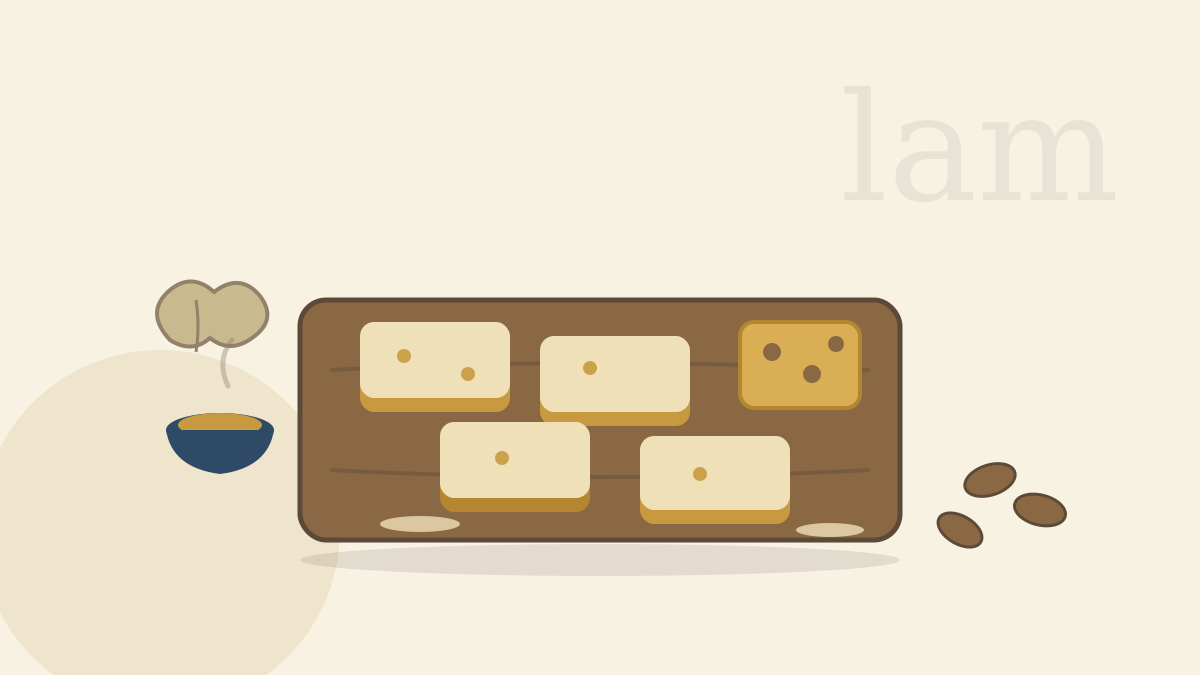
A northern Tết confection of toasted sticky-rice flour, malt syrup, ginger, and peanuts — chewy amber bars dusted in the same roasted flour that binds them.
By Vietnamese Cookbook Kitchen · May 23, 2026
The Northern HighlandsThe Lê Dynasty era, 1428–1789
 Chè
Chè- Prep
- 25 min
- Cook
- 25 min
- Serves
- 8
- Level
- Intermediate
Chè lam is what the north eats with tea when the weather turns toward Tết — a confection of toasted glutinous rice flour bound in ginger-malt syrup, studded with peanuts, cut into stubby, flour-dusted bars. The story goes that it began as a pilgrim's provision, made to be offered at pagodas and carried home from festivals; villages like Thạch Xá outside Hà Nội built their name on it, and the mountain provinces of the northeast make their own from upland sticky rice, sold in every Cao Bằng market come the cold months. Lowland or highland, it is winter food by conviction — ginger heat, tea steam, a tin kept by the door for guests.
The technique worth learning is the toasted flour, bột nếp rang, which does three jobs from one pan: cooked into the syrup it binds and flavors, dusted over the slab it prevents a permanent handshake between the bars, and its popcorn nuttiness is the taste people remember. The syrup's stopping point decides everything — a slow ribbon off the spoon gives that long, gingery chew; a minute more gives you something to threaten dental work with. Cut a corner while it is barely set, eat it standing over the tray, and consider that pilgrims invented road-trip candy centuries before the road trip.
Pull the syrup early rather than late. It thickens further the moment the flour goes in, and the difference between a tender chew and a jaw workout is about one minute on the stove.
Lời đầu bếp · A word from the kitchen
Ingredientsnguyên liệu
Serves 8
- 250 gglutinous rice flour — about 2 cups; you will toast all of it — roughly 200 g goes into the candy and the rest becomes the dusting flour
- 150 gmạch nha (malt syrup) — about 7 tbsp; sold in tubs at Vietnamese grocers, or use brown rice syrup. See the FAQ before reaching for honey
- 150 gsugar — ¾ cup; palm sugar deepens the caramel note
- 100 mlwater — about 7 tbsp
- 40 gfresh ginger — a fat thumb — half minced fine, half in whisper-thin matchsticks
- 120 groasted unsalted peanuts — about 1 cup, rubbed of their skins and roughly cracked
- 1pinch of fine salt
Methodcách làm
Step 1: Toast the flour
Toast the glutinous rice flour in a dry wok or wide pan over medium-low heat, stirring constantly, 8–10 minutes until it smells like popcorn and turns the color of pale straw. This is bột nếp rang, and it is the soul of the candy — undertoasted flour tastes raw and pasty, and no amount of syrup will hide it.
Step 2: Make the ginger syrup
Simmer the sugar, malt syrup, water, salt, and all the ginger in a heavy pot over medium heat for 8–10 minutes, until it thickens enough that a drizzle from the spoon falls in a slow ribbon and a drop in cold water forms a soft, squeezable ball — around 112–115°C / 234–239°F if you own a thermometer.
Step 3: Beat in the flour and peanuts
Off the heat, stir in the peanuts, then add about 200 g of the toasted flour in three or four additions, beating hard with a sturdy spatula between each. The mass will fight back and pull away from the pot in one glossy, taffy-like lump — that is your sign to stop adding flour.
Step 4: Press and dust
Dust a small tray or baking dish generously with the reserved toasted flour, press the hot mass into an even slab two fingers thick, and dust the top. Flatten with a flour-dusted rolling pin or the bottom of a bowl while it is still warm and willing.
Step 5: Rest, cut, and dust again
Rest the slab at cool room temperature for at least 4 hours, ideally overnight, then cut into stubby bars with a knife wiped between strokes and roll every cut face in the toasted flour. The flour coat is not garnish — it is what lets the bars share a tin without becoming one bar.
Đồ nghề · The tools
Equipment
Heavy pot / Dutch oven
Nồi dàyDeep, heat-retentive, and stable — for deep-frying without temperature crashes, and for bò kho and cà ri when the claypot is too small for the crowd.
Shop on Amazon →Mandoline
Bàn bàoĐồ chua lives or dies on evenness — carrot and daikon cut to the same whisper-thin matchstick pickle at the same speed. Use the guard; every Vietnamese grandmother has the scar that says otherwise.
Shop on Amazon →
Equipment links are Amazon affiliate links. As an Amazon Associate we earn from qualifying purchases, at no cost to you. Disclosure.
Questions from the kitchen
Can I substitute honey or golden syrup for mạch nha?
Golden syrup or brown rice syrup, yes — they share malt syrup's gentle sweetness and anti-crystallizing stretch. Honey works at a push but makes a softer, stickier bar and shoulders in with its own flavor. Plain sugar alone, no — the candy will grain and snap instead of chew.
Why did my chè lam turn out rock-hard?
The syrup went too far. Past the soft-ball stage every extra degree subtracts chew, and the flour stiffens things further. Pull the pot when the ribbon is slow but still fluid. Hard bars are not lost, though — cut them small and let them soften alongside a pot of hot shan tuyết tea, which is how they are served anyway.
How long do the bars keep?
Two to three weeks in an airtight tin at room temperature, dusted well with the toasted flour and separated in layers. Do not refrigerate — the cold stales the glutinous starch and the chew goes chalky. If they stiffen with age, ten seconds' warmth in your hand brings them most of the way back.
Nấu tiếp · Cook next
Keep the burner on
 Chè
ChèChè & Sweets·15 min·Beginner
Đà Lạt Avocado CreamKem bơ
Đà Lạt's night-market original — chilled avocado blended dense as mousse under a scoop of coconut ice cream and toasted coconut. The highlands' proudest sweet.
 Chè
ChèChè & Sweets·55 min·Beginner
Lotus Seed ChèChè hạt sen
Lotus seeds simmered tender in rock-sugar syrup — a spare, temple-lineage Vietnamese sweet, served warm or iced, with an optional longan refinement from Huế.
 Chè
ChèChè & Sweets·60 min·Beginner
Sesame Rice Balls in Ginger SyrupSủi dìn
Warm glutinous rice balls with molten black sesame hearts in a ginger-hot syrup — the Hoa community's winter sweet from Hải Phòng's old Chinese quarter.