Dừa Dầm (Coconut Sundae)
Dừa dầm
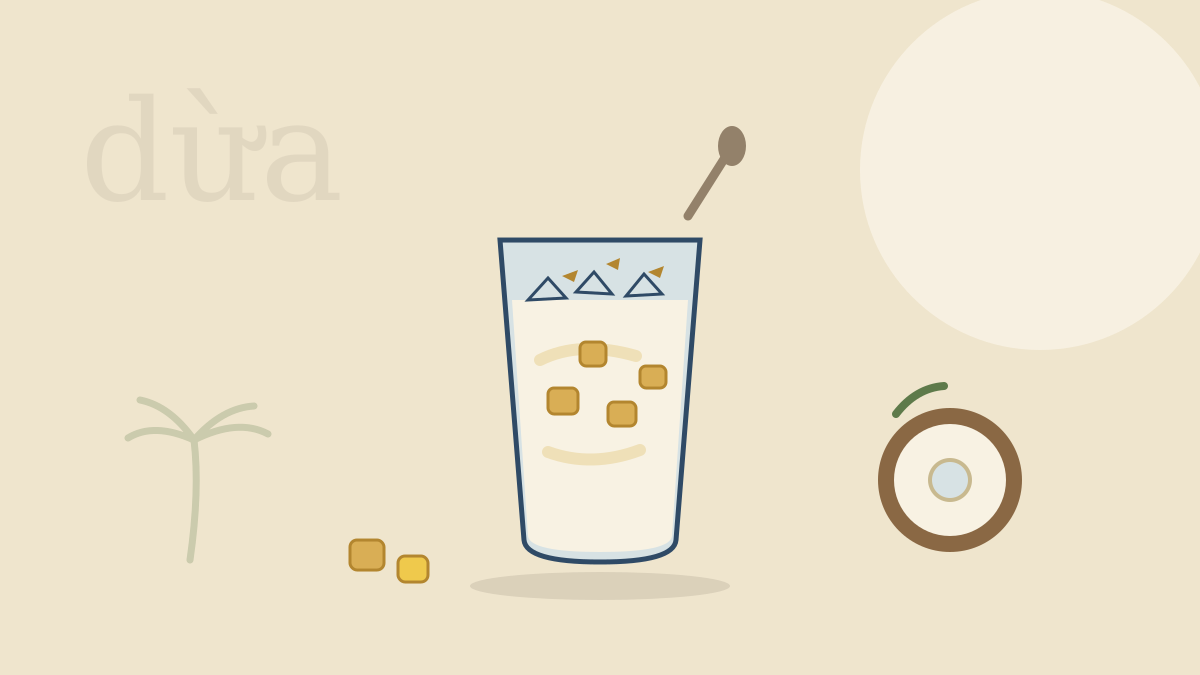
Hải Phòng's coconut sundae — young coconut ribbons, coconut jelly, and iced coconut cream layered in one glass; the original the copies all name-check.
By Vietnamese Cookbook Kitchen · May 15, 2026
Hải Phòng & the Northern CoastĐổi Mới era, 1986–2008
 Chè
Chè- Prep
- 30 min
- Cook
- 10 min
- Serves
- 4
- Level
- Beginner
Most Vietnamese desserts are ensembles — beans, jellies, fruit, ice, sharing a glass. Dừa dầm is a monologue. Young coconut appears four ways at once: flesh in ribbons, water set into jelly, milk cooked to cream, and toasted flakes on top, all packed over crushed ice. The dessert belongs to Hải Phòng and says so on every sign — stalls across Vietnam sell it as "dừa dầm Hải Phòng," the city name traveling with the recipe the way Buffalo travels with its wings. It is a đổi mới success story: born in the port city's dessert- stall economy and copied nationwide within a generation, with the original shops still drawing queues on hot evenings.
The engineering is simple but strict. Four textures of one ingredient only work if each stays distinct, so the jelly is cut small, the ribbons left wide, the flakes toasted dry — and the cream, the element that touches everything, is chilled thoroughly and salted just to the edge of detection. Warm cream melts the architecture; unsalted cream flattens it. Build it in front of whoever is eating it, hand over the long spoon, and accept that the glass will come back scraped.
Salt the coconut cream until you can just barely name the salt, then stop. That whisper is what keeps a glass of four coconut textures from collapsing into one sweet blur.
Lời đầu bếp · A word from the kitchen
Ingredientsnguyên liệu
Serves 4
Coconut jelly
- 500 mlcoconut water — about 2 cups — from the carton is fine, unsweetened
- 5 gagar powder — about 2½ tsp; agar sets firm at room temperature, no gelatin needed
- 40 gsugar — 3 tbsp
Coconut cream
- 400 mlcoconut milk — one standard can, full-fat
- 60 gsugar — 5 tbsp
- 40 mlsweetened condensed milk — about 3 tbsp
- 1small pinch salt
- 1 tsptapioca starch — slaked in a spoonful of water — for body, not thickness
Assembly
- 300 gyoung coconut flesh — about 10 oz, cut into wide ribbons — frozen "young coconut meat" from the Asian market is exactly right; two fresh young coconuts if you enjoy machete work
- As neededcrushed ice — a lot — the glass should be half ice
- 3 tbsptoasted coconut flakes — toasted in a dry pan to pale gold
Methodcách làm
Step 1: Set the jelly
Whisk the agar into the cold coconut water, bring to a boil stirring, add the sugar, and simmer two minutes until fully dissolved. Pour into a shallow pan and let it set — 30 minutes at room temperature — then cut into small cubes. Agar must boil to activate; warm-not-boiled jelly never sets, and that is the only way this step fails.
Step 2: Make the cream
Warm the coconut milk with the sugar, condensed milk, and salt, stir in the slaked tapioca, and simmer thirty seconds until it coats a spoon like thin cream. Chill it completely — the cream must go over the ice cold, or the glass turns to soup on contact.
Step 3: Ready the coconut
If using frozen young coconut, thaw and drain it well, keeping the ribbons wide and generous. This is the flesh the dessert is named for — dầm means roughly "steeped," the coconut drowned in its own cream.
Step 4: Build the glasses
In four tall glasses or bowls, layer coconut ribbons, jelly cubes, and crushed ice, then flood with the cold coconut cream until it settles into every gap.
Step 5: Top and serve immediately
Finish with toasted coconut flakes and a long spoon. The point of dừa dầm is the first five minutes, while the ice is loud and the cream is thick — assemble to order, never ahead.
Questions from the kitchen
Can I use canned or mature coconut instead of young coconut?
Not for the ribbons. Mature coconut is hard and oily where young coconut is soft, slippery, almost translucent — the texture is the dessert. Frozen young coconut meat, sold in flat packets in any Vietnamese or Thai market, is the honest answer abroad and costs a few dollars.
What can I make ahead?
Everything except the glass. The jelly keeps three days covered in the fridge, the cream two or three, and the coconut ribbons hold a day in their own water. Assembly is sixty seconds; do it while the spoons are being handed out.
Is this the same as chè?
Cousin, not sibling. Chè is a whole family of sweet soups and layered desserts; dừa dầm is Hải Phòng's specific, coconut-only argument — no beans, no taro, nothing that isn't coconut in a different state. The single-mindedness is the charm.
Nấu tiếp · Cook next
Keep the burner on
 Chè
ChèChè & Sweets·15 min·Beginner
Đà Lạt Avocado CreamKem bơ
Đà Lạt's night-market original — chilled avocado blended dense as mousse under a scoop of coconut ice cream and toasted coconut. The highlands' proudest sweet.
 Chè
ChèChè & Sweets·55 min·Beginner
Lotus Seed ChèChè hạt sen
Lotus seeds simmered tender in rock-sugar syrup — a spare, temple-lineage Vietnamese sweet, served warm or iced, with an optional longan refinement from Huế.
 Chè
ChèChè & Sweets·60 min·Beginner
Sesame Rice Balls in Ginger SyrupSủi dìn
Warm glutinous rice balls with molten black sesame hearts in a ginger-hot syrup — the Hoa community's winter sweet from Hải Phòng's old Chinese quarter.