Mì Quảng
Mì Quảng
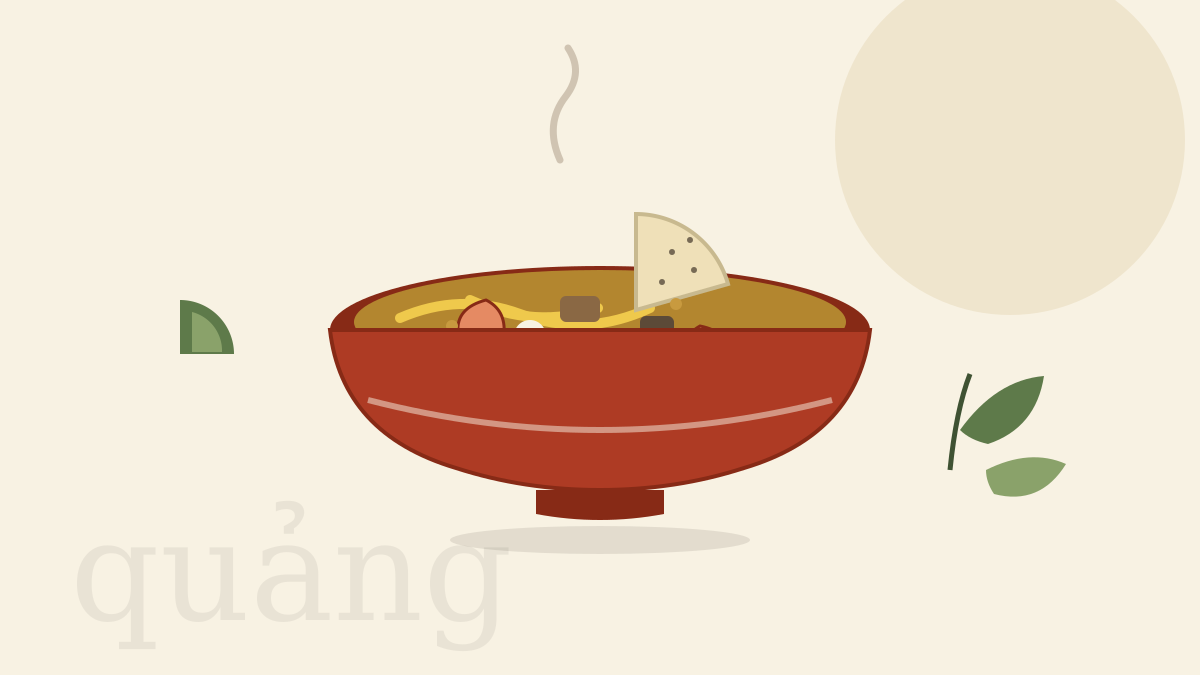
Quảng Nam's turmeric-gold noodles under a scant, intense broth — shrimp, pork, peanuts, and a shattered rice cracker. A noodle dish, not a soup.
By Vietnamese Cookbook Kitchen · June 2, 2026
Quảng Nam & Đà NẵngThe Lê Dynasty era, 1428–1789
 Phở
Phở- Prep
- 40 min
- Cook
- 45 min
- Serves
- 4
- Level
- Intermediate
In 1471, Lê Thánh Tông's armies took the Cham citadel of Vijaya, and the Lê court named its newly claimed frontier Quảng Nam — "the expansive south." The settlers who moved into the Thu Bồn river valley planted rice, and mì Quảng is what their kitchens made of it: wide noodles stained gold with turmeric, served at weddings, harvests, death anniversaries, and any ordinary Tuesday. Ignore the name — mì elsewhere means wheat noodles, but these are rice through and through. And ignore the phở comparison, because this is the anti-phở: where Hanoi's masterpiece is a meditation on broth, Quảng Nam hands you barely half a ladle of it.
That half-ladle — the nước nhưn — is the whole game. Pork and shrimp braise in just enough stock to concentrate into something that verges on too much. The broth is a sauce, not a bath: it should wet the bottom third of the noodles and stop, so every strand carries flavor without drowning. The toppings work like a percussion section — crushed peanuts, a raft of herbs and banana blossom, and the toasted sesame cracker you shatter over the top with your palm. Eat it tossed, the way the farmers it was built for did, and you will understand why Quảng Nam never bothered arguing with Hanoi.
Judge the broth in the pot, not the bowl — on its own it should taste a shade too intense. If the finished noodles are swimming, you have made a respectable soup and lost the dish.
Lời đầu bếp · A word from the kitchen
Ingredientsnguyên liệu
Serves 4
Pork, shrimp, and the nước nhưn
- 500 gpork shoulder — about 1 lb, cut into 3 cm chunks; belly works if you like it richer
- 300 gmedium shrimp — about ⅔ lb, peeled but tails on — simmer the shells in the stock for ten minutes first and you get the broth's backbone for free
- 2 tbspfresh turmeric, minced — or 2 tsp ground; wear an apron you don't love
- 3shallots, minced
- 4garlic cloves, minced
- 2 tbspfish sauce (nước mắm) — 30 ml, plus more to adjust at the end
- 2 tbspannatto oil — 30 ml — or neutral oil; annatto deepens the gold but turmeric does most of the coloring
- 750 mlchicken or pork stock — about 3 cups — yes, that little; scarcity is the point
Noodles and toppings
- 500 gfresh wide rice noodles — about 1 lb; or 300 g dried — see the FAQ for what to buy
- 6quail eggs — hard-boiled and halved; optional but canonical
- 60 groasted peanuts, crushed — about ½ cup
- 2toasted sesame rice crackers (bánh tráng nướng) — one half per bowl, shattered at the table
- 1large herb platter — lettuce, mint, sliced banana blossom if you can get it, bean sprouts — this is not garnish, it is half the bowl
- 1lime, in wedges, plus sliced chili
Methodcách làm
Step 1: Marinate the pork
Toss the pork with the turmeric, half the shallots and garlic, the fish sauce, and a grind of pepper. Give it 20 minutes — the turmeric needs time to stain the meat, because the color of mì Quảng is seasoning you can see.
Step 2: Build the nước nhưn
Heat the annatto oil in a wide pot and fry the remaining shallots and garlic until fragrant. Sear the pork hard on all sides, then pour in just enough stock to barely cover it and simmer, uncovered, for 25 minutes. You are not making broth — you are making a concentrated braising liquid that happens to be pourable.
Step 3: Add the shrimp and push the seasoning
Slide the shrimp in for the last 4 minutes, until just pink. Now taste the liquid and season it past comfortable — more fish sauce, a pinch of sugar if your stock was lean. Diluted across a bowl of unseasoned noodles, "too much" becomes exactly right.
Step 4: Ready the bowls
Blanch the noodles briefly and shake them very dry — water hiding in the noodles is the great diluter. Lay a handful of sprouts and torn lettuce in each bowl first, noodles on top. The greens underneath wilt slightly in the heat, which is where they belong.
Step 5: Assemble scantly and shatter
Arrange pork, shrimp, and quail eggs over the noodles, then ladle broth to about a third of the noodles' height — the bottom strands bathe, the top ones stay dry. Finish with peanuts and herbs, plant half a rice cracker on top, and let each eater smash it down with a palm and toss the whole bowl before the first bite.
Đồ nghề · The tools
Equipment
Tall stockpot (12 qt+)
Nồi hầmPhở is a marathon of bones and water, and a wide pot evaporates your broth away. Go tall and narrow — the depth keeps a lazy simmer lazy for six hours.
Shop on Amazon →Portable gas burner
Bếp ga miniLẩu is not lẩu if someone has to keep walking to the stove. The tabletop butane burner turns a pot of broth into a two-hour dinner party.
Shop on Amazon →Charcoal grill / grill pan
Vỉ nướngNướng means fire, and lemongrass pork wants char and smoke. A small charcoal grill is the true answer; a screaming-hot cast-iron grill pan under a cracked window is the honest apartment one.
Shop on Amazon →Fine-mesh skimmer
Vợt vớt bọtClear phở broth is not a trick, it is patience with a skimmer — take the scum off early and often and the pot rewards you with glass.
Shop on Amazon →Noodle blanching basket
Vợt trụng búnOne long-handled basket, one pot of boiling water, one bowl at a time — noodles dunked, shaken dry, and dropped into the bowl still steaming. The street-stall rhythm at home.
Shop on Amazon →
Equipment links are Amazon affiliate links. As an Amazon Associate we earn from qualifying purchases, at no cost to you. Disclosure.
Questions from the kitchen
Is mì Quảng a soup?
No, and the locals are firm about this. The broth is a dressing — enough to wet the bottom third of the bowl and no more. If you catch yourself lifting the bowl to drink at the end, you over-poured; the last of a proper mì Quảng is scraped, not sipped.
I can't find turmeric-tinted wide rice noodles. What do I buy?
Fresh rice noodle sheets from a Vietnamese market, cut into 1 cm ribbons, are the best stand-in; dried wide rice sticks (the bánh phở cut) are honest too. Don't chase pre-tinted noodles — in most Quảng Nam kitchens the gold comes from turmeric in the noodle water and the broth, and yours will stain up nicely in the bowl.
What can replace the rice cracker?
Any plain grilled bánh tráng nướng from a Vietnamese grocer — the sesame-studded kind is ideal. In a pinch, plain unsalted rice crackers give you the crunch, though not the toasty sesame note. Skip anything seasoned; the broth is doing the talking.
Nấu tiếp · Cook next
Keep the burner on
 Phở
PhởPhở & Noodle Soups·255 min·Advanced
Phở Bò, the Hanoi WayPhở bò
Hanoi's morning bowl built the slow way — charred onion and ginger, toasted spices, and a beef broth kept at a shiver, never a boil, for three hours.
 Phở
PhởPhở & Noodle Soups·220 min·Intermediate
Hủ Tiếu Nam VangHủ tiếu Nam Vang
The Phnom Penh–style noodle soup of the Mekong world — clear pork-and-dried- seafood broth, chewy noodles, shrimp, quail eggs, and a slick of fried garlic oil.
 Phở
PhởPhở & Noodle Soups·225 min·Intermediate
Bún Bò HuếBún bò Huế
Huế's lemongrass-annatto noodle soup — beef shank, pork hock, and a fermented-shrimp depth handled honestly for kitchens far from the Perfume River.