Braised Duck Egg Noodles
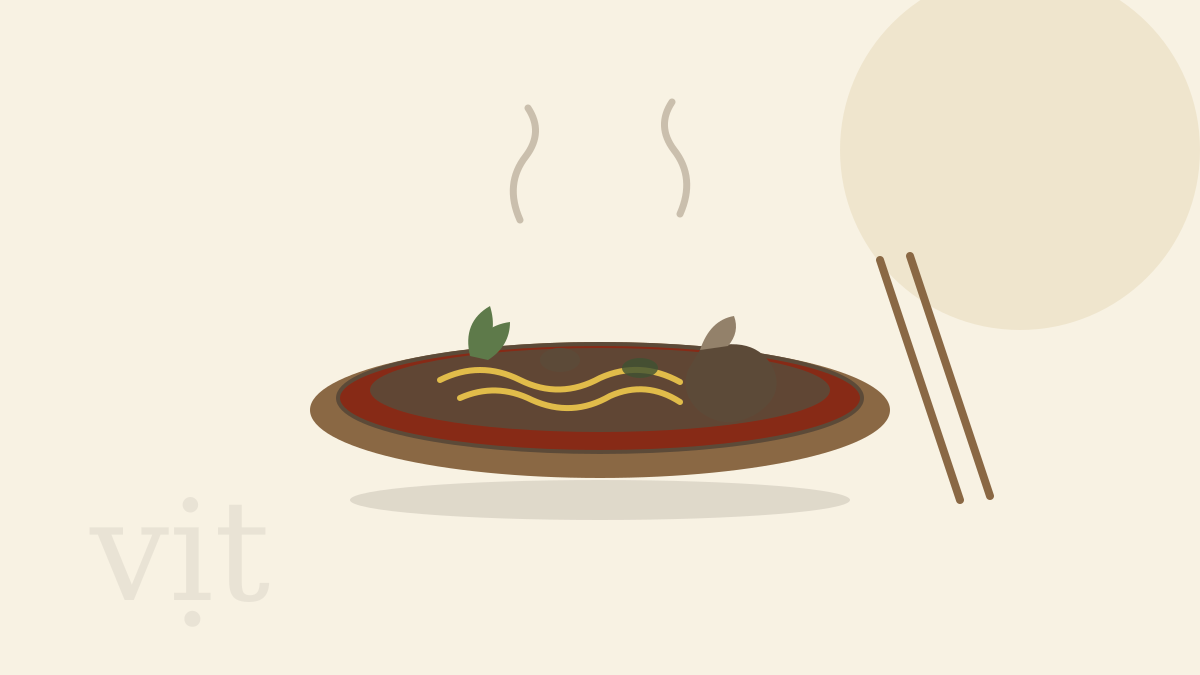
Mì vịt tiềm
Chợ Lớn's five-spice braised duck over springy egg noodles and broth built from the braise itself — a Cantonese-Vietnamese restaurant classic, fried before it's simmered.
By Vietnamese Cookbook Kitchen · April 23, 2026
Sài Gòn & the SoutheastFrench Indochina era, 1883–1945
 Phở
Phở- Prep
- 30 min
- Cook
- 90 min
- Serves
- 4
- Level
- Advanced
Mì vịt tiềm is a full transplant from Chợ Lớn's Cantonese kitchens, brought by the Chinese-Vietnamese community that built Saigon's Chinatown across the nineteenth and twentieth centuries and never let go of the double-braising technique — tiềm, from Cantonese "dun" — that gives the dish its name. Duck, scarcer and pricier than chicken or pork in most Vietnamese kitchens, marked this as restaurant food for much of its history: a bowl ordered on a birthday or after a good week, not a Tuesday dinner. Hoa (Chinese-Vietnamese) restaurants across the city still treat it as a signature dish, the kind a menu leads with rather than buries.
The whole dish runs on a single sequence that can't be reordered: sear the duck skin first, then braise, then cook the noodles apart from everything else. Frying before braising is what turns pale skin into something dark and rendered; keeping the noodles out of the braising liquid until the very last step is what keeps them springy instead of starch-clouded. Get that order right and the payoff is a bowl that tastes like a restaurant kitchen even when it came from your own stove — deeply savory broth, five-spice warmth, and duck that gives at the first pull of a chopstick.
Fry the duck skin-down before it ever sees the braising liquid. Skip that step and you get pale, flabby skin steeping in broth instead of the deep mahogany color and rendered richness the dish is built on.
Lời đầu bếp · A word from the kitchen
Ingredientsnguyên liệu
Serves 4
Duck and braise
- 1duck leg quarters, whole — about 4 pieces, 1.2 kg (2½ lb) total — leg quarters hold up to a long braise far better than breast
- 2 tbspneutral oil
- 1knob ginger, sliced thick — about 40 g (1.5 oz)
- 4garlic cloves, smashed
- 2star anise
- 1cinnamon stick
- 2dried tangerine peel — optional but classic Cantonese-Vietnamese — soak 10 minutes to soften before adding
- 60 mldark soy sauce — 4 tbsp
- 30 mllight soy sauce — 2 tbsp
- 20 grock sugar — about 1 tbsp, roughly cracked
- 1.2 lwater or light chicken stock — 5 cups, enough to submerge the duck halfway
Noodles and vegetables
- 400 gfresh egg noodles (mì) — about 14 oz — the thin, springy Cantonese-style egg noodle, not rice noodle
- 200 gbaby bok choy, halved — about 2 heads
- 100 gshiitake mushrooms — fresh or rehydrated dried, left whole or halved
To finish
- As neededsliced scallion
- As neededfried shallots
- As neededwhite pepper
Methodcách làm
Step 1: Fry the duck skin first
Pat the duck quarters dry and sear skin-side down in the oil over medium heat until deeply browned and much of the fat has rendered out, 6 to 8 minutes. This step alone is why restaurant mì vịt tiềm has that dark mahogany skin — do not shortcut it by braising raw duck straight away.
Step 2: Build the braise
Push the duck aside, add the ginger and garlic to the rendered fat, and toast until fragrant. Add the star anise, cinnamon, and tangerine peel and toast 30 seconds more, until the whole kitchen smells like the dish before any liquid goes in.
Step 3: Braise low and slow
Add both soy sauces, the rock sugar, and the water or stock, bring to a simmer, then cover and cook on low for 60 to 75 minutes, until the duck is fully tender and pulls easily from the bone. Skim fat from the surface occasionally — this braising liquid becomes your soup base.
Step 4: Cook mushrooms and bok choy in the braise
In the last 10 minutes, add the shiitake to the braising liquid, then blanch the bok choy in the same pot for the final 2 minutes, just until bright green and barely tender. Fish everything out and keep warm.
Step 5: Cook the noodles separately
Boil the egg noodles in plain water per package timing, usually 2 to 3 minutes — never in the braising liquid, which would turn cloudy and starchy. Drain well and divide among bowls.
Step 6: Assemble
Ladle the hot braising liquid over the noodles, top with duck, bok choy, and mushrooms, and finish with scallion, fried shallots, and a dusting of white pepper. Serve immediately, while the noodles still have spring.
Đồ nghề · The tools
Equipment
Tall stockpot (12 qt+)
Nồi hầmPhở is a marathon of bones and water, and a wide pot evaporates your broth away. Go tall and narrow — the depth keeps a lazy simmer lazy for six hours.
Shop on Amazon →Fine-mesh skimmer
Vợt vớt bọtClear phở broth is not a trick, it is patience with a skimmer — take the scum off early and often and the pot rewards you with glass.
Shop on Amazon →
Equipment links are Amazon affiliate links. As an Amazon Associate we earn from qualifying purchases, at no cost to you. Disclosure.
Questions from the kitchen
Can I use duck breast instead of leg quarters?
You can, but expect a different dish — breast dries out under a long braise built for tougher cuts. If breast is all you have, sear it the same way but pull it after 20 to 25 minutes of braising rather than the full hour, and slice rather than serve whole.
What is "tiềm" and why does the name include it?
Tiềm is a Cantonese-derived term for slow double-braising or double steaming — the same root behind Cantonese "dun" cooking. The name literally flags the technique: duck, slow-braised, over noodles. It's one more sign of how directly this dish carries its Chợ Lớn Cantonese heritage in its own name.
Can I make the braise ahead?
Yes, and it improves for it — the duck and broth both deepen overnight in the fridge, the same way any good braise does. Skim the solidified fat off the top before reheating, and cook the noodles fresh each time you serve; they don't hold.
Nấu tiếp · Cook next
Keep the burner on
 Phở
PhởPhở & Noodle Soups·255 min·Advanced
Phở Bò, the Hanoi WayPhở bò
Hanoi's morning bowl built the slow way — charred onion and ginger, toasted spices, and a beef broth kept at a shiver, never a boil, for three hours.
 Phở
PhởPhở & Noodle Soups·220 min·Intermediate
Hủ Tiếu Nam VangHủ tiếu Nam Vang
The Phnom Penh–style noodle soup of the Mekong world — clear pork-and-dried- seafood broth, chewy noodles, shrimp, quail eggs, and a slick of fried garlic oil.
 Phở
PhởPhở & Noodle Soups·225 min·Intermediate
Bún Bò HuếBún bò Huế
Huế's lemongrass-annatto noodle soup — beef shank, pork hock, and a fermented-shrimp depth handled honestly for kitchens far from the Perfume River.