Gia Lai Dry Phở
Phở khô Gia Lai
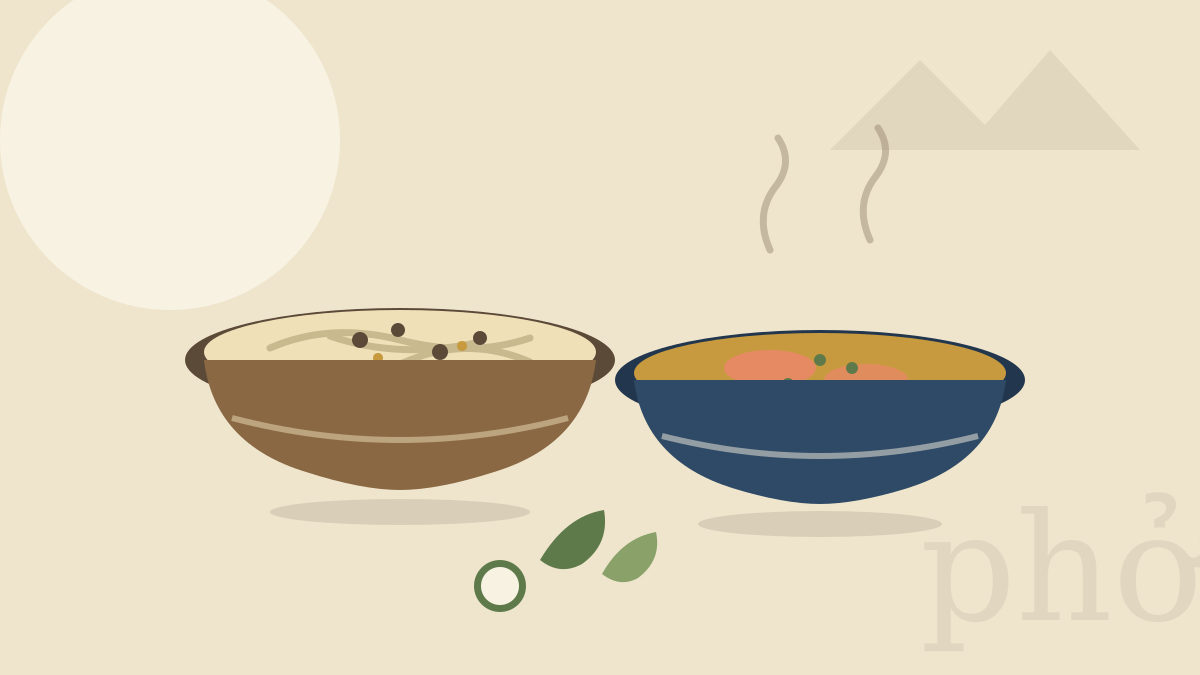
Pleiku's two-bowl phở — chewy dry noodles tossed with garlicky minced pork and tương đen, a clear beef broth steaming alongside. Gia Lai's quiet classic.
By Vietnamese Cookbook Kitchen · June 15, 2026
The Central HighlandsThe Subsidy Era era, 1975–1986
 Phở
Phở- Prep
- 30 min
- Cook
- 200 min
- Serves
- 4
- Level
- Intermediate
Pleiku sits on red basalt at 750 metres, cool and windblown, and it eats its phở dry. Phở khô Gia Lai — locals mostly say phở hai tô, "two-bowl phở" — arrives as a pair: springy noodles tossed with fried garlic, browned pork, and dark tương đen in one bowl, a clear beef broth in the other. The story goes that it took shape in Pleiku's Chinese-Vietnamese eateries around the 1950s; what is certain is that by the lean subsidy years after 1975 it was the town's breakfast — cheap pork and garlic stretching an expensive broth — and it never left. It remains the rare phở that Hanoi and Saigon both had to learn from somewhere else.
Everything hangs on the noodle staying chewy and separate. Coat the hot noodles in garlic oil the moment they drain — the oil is seasoning and armor at once, and thirty seconds of hesitation costs you the texture the dish is named for. Then find the rhythm the two bowls are built for: a tangle of noodles dragged through tương đen, a sip of quiet broth, a leaf of basil, again. The broth exists to answer the noodles, not to sauce them. Anyone caught pouring one bowl into the other is presumed, politely, to be from somewhere else.
The garlic oil does double duty. Fry the garlic slowly, pull it at pale gold — it keeps cooking in the oil — and toss the noodles in that oil while they are still steaming, or they will seize into a brick you cannot unmake.
Lời đầu bếp · A word from the kitchen
Ingredientsnguyên liệu
Serves 4
Broth
- 1.5 kgbeef marrow and knuckle bones — about 3 lb; ask the butcher to split the knuckles
- 400 gbeef brisket — in one piece — it simmers in the broth and gets sliced for serving
- 1large yellow onion — halved, skin on, for charring
- 60 gginger — a fat hand, halved lengthwise, for charring
- 30 grock sugar — or 2 tbsp plain sugar
- 30 mlfish sauce — 2 tbsp, plus more to season
Noodles and pork
- 400 gthin dry rice noodles — bánh phở khô Gia Lai if your market carries it; thin dry hủ tiếu is the closest stand-in — you want round and springy, not flat
- 250 gminced pork — a little fat in the grind helps
- 6garlic cloves — sliced thin and even, so they fry at one speed
- 60 mlneutral oil — 4 tbsp
- 15 mlfish sauce — 1 tbsp
- 1 tspsugar
To serve
- 3 tbsptương đen (fermented soybean sauce) — the dark, salty-sweet soul of the dish; see the FAQ for the hoisin compromise
- 200 gbean sprouts — blanched ten seconds if you like them tamed
- 3scallions — sliced
- 3 tbspfried shallots
- As neededThai basil, lettuce, lime wedges, sliced chili
Methodcách làm
Step 1: Start the broth
Char the onion and ginger over a flame or under the broiler until blackened in spots, then rinse. Blanch the bones five minutes in boiling water, rinse, and return them to a clean pot with the brisket, onion, ginger, and 3 liters of fresh water. Simmer gently 3 hours, skimming — a Gia Lai broth is clear and quiet, not spiced like Hanoi's.
Step 2: Make the garlic oil
Start the sliced garlic in cold oil over medium-low heat and fry, stirring, until pale gold — then off the heat at once. Lift out half the chips and reserve them for topping; leave the rest in the oil.
Step 3: Fry the pork
Raise the heat under the same pan and fry the minced pork in the garlic oil until its water cooks off and it starts to catch at the edges. Season with the fish sauce and sugar. You want loose, browned crumbs, not a wet sauce.
Step 4: Finish the broth
Pull the brisket when it is fork-tender, around the two-hour mark, and slice it thin once cool. Strain the broth, then season with the rock sugar, fish sauce, and salt until it tastes complete on its own — this bowl never gets the noodles, so it has to stand alone.
Step 5: Cook the noodles
Boil the noodles just until they lose their chalky core but keep a real chew — start testing early, brands vary wildly. Drain, shake dry, and toss immediately with a few spoonfuls of the garlic oil so the strands stay slick and separate.
Step 6: Serve as two bowls
Divide the noodles among bowls and top with pork, reserved garlic chips, fried shallots, scallions, and a spoonful of tương đen. Fill a second set of bowls with hot broth, sliced brisket, and scallion. Serve in pairs with sprouts, herbs, lime, and chili — the noodles get mixed, the broth gets sipped, and never the two poured together.
Đồ nghề · The tools
Equipment
Tall stockpot (12 qt+)
Nồi hầmPhở is a marathon of bones and water, and a wide pot evaporates your broth away. Go tall and narrow — the depth keeps a lazy simmer lazy for six hours.
Shop on Amazon →Claypot
Thố đấtThe vessel kho was invented in — clay heats slowly, holds a caramel simmer without scorching, and goes straight to the table still bubbling. Season it once with rice water and it outlives you.
Shop on Amazon →Charcoal grill / grill pan
Vỉ nướngNướng means fire, and lemongrass pork wants char and smoke. A small charcoal grill is the true answer; a screaming-hot cast-iron grill pan under a cracked window is the honest apartment one.
Shop on Amazon →Spider strainer
Vợt chiênThe wide wire basket that lifts fried food out of the oil in one pass and blanched noodles out of the pot in the next. One tool, half the site.
Shop on Amazon →Fine-mesh skimmer
Vợt vớt bọtClear phở broth is not a trick, it is patience with a skimmer — take the scum off early and often and the pot rewards you with glass.
Shop on Amazon →Fine sieve / muslin
Rây lọcFor straining broth crystal-clear, squeezing coconut milk, and working tamarind pulp through into pure sour. Line it with muslin when the recipe says “clear” and means it.
Shop on Amazon →
Equipment links are Amazon affiliate links. As an Amazon Associate we earn from qualifying purchases, at no cost to you. Disclosure.
Questions from the kitchen
What exactly is tương đen, and can I use hoisin?
Gia Lai's tương đen is a fermented soybean sauce, darker, saltier, and less candied than hoisin. Hoisin loosened with a spoonful of the hot broth is the accepted shortcut abroad — expect it sweeter. Vietnamese markets often carry tương đen sold for hủ tiếu; that is the closer match.
Which noodles do I buy?
The real thing is bánh phở khô Gia Lai — thin, round, and springy, nothing like the soft flat ribbon in a bowl of phở nước. Failing that, buy thin dry hủ tiếu or a fine round rice vermicelli, and err toward undercooking. The chew is the dish's whole argument.
Why not just pour the broth over the noodles?
Because then it is phở nước, and the architecture collapses — the garlic oil washes off, the tương đen dilutes, the chew softens. The dry bowl is seasoned loud precisely because the bowl beside it is quiet. Alternate bites and sips; don't merge them.
Nấu tiếp · Cook next
Keep the burner on
 Phở
PhởPhở & Noodle Soups·255 min·Advanced
Phở Bò, the Hanoi WayPhở bò
Hanoi's morning bowl built the slow way — charred onion and ginger, toasted spices, and a beef broth kept at a shiver, never a boil, for three hours.
 Phở
PhởPhở & Noodle Soups·220 min·Intermediate
Hủ Tiếu Nam VangHủ tiếu Nam Vang
The Phnom Penh–style noodle soup of the Mekong world — clear pork-and-dried- seafood broth, chewy noodles, shrimp, quail eggs, and a slick of fried garlic oil.
 Phở
PhởPhở & Noodle Soups·225 min·Intermediate
Bún Bò HuếBún bò Huế
Huế's lemongrass-annatto noodle soup — beef shank, pork hock, and a fermented-shrimp depth handled honestly for kitchens far from the Perfume River.