Pork & Rice Paper Rolls
Bánh tráng cuốn thịt heo
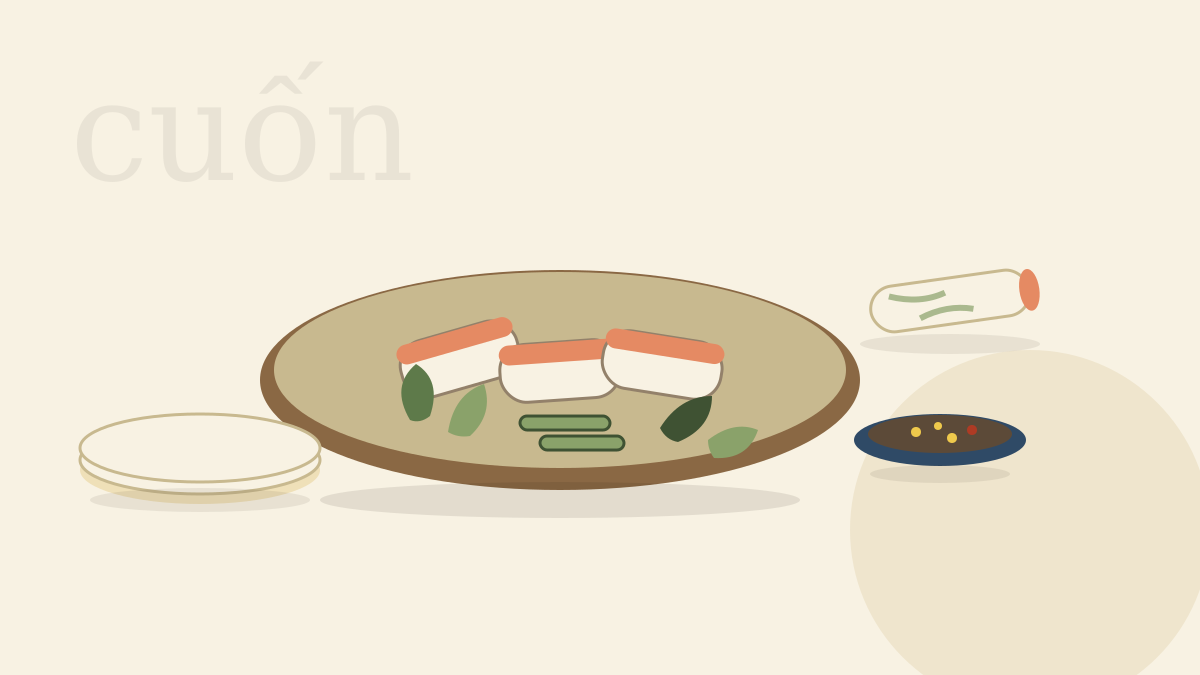
Đà Nẵng's boiled-pork platter — thin slices with their ribbon of fat, rice paper, a garden of herbs, and pungent mắm nêm doing the talking. You roll.
By Vietnamese Cookbook Kitchen · June 16, 2026
Quảng Nam & Đà NẵngĐổi Mới era, 1986–2008
 Gỏi
Gỏi- Prep
- 30 min
- Cook
- 30 min
- Serves
- 4
- Level
- Beginner
This is what happens when a beach city gets rich enough to celebrate its own plainest supper. Boiled pork with herbs and rice paper is old, thrifty, central-coast home cooking, but bánh tráng cuốn thịt heo as an institution belongs to đổi mới-era Đà Nẵng — the reform years after 1986, and especially after 1997, when the city split from Quảng Nam province to govern itself and boomed. Specialist eateries — locals will steer you to the Trần chain before you finish asking — built entire menus on this one platter: pale sheets of pork carved so each slice carries its ribbon of skin and fat, a rice paper, and a rented garden of herbs.
The kitchen's only real job is restraint: a gentle simmer, a full rest in the cooking liquid, a sharp knife. Everything else is the eater's problem, which is the point — the roll is assembled at the table or it isn't this dish. What holds it all together is mắm nêm, the fermented anchovy sauce that arrives smelling like a dare and finishes like a handshake; we give a gentler nước chấm road in the FAQ, with an honest accounting of what it costs. Roll, dip, argue about fish mint. That is the whole ceremony.
Let the pork cool in its own liquid before slicing — carve it warm and dry and it turns gray and crumbly at the edges. Cooled, it slices into those clean pale sheets with the fat still pearly.
Lời đầu bếp · A word from the kitchen
Ingredientsnguyên liệu
Serves 4
The pork
- 700 gpork leg or belly, skin on, in one piece — about 1½ lb; in Đà Nẵng the prized cut is "heo hai đầu da" — lean meat bracketed by skin and fat at both ends. A skin-on belly is the honest stand-in abroad
- 2shallots, halved
- 1 tbspsalt
- 1 tbspwhite vinegar — keeps the meat pale and sweet-smelling
The mắm nêm sauce
- 4 tbspmắm nêm (fermented anchovy sauce) — 60 ml, from the jar labeled exactly that at a Vietnamese grocer; see the FAQ for the gentler road
- 100 gripe pineapple, minced — about ⅔ cup — its sweetness civilizes the anchovy
- 2garlic cloves, minced
- 1bird's-eye chili, minced
- 1 tbspsugar
- 1 tbsplime juice — 15 ml, plus warm water to loosen
The table
- 20rice paper sheets (bánh tráng) — the 22 cm size handles best
- 300 gfresh rice noodle sheets — about ⅔ lb — in Đà Nẵng a thin wet sheet (mì lá) is layered onto the rice paper; fresh sheets from the refrigerated case, or thin round noodles, both work
- 1very large herb platter — lettuce, mint, perilla (tía tô), cilantro, and fish mint (diếp cá) if you can find it and dare — it is beloved and divisive in equal measure
- 1cucumber, in long batons
- 1green banana or green mango, thinly sliced — optional, for the tannic crunch locals expect
Methodcách làm
Step 1: Simmer the pork gently
Cover the pork with cold water, add the shallots, salt, and vinegar, and bring it just to a simmer — never a boil, which seizes the meat and clouds the fat. Cook 25 to 30 minutes, until a skewer into the center runs clear, then turn off the heat and let it cool in the liquid for 15 minutes.
Step 2: Make the mắm nêm
Stir the mắm nêm with the pineapple, garlic, chili, sugar, and lime, then loosen with warm water a spoonful at a time until it pours like thin cream. Taste it against a lettuce leaf, not a spoon — it should be assertive, not violent.
Step 3: Slice thin
Carve the cooled pork across the grain into slices thin enough to drape — each one should carry its full stripe of skin, fat, and lean. That stripe is the whole architecture of the dish; a plate of lean-only slices misses the point.
Step 4: Set the table
Fan the pork on one platter, pile herbs, cucumber, and noodle sheets on another, and give every eater rice paper and a bowl of sauce. A shallow dish of warm water for dipping the paper saves the usual first-timer wrestling.
Step 5: Roll and eat
Soften a rice paper briefly, lay on a piece of noodle sheet, then lettuce, herbs, cucumber, and a slice of pork. Roll it snug, dip, and eat in two bites. The first roll is always a mess; by the third, everyone at the table has a technique and opinions about everyone else's.
Đồ nghề · The tools
Equipment
Portable gas burner
Bếp ga miniLẩu is not lẩu if someone has to keep walking to the stove. The tabletop butane burner turns a pot of broth into a two-hour dinner party.
Shop on Amazon →Mandoline
Bàn bàoĐồ chua lives or dies on evenness — carrot and daikon cut to the same whisper-thin matchstick pickle at the same speed. Use the guard; every Vietnamese grandmother has the scar that says otherwise.
Shop on Amazon →Julienne peeler
Dao bào sợiThe three-dollar tool that shreds green papaya and mango into long, springy threads for gỏi. Look for the Thai Kiwi brand — it hangs in every Southeast Asian market for a reason.
Shop on Amazon →
Equipment links are Amazon affiliate links. As an Amazon Associate we earn from qualifying purchases, at no cost to you. Disclosure.
Questions from the kitchen
Is there an alternative to mắm nêm?
Yes, and no one respectable will scold you. A standard nước chấm — the fish sauce, lime, sugar, and chili balance from our foundations recipe — with a spoonful of the minced pineapple stirred in gets you a brighter, gentler sauce. You lose the funky bass note that makes the Đà Nẵng original so addictive; you gain a table of relaxed guests.
What cut of pork should I ask for?
Skin-on pork belly is the easiest correct answer abroad — every slice gets skin, fat, and lean. Boneless leg with the skin on runs leaner and is closer to what many Đà Nẵng shops serve. Avoid loin; it slices prettily and eats like cardboard here.
Can I prepare it ahead?
Almost entirely. The pork can be simmered, cooled, and refrigerated a day ahead — slice it cold and let it lose the chill on the platter. The sauce holds two or three days. Only the herbs and the rolling must happen at the table, which is the fun of it anyway.
Nấu tiếp · Cook next
Keep the burner on
 Gỏi
GỏiRolls & Gỏi·25 min·Beginner
Green Mango SaladGỏi xoài
Green mango cut into crunchy threads, tossed with dried shrimp, rau răm, and a bold fish-sauce dressing — the central coast's sharpest little salad.
 Gỏi
GỏiRolls & Gỏi·75 min·Beginner
Fresh Spring RollsGỏi cuốn
Southern Vietnam's pork-and-shrimp fresh roll — herbs, vermicelli, and rice paper rolled with proper tension, plus the peanut-hoisin sauce it was born to meet.
 Gỏi
GỏiRolls & Gỏi·75 min·Intermediate
Square Crab Spring RollsNem cua bể
Hải Phòng's square-folded fried rolls — crab, pork, and wood ear sealed in rice paper and fried to a shattering crust, the port city's proudest snack.