Fresh Spring Rolls
Gỏi cuốn
Southern Vietnam's pork-and-shrimp fresh roll — herbs, vermicelli, and rice paper rolled with proper tension, plus the peanut-hoisin sauce it was born to meet.
By Vietnamese Cookbook Kitchen · June 18, 2026
Sài Gòn & the SoutheastThe Diaspora & Today era, 1975–present
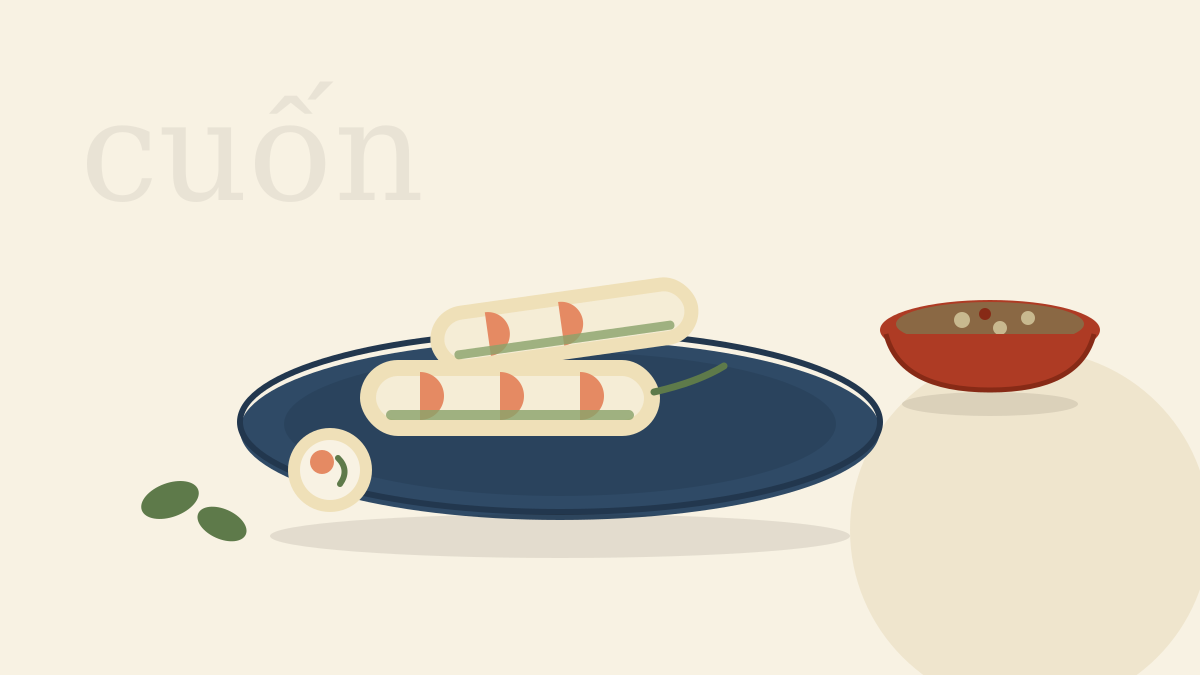 Gỏi
Gỏi- Prep
- 45 min
- Cook
- 30 min
- Serves
- 4
- Level
- Beginner
Gỏi cuốn translates, more or less, as "salad roll," and the dish is the southern table in miniature — the roll-your-own habit of the Mekong, where herbs arrive by the plateful and rice paper is a pantry staple. Its global career is recent and has a date. After 1975, the fall of Saigon sent hundreds of thousands of southerners abroad, and the restaurants they opened carried gỏi cuốn with them; somewhere in the American 1980s it was rechristened the "summer roll" — cool and fresh, against the fried spring roll, chả giò — and became, alongside phở, the way much of the world first meets Vietnamese food.
The rolling is the whole lesson, and it turns on one fact: rice paper keeps softening after it leaves the water, so you wet it two seconds and let time finish the job. After that it is burrito grammar — a compact bundle, one firm fold, sides tucked, then tension all the way home, with the shrimp laid pink-side down so they shine through the final layer like a shop window. Filling loose in the middle means collapse at the first bite; roll it tighter than seems polite. The cook eats the ugly first roll standing up at the counter. No one has ever complained.
Your first roll will be ugly and your fourth will not. Wet the paper less than feels right — it keeps softening on the board while you work.
Lời đầu bếp · A word from the kitchen
Ingredientsnguyên liệu
Serves 4
Filling
- 350 gpork belly or shoulder, in one piece — belly is traditional; shoulder is leaner and forgiven
- 350 gshrimp — 16–20 count, shell on — the shells season the poaching water
- 100 grice vermicelli (bún)
- 8soft lettuce leaves — butter or red-leaf, thick ribs cut out
- 1bunch mint — leaves picked; add perilla or cilantro if the market is kind
- 12garlic chives (hẹ) — optional but classic — the green tail out the end of the roll
- 12rice paper rounds, 22 cm — buy a few extra; the learning curve is edible
Peanut-hoisin sauce
- 60 ghoisin sauce — 4 tbsp
- 30 gsmooth peanut butter — 2 tbsp
- 60 mlpork poaching broth or water — 4 tbsp, to thin
- 1garlic clove, minced
- As neededcrushed roasted peanuts and sliced bird's-eye chili, to finish
Methodcách làm
Step 1: Poach the pork
Cover the pork with water, salt it like pasta water, and simmer gently 25–30 minutes until a skewer slides through with no pink at the center. Rest it 10 minutes, then slice as thin as your knife allows — and keep a ladle of the broth for the sauce.
Step 2: Poach and halve the shrimp
Drop the shrimp into the same barely-simmering pot for about 2 minutes, until just pink, then into iced water. Peel, devein, and halve each one lengthwise — the flat pink face is what shows through the paper, and a whole shrimp makes a lumpy roll.
Step 3: Cook the noodles and set the station
Cook the vermicelli per the packet, rinse cold, and drain until truly dry. Then set up like a production line — everything within reach, a damp (not wet) cutting board or tea towel to roll on, a wide bowl of warm water for the paper.
Step 4: Wet the paper — briefly
Drag a sheet through the warm water in about two seconds, both sides, and lay it on the board while it still feels slightly stiff. It will keep softening as you build; paper soaked until floppy will be glue by the time you roll.
Step 5: Build and roll
On the lower third, make a tidy bundle — lettuce cupping noodles, mint, and pork. Fold the near edge over the bundle and pull back gently to compact it, fold in the sides, then lay three shrimp halves pink-side down and a chive on the paper ahead and keep rolling with steady tension. The shrimp end up windowed under the last, tightest layer.
Step 6: Make the sauce
Warm the garlic, hoisin, peanut butter, and broth in a small pan for a minute, until it loosens to the thickness of cream. Into a bowl, peanuts and chili on top — the sauce should be deep, sweet, and just short of too thick to dip.
Đồ nghề · The tools
Equipment
Mandoline
Bàn bàoĐồ chua lives or dies on evenness — carrot and daikon cut to the same whisper-thin matchstick pickle at the same speed. Use the guard; every Vietnamese grandmother has the scar that says otherwise.
Shop on Amazon →
Equipment links are Amazon affiliate links. As an Amazon Associate we earn from qualifying purchases, at no cost to you. Disclosure.
Questions from the kitchen
Why does my rice paper tear or stick to everything?
Almost always over-soaking — two seconds in warm water is enough, because the paper continues to absorb long after it leaves the bowl. Roll on a damp board rather than a dry plate, and don't let finished rolls touch each other; they weld on contact.
Can I make them ahead?
A few hours, covered with a damp towel at room temperature, not touching. The refrigerator is the enemy — cold turns the paper stiff and cloudy — so if lunch is tomorrow, prep the fillings tonight and roll fresh.
Peanut sauce or nước chấm?
Both are legitimate; the south leans hard toward the peanut-hoisin tương, and it's what these proportions were balanced for. Nước chấm makes a brighter, lighter roll. Serving both ends the debate at the table.
Nấu tiếp · Cook next
Keep the burner on
 Gỏi
GỏiRolls & Gỏi·25 min·Beginner
Green Mango SaladGỏi xoài
Green mango cut into crunchy threads, tossed with dried shrimp, rau răm, and a bold fish-sauce dressing — the central coast's sharpest little salad.
 Gỏi
GỏiRolls & Gỏi·60 min·Beginner
Pork & Rice Paper RollsBánh tráng cuốn thịt heo
Đà Nẵng's boiled-pork platter — thin slices with their ribbon of fat, rice paper, a garden of herbs, and pungent mắm nêm doing the talking. You roll.
 Gỏi
GỏiRolls & Gỏi·75 min·Intermediate
Square Crab Spring RollsNem cua bể
Hải Phòng's square-folded fried rolls — crab, pork, and wood ear sealed in rice paper and fried to a shattering crust, the port city's proudest snack.