Square Crab Spring Rolls
Nem cua bể
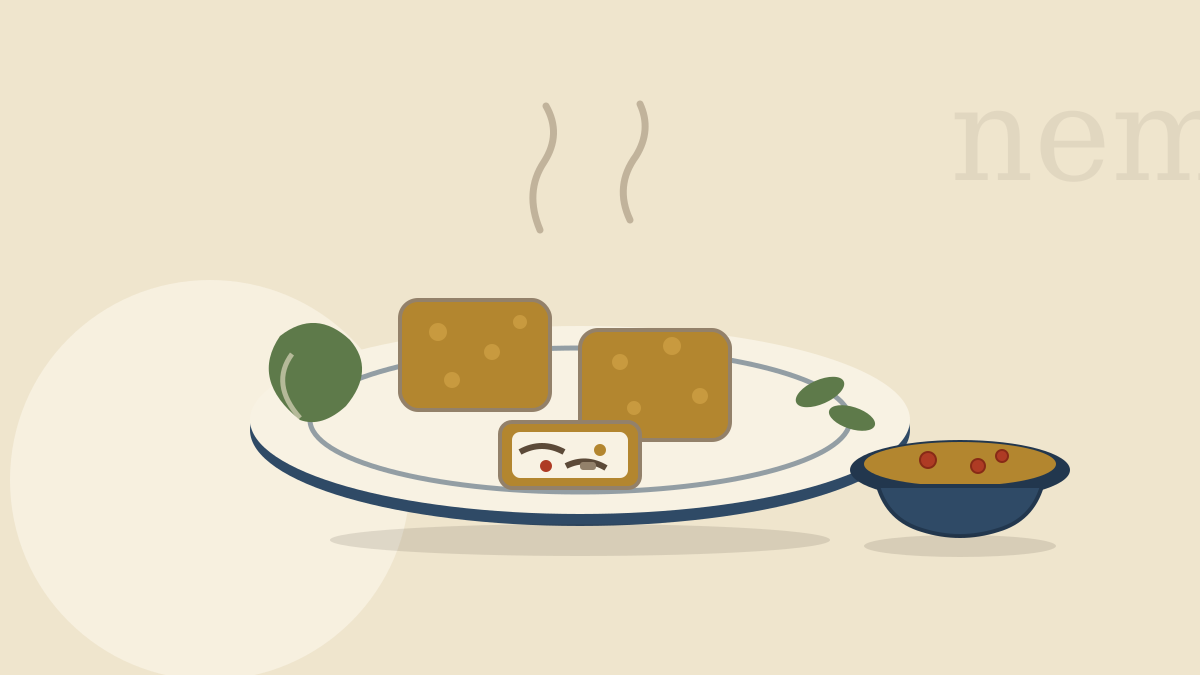
Hải Phòng's square-folded fried rolls — crab, pork, and wood ear sealed in rice paper and fried to a shattering crust, the port city's proudest snack.
By Vietnamese Cookbook Kitchen · June 11, 2026
Hải Phòng & the Northern CoastĐổi Mới era, 1986–2008
 Gỏi
Gỏi- Prep
- 50 min
- Cook
- 25 min
- Serves
- 6
- Level
- Intermediate
In a country that fries spring rolls from the Chinese border to Cà Mau, Hải Phòng looked at the standard cylinder and folded a square instead. Nem cua bể — sea-crab rolls — are the port city showing off: fat parcels of crab, pork, wood ear, and glass noodles, big as a deck of cards, with a rice-paper crust that blisters into glass. When the city's crab houses boomed in the nineties, this was the dish every table ordered first, and it has since colonized wedding menus from Hà Nội to Little Saigon.
The engineering matters more than the folding. Crab and sprouts carry water, rice paper is fragile, and hot oil punishes both — so the whole recipe is really one instruction wearing six disguises: get the water out, and fry twice. The first fry cooks the filling through gently; the rest lets steam escape; the second, hotter fry builds the shatter. Skip the second fry and you'll wonder why yours bends where the restaurant's cracks.
Eat them the way the source does: halved so the mosaic of filling shows, wrapped in lettuce with mint, dragged through a nước chấm mixed lean and garlicky. And if the first parcel leaks a little in the oil, fry on — even in Hải Phòng, the cook eats the burst one standing up, and it is never the worst roll of the batch.
Wet filling is the death of a nem — squeeze the sprouts, wring the noodles, and blot the crab, because every drop of water you leave in becomes a burst seam in the fryer.
Lời đầu bếp · A word from the kitchen
Ingredientsnguyên liệu
Serves 6
The filling
- 200 gcooked crab meat — about 7 oz — picked from a steamed blue crab or good refrigerated lump meat; squeeze it gently dry and keep it cold until mixing
- 200 gfatty ground pork — about 7 oz — the fat bastes the crab from inside
- 30 gdried glass noodles (miến) — about 1 oz — soaked 10 minutes in warm water, wrung out, snipped into 3 cm lengths
- 4dried wood ear mushrooms — soaked 20 minutes in warm water, stemmed, sliced into fine ribbons
- 80 gbean sprouts — a large handful, roughly chopped and squeezed hard in a towel
- 1small carrot — coarsely grated
- 2shallots — minced
- 1egg — lightly beaten — the mortar of the parcel
- 1 tbspfish sauce (nước mắm)
- 0.5 tspground black pepper — generous — nem cua bể should taste peppery
Wrapping and frying
- 12rice paper rounds, 22 cm — the ordinary bánh tráng for fresh rolls; you'll fold each into a square parcel
- 100 mllight beer or sugar water — about 7 tbsp — 1 tsp sugar in warm water works; wiped on the papers, it blisters the crust an even gold
- 1 literneutral oil for frying — about 4¼ cups — enough for the rolls to float free
To serve
- 1 batchnước chấm — see the foundations chapter — Hải Phòng likes it lean and garlicky rather than sweet
- 1 headsoft lettuce, plus mint and cilantro — for wrapping bites, or serve the rolls over a bowl of bún with the sauce poured over
Methodcách làm
Step 1: Dry everything, then mix
The order of work is a drying campaign — wring the soaked noodles, squeeze the sprouts and wood ear in a towel, blot the crab. Then mix all the filling ingredients except the crab until sticky, and fold the crab in last with a light hand so it stays in flakes instead of vanishing into paste.
Step 2: Soften and fold the squares
Wipe both sides of a rice paper with beer or sugar water and wait 30 seconds until it relaxes. Set a rectangle of filling — about 3 heaped tablespoons — just below center, fold the bottom edge over it, fold in both sides like a letter, and roll upward once to close: a plump square parcel, not a cigar. Fold snug but not drum-tight; the filling swells as it fries.
Step 3: Rest the parcels seam-down
Set the folded squares seam-side down on a tray lined with parchment, not touching, for 10 minutes. The seams glue themselves shut and the papers lose their surface tack. If any parcel feels wet or sagging, wrap it in a second wiped paper — double-wrapping is standard practice, not cheating.
Step 4: First fry, gentle
Heat the oil to 160°C (320°F) — a chopstick tip should fizz steadily, not furiously. Lower in the parcels seam-side down, a few at a time so the temperature holds, and fry 6 to 7 minutes, turning once, until pale gold and cooked through. Pork and crab together mean the center must reach a full 71°C (160°F); a gentle first fry gets it there without burning the shell.
Step 5: Second fry, hot
Drain the rolls on a rack at least 10 minutes — or up to a day, refrigerated. Just before serving, reheat the oil to 180°C (350°F) and fry 90 seconds to 2 minutes until deep gold and blistered all over. The double fry is what gives the crust its shatter; a single fry gives you chew.
Step 6: Cut and serve hot
Rest 2 minutes, then cut each square in half with a serrated knife so the layered interior shows. Serve at once with lettuce, herbs, and nước chấm — or Hải Phòng style, perched on a bowl of bún. A fried nem waits for no one; ten minutes from the oil is its whole life.
Đồ nghề · The tools
Equipment
Frying thermometer
Nhiệt kế dầuThe difference between shattering chả giò and greasy chả giò is holding the oil at temperature — stop guessing.
Shop on Amazon →Bamboo steamer
Xửng hấpFor bánh bao, xôi, and fish steamed whole — bamboo breathes, so nothing drips condensation back onto your work. Line it with a cabbage leaf, not parchment, and steal the leaf after.
Shop on Amazon →Mortar & pestle
Cối chàyLemongrass, garlic, and chilies pounded release oils a blender never finds — it bruises where blades slice. The sound of a Vietnamese kitchen starting dinner.
Shop on Amazon →Mandoline
Bàn bàoĐồ chua lives or dies on evenness — carrot and daikon cut to the same whisper-thin matchstick pickle at the same speed. Use the guard; every Vietnamese grandmother has the scar that says otherwise.
Shop on Amazon →
Equipment links are Amazon affiliate links. As an Amazon Associate we earn from qualifying purchases, at no cost to you. Disclosure.
Questions from the kitchen
Can I use wheat spring-roll wrappers instead of rice paper?
You can, and they're easier to fold — but you'll get a smooth, even crunch instead of the blistered, glassy shatter that makes nem cua bể famous. If your rice papers keep tearing, buy a thicker brand, wipe with less liquid, or double-wrap each parcel rather than switching to wheat.
Why square? Every other spring roll I know is a cylinder.
The square is Hải Phòng's signature and its practical genius — a parcel this loaded with crab would snap a slender cylinder, and the flat faces fry evenly and stack neatly on the seller's tray. Fold a cigar if you must, but make it fat and stubby, and it will still eat well. It just won't look like the port city.
Can I make them ahead or freeze them?
Yes — this recipe splits perfectly at the first fry. Fry gently, cool completely, then refrigerate up to 2 days or freeze up to a month in a single layer before bagging. Second-fry straight from the fridge at 180°C, or from frozen at 170°C for 4 to 5 minutes. Never freeze them raw; the rice paper cracks and the sprouts weep.
Nấu tiếp · Cook next
Keep the burner on
 Gỏi
GỏiRolls & Gỏi·25 min·Beginner
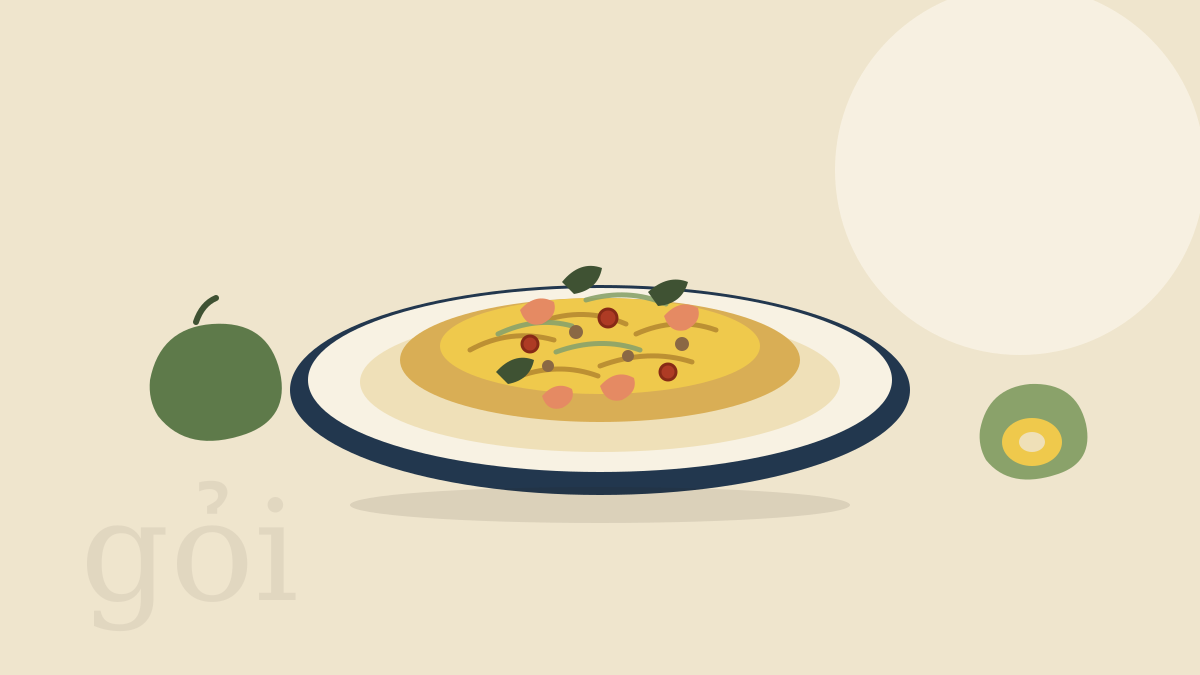
Green Mango SaladGỏi xoài
Green mango cut into crunchy threads, tossed with dried shrimp, rau răm, and a bold fish-sauce dressing — the central coast's sharpest little salad.
 Gỏi
GỏiRolls & Gỏi·75 min·Beginner
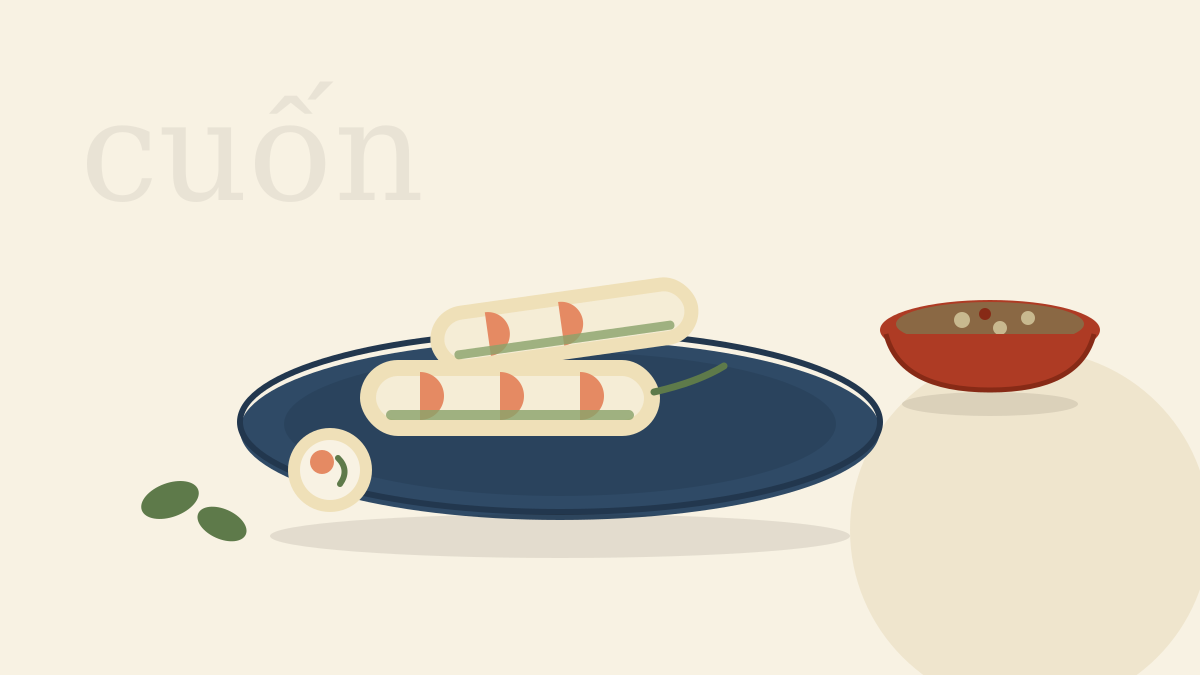
Fresh Spring RollsGỏi cuốn
Southern Vietnam's pork-and-shrimp fresh roll — herbs, vermicelli, and rice paper rolled with proper tension, plus the peanut-hoisin sauce it was born to meet.
 Gỏi
GỏiRolls & Gỏi·60 min·Beginner
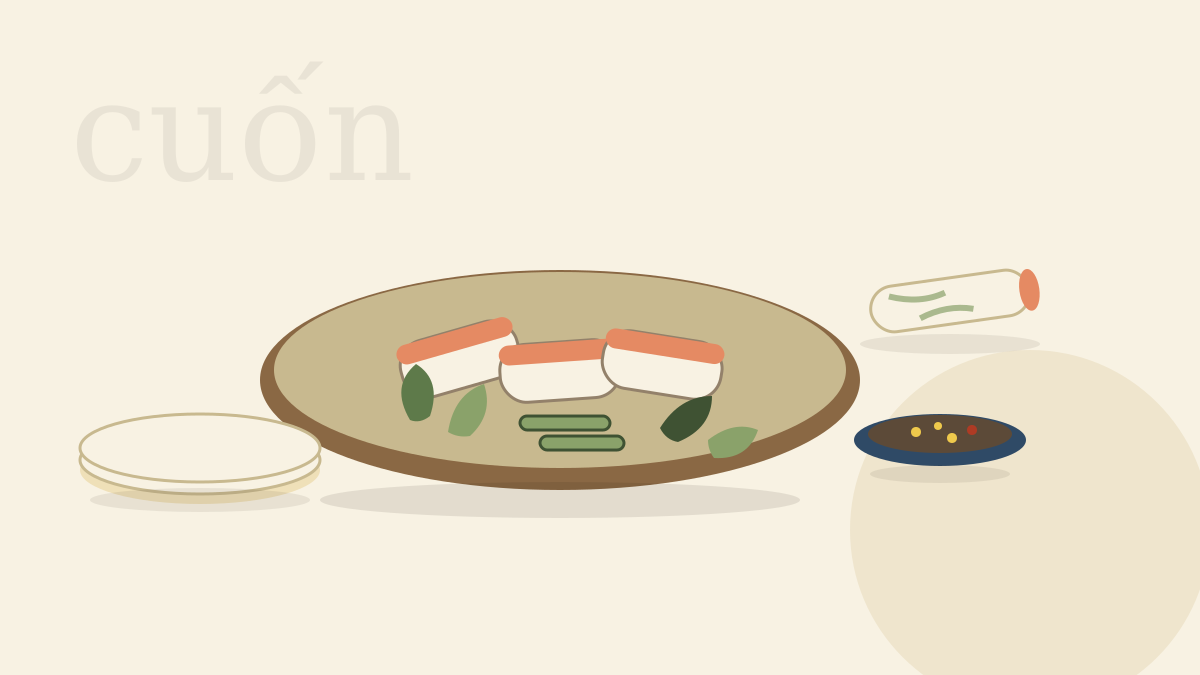
Pork & Rice Paper RollsBánh tráng cuốn thịt heo
Đà Nẵng's boiled-pork platter — thin slices with their ribbon of fat, rice paper, a garden of herbs, and pungent mắm nêm doing the talking. You roll.