Stuffed Cabbage Rolls
Bắp cải cuộn thịt
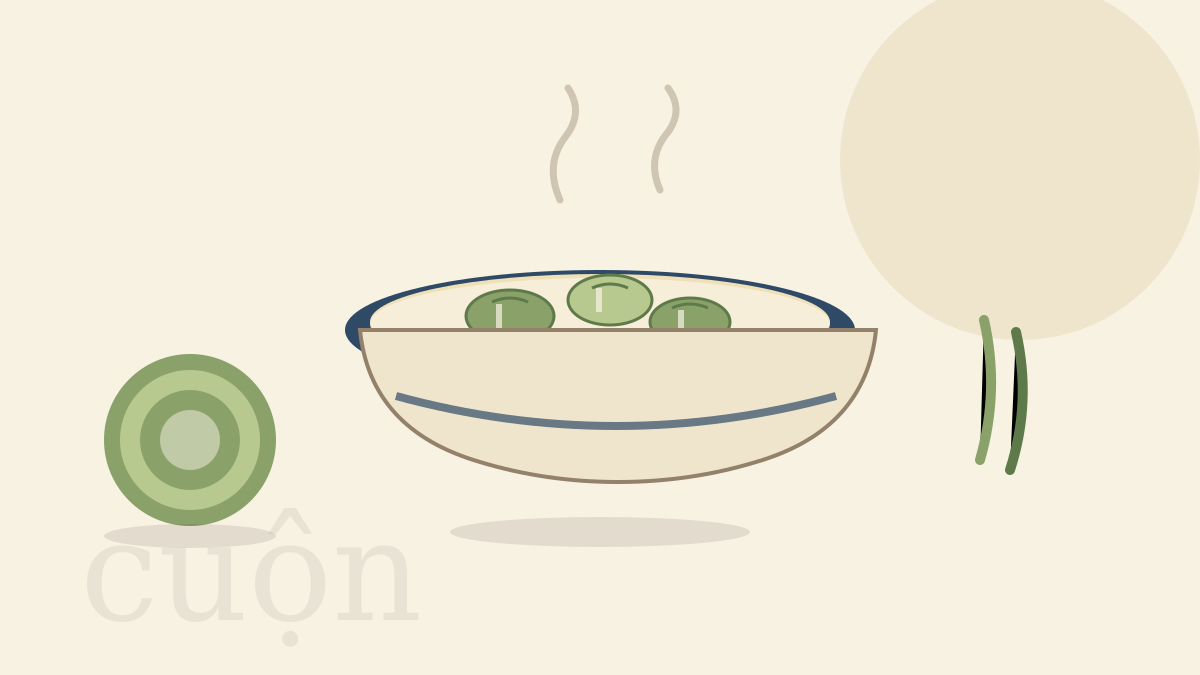
Cabbage leaves tied with scallion around a pork-and-mushroom filling in a clear broth — a northern dish carried to the highlands by 1954 resettlers and never let go.
By Vietnamese Cookbook Kitchen · May 1, 2026
The Central HighlandsPartition & War era, 1945–1975
 Gỏi
Gỏi- Prep
- 40 min
- Cook
- 30 min
- Serves
- 4
- Level
- Intermediate
The central highlands are not, on paper, cabbage country — that's a northern crop, suited to cooler air than most of the region gets. It grows there anyway, in the highland microclimates around Đà Lạt, for a reason that has more to do with people than soil: after the 1954 Geneva Accords divided Việt Nam and sent close to a million people south, a share of them settled in these hills rather than the lowland cities, chasing a climate that felt more like the north they'd left behind. They planted what they knew, and bắp cải cuộn thịt — cabbage rolls in clear broth — came with them.
It is, unmistakably, a northern dish: restrained, broth-forward, built on the same instinct for clean flavors that runs through Hanoi cooking rather than the sweeter, bolder hand of the south. The scallion tie is the detail that gives it away — a technique for holding a roll shut without touching a single foreign object, learned in one kitchen and carried, apparently, over a thousand kilometers. Eaten hot with the broth still steaming, it tastes like a specific migration, still going on a plate.
Tie the rolls with a single blanched scallion strand, not string — it cooks into the dish instead of coming off it, and it tells you, at a glance, that the cook who made this one learned it from someone who cared.
Lời đầu bếp · A word from the kitchen
Ingredientsnguyên liệu
Serves 4
The rolls
- 8large green cabbage leaves — outer leaves, whole — blanched until pliable, thick rib shaved thin so they roll without cracking
- 8scallions — the green tops only, blanched 10 seconds until limp, for tying
- 300 gground pork — 10 oz, not too lean — some fat keeps the filling from drying out
- 15 gdried wood ear mushroom — about 1/3 cup soaked, then minced fine
- 20 gdried shiitake mushroom — 2–3 pieces soaked, minced fine
- 30 gglass noodles (miến) — 1 oz, soaked until pliable, chopped short
- 1shallot, minced
- 1egg
- 1 tbspfish sauce
- To tasteblack pepper to taste
The broth
- 1 Lpork or chicken stock — about 4 cups, made from bones if you have it, or good store-bought
- 1 tbspfish sauce
- To tastesalt and white pepper to taste
- 2 tbspcilantro or scallion, chopped, for garnish
Methodcách làm
Step 1: Prepare the leaves
Blanch the cabbage leaves in boiling water for 1 to 2 minutes until pliable, then shock in cold water. Shave down the thick center rib with a knife so each leaf folds flat without tearing.
Step 2: Mix the filling
Combine the ground pork, minced mushrooms, glass noodles, shallot, egg, fish sauce, and pepper, mixing in one direction until the filling turns slightly sticky. That stickiness is what holds each roll together without needing to overwork the meat.
Step 3: Roll and tie
Place 2 to 3 tablespoons of filling at the base of each leaf, fold in the sides, and roll into a tight cylinder. Tie each roll with a blanched scallion strand — it holds the shape through simmering and disappears into the dish rather than getting fished out at the table.
Step 4: Simmer in broth
Bring the stock to a gentle simmer, season with fish sauce and salt, and lower the rolls in seam-side down. Simmer uncovered for 20 to 25 minutes, until the filling is cooked through and the cabbage has gone tender and translucent at the edges.
Step 5: Serve in the broth
Ladle two or three rolls per bowl with plenty of the clear broth, finished with white pepper and a scatter of cilantro or scallion. This is a spoon-and-chopsticks dish, eaten hot, broth included.
Đồ nghề · The tools
Equipment
Portable gas burner
Bếp ga miniLẩu is not lẩu if someone has to keep walking to the stove. The tabletop butane burner turns a pot of broth into a two-hour dinner party.
Shop on Amazon →Mandoline
Bàn bàoĐồ chua lives or dies on evenness — carrot and daikon cut to the same whisper-thin matchstick pickle at the same speed. Use the guard; every Vietnamese grandmother has the scar that says otherwise.
Shop on Amazon →Long cooking chopsticks
Đũa bếpExtra-long chopsticks for turning frying rolls, loosening noodles, and plucking herbs — the Vietnamese kitchen’s default hand, kept a safe distance from the oil.
Shop on Amazon →
Equipment links are Amazon affiliate links. As an Amazon Associate we earn from qualifying purchases, at no cost to you. Disclosure.
Questions from the kitchen
Why is this dish tied to 1954?
After the 1954 Geneva Accords split Việt Nam, roughly a million people moved south, and a meaningful number resettled in the central highlands, drawn by cheaper land and a climate closer to the north they'd left. They brought northern dishes with them, cabbage rolls in clear broth among them — a genuinely northern preparation that took root far from home and stayed part of highland cooking since.
Can I make the rolls ahead?
Yes — assemble and tie the rolls up to a day ahead and refrigerate uncovered on a tray, then simmer them fresh in hot broth when you're ready to serve. Don't simmer them ahead and reheat; the cabbage turns from tender to mushy the second time around.
What can I use instead of wood ear and shiitake?
Fresh mushrooms work in a pinch — double the volume, since dried mushrooms concentrate flavor that fresh ones haven't developed. You lose the specific chewy-meets-earthy texture the dried versions give the filling, but the dish still holds together.
Nấu tiếp · Cook next
Keep the burner on
 Gỏi
GỏiRolls & Gỏi·25 min·Beginner
Green Mango SaladGỏi xoài
Green mango cut into crunchy threads, tossed with dried shrimp, rau răm, and a bold fish-sauce dressing — the central coast's sharpest little salad.
 Gỏi
GỏiRolls & Gỏi·75 min·Beginner
Fresh Spring RollsGỏi cuốn
Southern Vietnam's pork-and-shrimp fresh roll — herbs, vermicelli, and rice paper rolled with proper tension, plus the peanut-hoisin sauce it was born to meet.
 Gỏi
GỏiRolls & Gỏi·60 min·Beginner
Pork & Rice Paper RollsBánh tráng cuốn thịt heo
Đà Nẵng's boiled-pork platter — thin slices with their ribbon of fat, rice paper, a garden of herbs, and pungent mắm nêm doing the talking. You roll.