Cầu Mống Seared Veal
Bê thui Cầu Mống
Quảng Nam's roadside legend — veal seared hard outside, rosy within, sliced thin for rice paper, herbs, and mắm nêm. Home method with real temperatures.
By Vietnamese Cookbook Kitchen · April 2, 2026
Quảng Nam & Đà NẵngĐổi Mới era, 1986–2008
 Nướng
Nướng- Prep
- 30 min
- Cook
- 25 min
- Serves
- 6
- Level
- Advanced
Cầu Mống is barely a dot on the map — a knot of houses in Điện Bàn, Quảng Nam, where Route 1 crosses the Thu Bồn river — and it is famous for exactly one thing. The restaurants strung along the road there sear whole young beef over rice straw and charcoal until the outside is lacquered and the inside stays rose-pink, then sell it by the lacquered kilo to travelers between Đà Nẵng and Tam Kỳ. Locals claim generations of history; what is certain is that the highway age made it a name, one of those đổi mới stories where a village skill became a brand.
At home the open fire becomes a heavy pan and the skill becomes thermometry: a hard sear on every face of one intact muscle, then a slow ride to 52–54°C at the center. That gap between crust and heart is the entire dish. The rest is assembly — rice paper, bitter green banana, sour starfruit, a heap of herbs, and mắm nêm sauce doing its beautiful, disreputable work. It eats like a party, which on the roadside in Cầu Mống is precisely what it is.
Buy a thick, intact piece — never pre-cut slices. The entire safety and texture logic of this dish depends on searing the outside of one whole muscle while the inside stays barely warmed.
Lời đầu bếp · A word from the kitchen
Ingredientsnguyên liệu
Serves 6
The veal
- 800 gveal eye of round or top round, in one piece — about 1¾ lb, an intact whole-muscle cut at least 7 cm/3 in thick, from a butcher you trust; beef eye of round works if veal is unavailable, at some cost in tenderness
- 1 tbspneutral oil
- 1 tspsalt
- 2lemongrass stalks, bruised — for the pan — they perfume the sear the way rice straw does in Cầu Mống
The mắm nêm sauce
- 4 tbspmắm nêm (fermented anchovy sauce) — the jarred purée style; stir the jar before measuring
- 60 gfresh pineapple, minced — about ⅓ cup with its juice — it tames and sweetens the funk
- 1garlic clove, minced
- 1bird's-eye chili, minced
- 2 tspsugar
- 1lime, juiced
The table
- 24rice paper rounds (bánh tráng)
- 1green (unripe) banana, sliced into thin coins — keep in water with a squeeze of lime so they don't blacken
- 1starfruit, sliced thin — or a tart green apple in half-moons, honestly closer than nothing
- 2 handfulsherbs — mint, perilla, cilantro — perilla is tía tô, the purple-backed leaf; pile them high
Methodcách làm
Step 1: Temper the meat
Take the veal out of the fridge 45 minutes ahead, pat it bone-dry, and salt it all over. A cold, wet surface steams instead of searing, and this dish is entirely about the distance between a charred crust and a rosy center.
Step 2: Sear every face hard
Heat the oil in a heavy pan until it just smokes, add the lemongrass, and sear the veal 2–3 minutes per face — all of them, ends included — until deeply browned. The sear is your safety step: on an intact whole muscle, bacteria live on the surface, and the surface is exactly what you are cooking hard. This logic does not apply to anything pre-cut, pierced, or ground.
Step 3: Bring the center to rare
Drop the heat to low, cover loosely, and roll the meat every few minutes until a probe thermometer reads 52–54°C (126–129°F) in the dead center — rare, warm, and blushing. Insert the probe through a seared face. No thermometer, no bê thui; guessing is how this dish goes gray.
Step 4: Rest, then slice against the grain
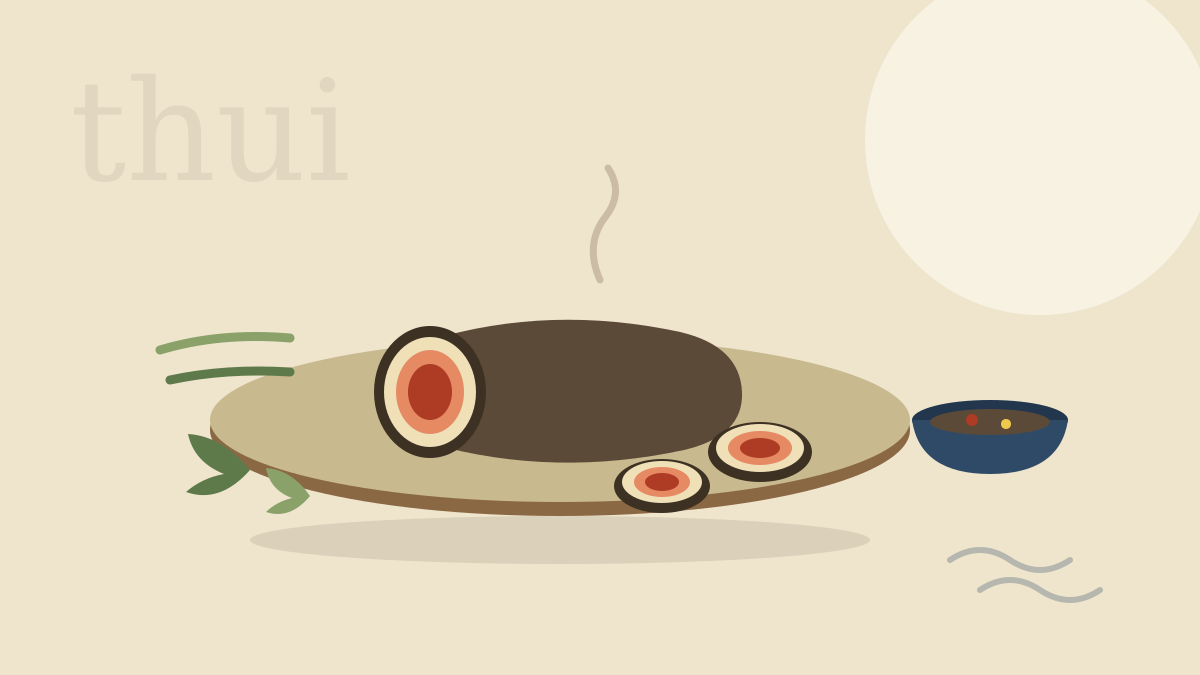
Rest the meat 15 minutes on a rack — the center will drift up a couple of degrees and the juices will set. Slice as thin as your knife allows, across the grain, so each piece shows the signature ring: dark crust, pale rim, rose-pink heart.
Step 5: Build the sauce and roll
Stir the mắm nêm with pineapple, garlic, chili, sugar, and lime, then taste and thin with water — it should be pungent but not punishing. Everyone rolls their own: rice paper, herbs, green banana, starfruit, veal, a stripe of sauce. The bitter banana and sour starfruit are not garnish; they are the dish's counterweights.
Đồ nghề · The tools
Equipment
Charcoal grill / grill pan
Vỉ nướngNướng means fire, and lemongrass pork wants char and smoke. A small charcoal grill is the true answer; a screaming-hot cast-iron grill pan under a cracked window is the honest apartment one.
Shop on Amazon →Mortar & pestle
Cối chàyLemongrass, garlic, and chilies pounded release oils a blender never finds — it bruises where blades slice. The sound of a Vietnamese kitchen starting dinner.
Shop on Amazon →
Equipment links are Amazon affiliate links. As an Amazon Associate we earn from qualifying purchases, at no cost to you. Disclosure.
Questions from the kitchen
Is rare veal safe to eat?
With real conditions attached. The interior of an intact, unpierced whole muscle is essentially sterile; surface bacteria are killed by the hard all-over sear, which is why this recipe demands one thick piece and a thermometer. None of this holds for ground, needle-tenderized, or pre-sliced meat. Pregnant women, young children, the elderly, and anyone immunocompromised should have their portion cooked through — 65°C (150°F) — without apology.
What is special about Cầu Mống?
It is a hamlet in Điện Bàn district, by the old bridge over the Thu Bồn south of Đà Nẵng, where a strip of roadside restaurants has made veal seared over rice straw and charcoal a destination in itself. How long the tradition runs is genuinely unclear — locals will tell you generations — but its fame is recent, riding the đổi mới highway trade on Route 1. This pan version trades the straw smoke for lemongrass and keeps the technique.
Mắm nêm frightens me. Is there an alternative?
Start by using less, not by substituting — two teaspoons of the finished sauce in a roll is genuinely different from a spoonful of it neat. If it is still too much, our nước chấm is the honest fallback, and the dish becomes milder and less itself. Most converts report the third roll is where mắm nêm stops being a dare.
Nấu tiếp · Cook next
Keep the burner on
 Nướng
NướngGrills & Lemongrass·80 min·Intermediate
Mắc Khén Grilled ChickenGà nướng mắc khén
Spatchcocked chicken under a crust of wild mắc khén pepper, grilled or roasted hot, with chẳm chéo — the herbal dipping salt of the northwest.
 Nướng
NướngGrills & Lemongrass·55 min·Intermediate
Lemongrass Pork SkewersNem lụi
Huế's nem lụi — springy pork paste grilled on lemongrass stalks, wrapped in rice paper and herbs, and dragged through a peanut sauce with a secret.
 Nướng
NướngGrills & Lemongrass·45 min·Intermediate
Chả Cá Lã VọngChả cá Lã Vọng
Hanoi's most famous single-dish meal — turmeric and galangal fish seared in oil, then finished at the table under a collapsing heap of dill and scallions.