Grilled Beef in Betel Leaf
Bò lá lốt
Charred bundles of lemongrass beef rolled in wild betel leaf — the Saigon bò bảy món classic, finished with scallion oil, peanuts, and nước chấm.
By Vietnamese Cookbook Kitchen · March 9, 2026
Sài Gòn & the SoutheastFrench Indochina era, 1883–1945
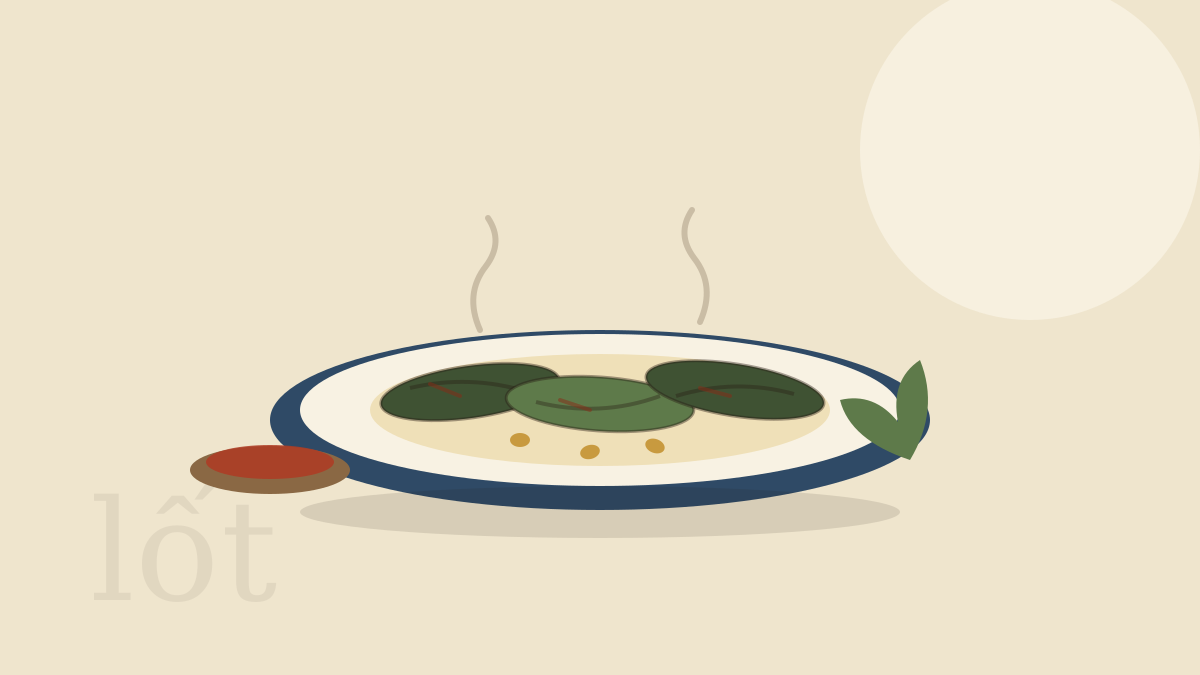 Nướng
Nướng- Prep
- 45 min
- Cook
- 10 min
- Serves
- 4
- Level
- Intermediate
Bò lá lốt belongs to bò bảy món — beef seven ways — the parade-format feast that Saigon restaurants built into an institution across the twentieth century, when French colonial appetites and cattle commerce made beef, long a luxury in Vietnam, something a restaurant could stake its name on. Seven courses of it, from fondue to porridge, with the leaf-wrapped rolls as the course everyone remembers. The leaf is lá lốt — wild betel, Piper sarmentosum — a low, glossy creeper that grows like rumor in southern gardens. It is not the betel leaf of the chewing quid, though English keeps marrying them, and diaspora restaurants from Westminster to Cabramatta have carried the rolls wherever the seven-course feast landed.
What the leaf does on the fire is the whole recipe. It shields the beef from direct flame while its own oils toast, so the meat steams in perfume while the wrapper chars — the glossy side of the leaf must face the fire, because that is where the scent lives. Fat is the other half of the argument: this dish predates lean ground beef and wants no part of it. Get the charcoal right, dunk generously, and you will understand why the other six courses struggle for attention.
Underfill the rolls. A thumb-thick log of beef cooks through in the time the leaf takes to char; a fat one leaves you choosing between raw centers and burnt leaves.
Lời đầu bếp · A word from the kitchen
Ingredientsnguyên liệu
Serves 4
Beef filling
- 500 gground beef — about 1 lb, 20% fat — chuck is right; lean beef makes sawdust rolls
- 100 gfatty ground pork — 3.5 oz; the traditional insurance policy against dry beef — skippable if your beef is properly fatty
- 2lemongrass stalks — tender cores only, minced to near-paste
- 3garlic cloves — minced
- 2shallots — minced
- 1 tbspfish sauce (nước mắm)
- 2 tspsugar
- 1 tspcurry powder — or five-spice — both run through Saigon kitchens; curry powder is the more southern habit
- 1 tspfreshly ground black pepper
Methodcách làm
Step 1: Make the filling
Mix the beef, pork, lemongrass, garlic, shallots, fish sauce, sugar, curry powder, and pepper with your hands until it turns slightly sticky. Rest it 30 minutes in the fridge — the salt and sugar need time to move through the meat, and a cold filling rolls cleaner.
Step 2: Wrap the rolls
Lay a leaf glossy-side down, stem toward you. Set a thumb-thick log of filling across the wide end, roll away from you, and pin the flap with a piece of stem or a toothpick soaked in water. The glossy face must end up outside — that is the surface that chars and releases the leaf's perfume.
Step 3: Make the scallion oil
Warm the oil until it shimmers, pour it over the sliced scallions, and add a pinch of salt. This is mỡ hành — scallion oil — and it does the gloss-and-richness work that butter does elsewhere.
Step 4: Grill hot and fast
Cook over medium-hot charcoal or a hard cast-iron pan, 6 to 8 minutes, turning every 2. The leaves should blister and blacken at the edges — that char is seasoning, not damage. Ground beef must cook through; there is no medium-rare inside a leaf. An instant-read should say 71°C (160°F).
Step 5: Dress and serve
Brush the hot rolls with scallion oil, shower them with peanuts, and serve with bún, lettuce, herbs, and a bowl of nước chấm. The correct technique is a lettuce-and-rice-paper bundle dunked to the knuckle.
Đồ nghề · The tools
Equipment
Charcoal grill / grill pan
Vỉ nướngNướng means fire, and lemongrass pork wants char and smoke. A small charcoal grill is the true answer; a screaming-hot cast-iron grill pan under a cracked window is the honest apartment one.
Shop on Amazon →Mortar & pestle
Cối chàyLemongrass, garlic, and chilies pounded release oils a blender never finds — it bruises where blades slice. The sound of a Vietnamese kitchen starting dinner.
Shop on Amazon →
Equipment links are Amazon affiliate links. As an Amazon Associate we earn from qualifying purchases, at no cost to you. Disclosure.
Questions from the kitchen
Where do I find lá lốt, and what does substituting cost me?
Vietnamese and Thai markets sell it fresh as lá lốt or bai cha plu, often near the banana leaves. Perilla (shiso) is the honest fallback — it wraps and grills the same, but you trade lá lốt's dark, peppery incense for something brighter and more anise-like. Grape leaves work structurally and taste like a different dish. Never dried leaves of anything.
Can I make these without a grill?
Yes — a cast-iron pan or a broiler both work, and street vendors in Saigon cook them on flat-tops all day. You lose the smoke but keep the char, which matters more. Oil the pan lightly and resist moving the rolls for the first two minutes.
Is lá lốt the betel leaf people chew?
No, and the confusion is old. Chewing betel is Piper betle; lá lốt is Piper sarmentosum, a milder cousin called wild betel in English. Same family, same heart-shaped leaf, entirely different job.
Nấu tiếp · Cook next
Keep the burner on
 Nướng
NướngGrills & Lemongrass·80 min·Intermediate
Mắc Khén Grilled ChickenGà nướng mắc khén
Spatchcocked chicken under a crust of wild mắc khén pepper, grilled or roasted hot, with chẳm chéo — the herbal dipping salt of the northwest.
 Nướng
NướngGrills & Lemongrass·55 min·Intermediate
Lemongrass Pork SkewersNem lụi
Huế's nem lụi — springy pork paste grilled on lemongrass stalks, wrapped in rice paper and herbs, and dragged through a peanut sauce with a secret.
 Nướng
NướngGrills & Lemongrass·45 min·Intermediate
Chả Cá Lã VọngChả cá Lã Vọng
Hanoi's most famous single-dish meal — turmeric and galangal fish seared in oil, then finished at the table under a collapsing heap of dill and scallions.