Bún Chả
Bún chả
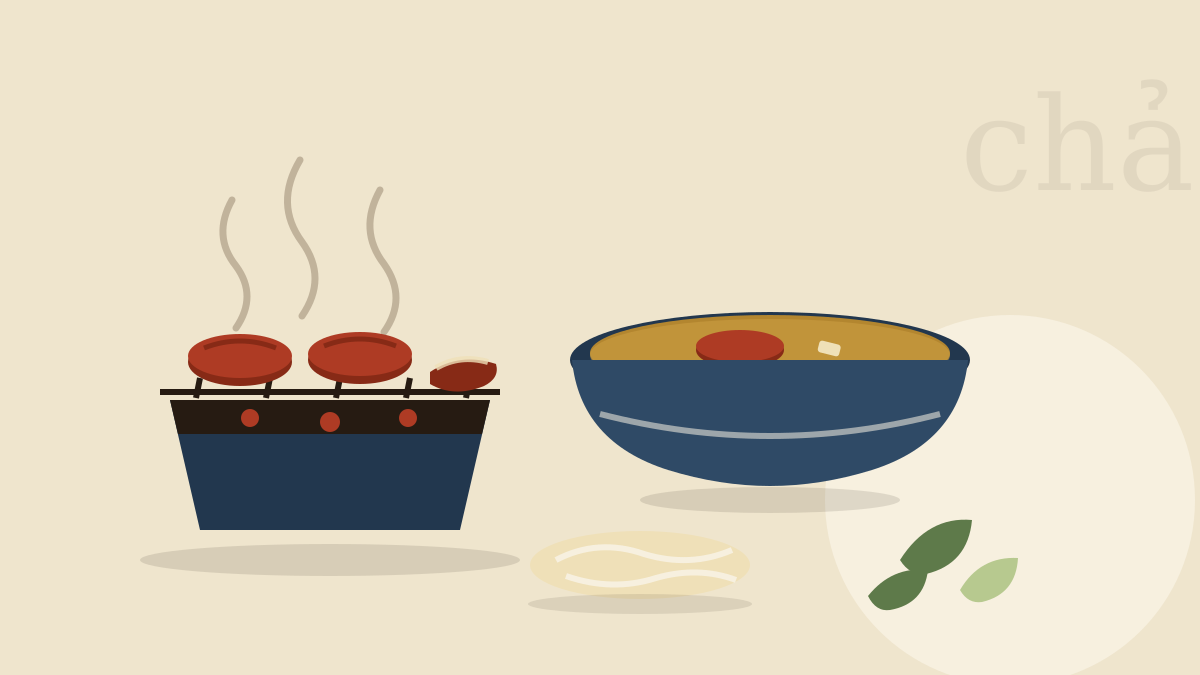
Hanoi's charcoal lunch — smoky pork patties and caramel-marinated belly dropped into a warm, sweet-sour dipping broth with cold noodles and herbs.
By Vietnamese Cookbook Kitchen · June 5, 2026
Hà Nội & the Red River DeltaĐổi Mới era, 1986–2008
 Nướng
Nướng- Prep
- 45 min
- Cook
- 25 min
- Serves
- 4
- Level
- Intermediate
Bún chả is older than any living cook — Hanoi writers were homesick for it in print by the 1950s — but the institution the world knows, the alley at noon, the sidewalk brazier fogging a whole block with pork smoke, is a child of Đổi Mới. When the market reopened after 1986, grilling pork over a bucket of coals was a business you could start with almost nothing, and the city's lunch hour reorganized itself around the smell.
The recipe's one real idea is calibration: nothing in bún chả is seasoned to stand alone. The meat is marinated a shade too sweet, the broth mixed a shade too weak, the noodles left entirely plain — and each is wrong until they meet in the bowl. If you taste as you go (you should), judge every component by what it's missing, because something else is carrying it.
A word for the caramel, the step most abroad-cooks skip: those thirty seconds of deliberately overshooting the sugar are what separate bún chả from generic sweet grilled pork. The dark edge of nước màu reads on the palate as depth and on the grill as color, and no amount of extra fish sauce can fake it.
Charcoal is an ingredient here, not a heat source — if you must use the broiler, let some fat drip and catch, because pork grilled over sterile heat makes a polite bún chả, and polite is wrong.
Lời đầu bếp · A word from the kitchen
Ingredientsnguyên liệu
Serves 4
The pork and marinade
- 400 gground pork shoulder — about 14 oz — ask for a coarse grind with at least 20% fat
- 400 gpork belly — about 14 oz, skinless, sliced 5 mm / ¼ in thin
- 4shallots — minced fine
- 3garlic cloves — minced
- 3 tbspfish sauce (nước mắm)
- 2 tbspsugar — for the quick caramel — the marinade's color and its bitter edge
- 1 tbspoyster sauce — the modern Hanoi shortcut to gloss and depth
- 1 tspblack pepper — coarsely ground
The dipping broth and pickles
- 80 mlfish sauce (nước mắm) — about ⅓ cup
- 60 gsugar — about 5 tbsp
- 60 mlrice vinegar — 4 tbsp — vinegar, not lime, is the classic sour for this broth
- 700 mlwarm water — about 3 cups
- 200 ggreen papaya or kohlrabi — about 7 oz, sliced into thin bite-size squares
- 1carrot — sliced thin on the diagonal
- 1 tspsalt — for weeping the pickles
The table
- 600 gfresh bún (rice vermicelli) — about 1⅓ lb cooked — or 300 g dried, boiled, rinsed cold
- 1 headsoft lettuce — butter or red-leaf, torn
- 2 handfulsherbs — perilla (tía tô), mint, and cilantro — perilla is the one worth hunting for
- to servesliced garlic and bird's-eye chili — stirred in at the table, to each eater's taste
Methodcách làm
Step 1: Burn the caramel
Melt the sugar with a spoon of water in a small pan and let it go past golden to a dark mahogany that smells one second short of burnt — this is nước màu, and its faint bitterness is what keeps the pork from tasting like candy. Off the heat, stir in a spoon of water to loosen it (it will spit), then cool.
Step 2: Marinate both cuts
Whisk the caramel with the shallots, garlic, fish sauce, oyster sauce, and pepper. Work half into the ground pork and turn the belly slices in the rest. Shape the ground pork into flat patties the size of a fat coin, about 6 cm across — thin patties char faster than they dry out. Rest at least 1 hour, or overnight in the fridge.
Step 3: Weep and pickle the vegetables
Toss the papaya and carrot with the salt and leave 15 minutes until limp and glassy, then squeeze and dress with 2 tablespoons each of the sugar and vinegar borrowed from the broth quantities. The pickle should still crunch — it is the only crisp thing in the bowl, so guard it.
Step 4: Make the broth almost too weak
Dissolve the sugar in the warm water, then add the fish sauce and vinegar. Taste — it should read like nước chấm that lost an argument, noticeably weaker than a dipping sauce. It has to be, because smoky meat, pickles, garlic, and chili are all about to land in it. Keep it warm, not hot.
Step 5: Grill over charcoal
Grill the patties and belly over hot coals — a hinged grill basket is the authentic tool and saves every patty — turning until the edges genuinely char and blister, 3 to 4 minutes a side. Ground pork must reach 71°C / 160°F inside; the belly is done when the fat is translucent and the edges crackle. Under a broiler, work as close to the element as the pan allows.
Step 6: Assemble the bowls
Ladle the warm broth into individual bowls, slide the meat straight off the grill into it, and top with a spoonful of pickles. The hiss when hot pork meets warm broth is the dish announcing itself — the fat and smoke bloom into the liquid and finish the seasoning you deliberately left short.
Step 7: Eat it the Hanoi way
Noodles and herbs stay outside the bowl. Take a chopstick-load of cold bún, drag it through the broth with a piece of meat and a leaf of perilla, and eat. Don't tip everything in at once — the point is the temperature gap, cold noodles through warm smoky broth, rebuilt bite by bite.
Đồ nghề · The tools
Equipment
Portable gas burner
Bếp ga miniLẩu is not lẩu if someone has to keep walking to the stove. The tabletop butane burner turns a pot of broth into a two-hour dinner party.
Shop on Amazon →Charcoal grill / grill pan
Vỉ nướngNướng means fire, and lemongrass pork wants char and smoke. A small charcoal grill is the true answer; a screaming-hot cast-iron grill pan under a cracked window is the honest apartment one.
Shop on Amazon →Mortar & pestle
Cối chàyLemongrass, garlic, and chilies pounded release oils a blender never finds — it bruises where blades slice. The sound of a Vietnamese kitchen starting dinner.
Shop on Amazon →Julienne peeler
Dao bào sợiThe three-dollar tool that shreds green papaya and mango into long, springy threads for gỏi. Look for the Thai Kiwi brand — it hangs in every Southeast Asian market for a reason.
Shop on Amazon →
Equipment links are Amazon affiliate links. As an Amazon Associate we earn from qualifying purchases, at no cost to you. Disclosure.
Questions from the kitchen
I don't have a charcoal grill — is it still worth making?
Yes. Use the broiler with the rack at its highest slot, or a cast-iron pan just short of smoking, and accept about 85% of the dish. What you're chasing is dripping fat catching and smoking back onto the meat, so don't line the pan so thoroughly that nothing ever sizzles.
Can I skip the belly and just make patties?
You can — plenty of Hanoi stalls sell chả viên only, and doubling the ground pork works fine. But the two textures are the dish's inner argument, springy patty against crackling belly, so if your butcher has belly, take it.
Is the dipping broth supposed to be hot?
No — warm, around body temperature. Hot broth wilts the herbs, cooks the pickle soft, and scalds the point of the dish, which is dipping cold noodles. Many Hanoi places serve it barely warm even in winter; the just-grilled meat carries the heat.
Nấu tiếp · Cook next
Keep the burner on
 Nướng
NướngGrills & Lemongrass·80 min·Intermediate
Mắc Khén Grilled ChickenGà nướng mắc khén
Spatchcocked chicken under a crust of wild mắc khén pepper, grilled or roasted hot, with chẳm chéo — the herbal dipping salt of the northwest.
 Nướng
NướngGrills & Lemongrass·55 min·Intermediate
Lemongrass Pork SkewersNem lụi
Huế's nem lụi — springy pork paste grilled on lemongrass stalks, wrapped in rice paper and herbs, and dragged through a peanut sauce with a secret.
 Nướng
NướngGrills & Lemongrass·45 min·Intermediate
Chả Cá Lã VọngChả cá Lã Vọng
Hanoi's most famous single-dish meal — turmeric and galangal fish seared in oil, then finished at the table under a collapsing heap of dill and scallions.