Whole Field-Fire Snakehead
Cá lóc nướng trui
The Mekong Delta's straw-fire fish, reproduced on a home grill — snakehead skewered whole and charred bare, no scaling, no seasoning, until it's done.
By Vietnamese Cookbook Kitchen · April 6, 2026
The Mekong DeltaThe Lê Dynasty era, 1428–1789
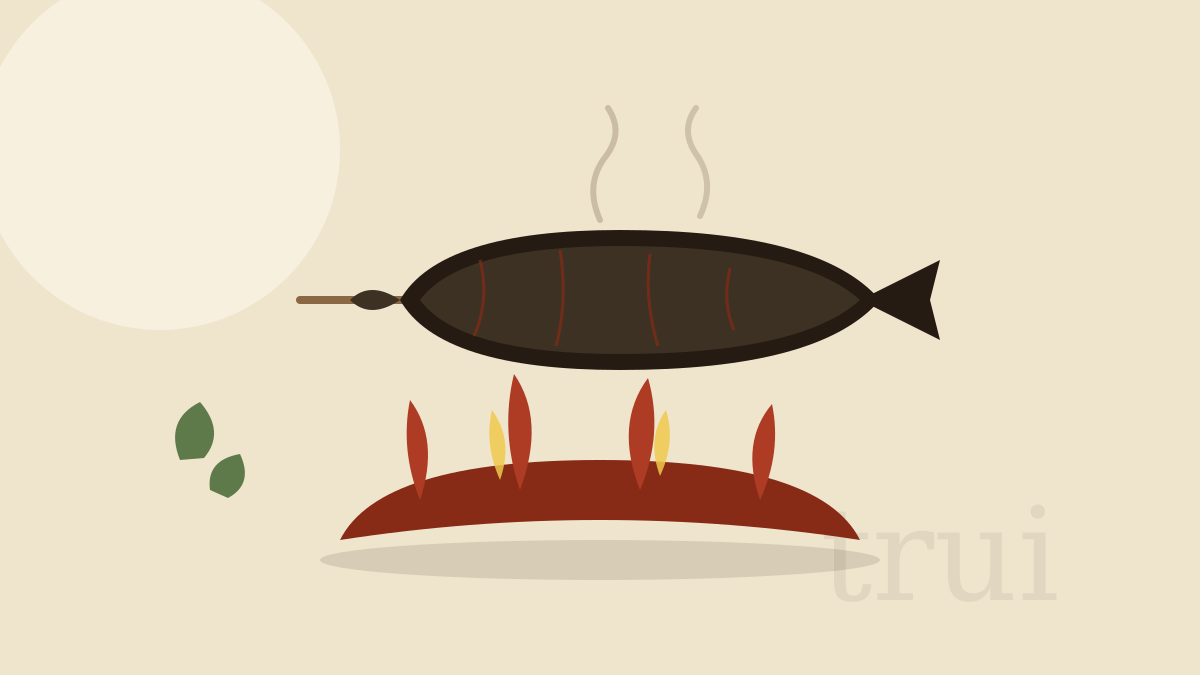 Nướng
Nướng- Prep
- 15 min
- Cook
- 25 min
- Serves
- 4
- Level
- Intermediate
Cá lóc nướng trui reads almost like an instruction with no recipe attached: take a whole snakehead, skewer it, and burn it. That bluntness is the history. Vietnamese settlers pushing into the Mekong Delta from the seventeenth century onward worked rice paddies that gave up snakehead fish by the basket and dry straw by the ton after harvest — so the fish went on a stick straight into a blaze of that straw, no time lost to scaling or seasoning a catch that would be eaten within the hour. It reads today as rustic theater at delta restaurants, torched tableside, but it began as field food: fast, fireside, and free of anything a farmer didn't already have to hand.
The technique only works because of what it sacrifices: the blackened skin is not garbage, it's a shield that steams the flesh inside while the outside takes the fire's full punishment. Peel it away and what's underneath is white, clean, barely smoky — a fish that tastes more of itself than any marinade could manage. Wrapped in rice paper with herbs and peanuts, dragged through nước chấm, it is a dish built entirely around restraint at every step except the fire.
Do not scale the fish and do not oil the grate. The charred skin is meant to be peeled off and discarded — it protects the flesh underneath the way bark protects a tree, and stripping it early just lets the fire in.
Lời đầu bếp · A word from the kitchen
Ingredientsnguyên liệu
Serves 4
Fish
- 1whole snakehead fish (cá lóc) — about 800 g–1 kg, gutted but unscaled and left whole, head and tail on; whole branzino or trout are the honest stand-in outside Asian markets, at roughly the same price per fish
- 1bamboo skewer or a sturdy metal spit — run lengthwise through the fish from mouth to tail, to hold it straight over the fire — traditionally a length of green bamboo or a lemongrass stalk itself
To serve
- 1 handfulcrushed roasted peanuts
- 4scallions — finely sliced, for a quick oil-scallion drizzle
- 30 mlneutral oil — 2 tbsp, heated until shimmering, for the scallion oil
- 1pack rice paper (bánh tráng)
- 200 grice vermicelli (bún)
- 1 large handfulmixed herbs and lettuce — lettuce, mint, perilla, and cucumber batons for wrapping
- 500 mlnước chấm hoặc mắm nêm — our foundations nước chấm works; a fermented anchovy mắm nêm is the delta's louder, more traditional pairing if you can find it
Methodcách làm
Step 1: Skewer the fish straight
Run the skewer through the fish from mouth to tail so it holds a straight line — a curled fish grills unevenly, charring at the bends before the thick part behind the head is done. Do not scale, gut beyond a single slit for the innards, or season it. The whole point of nướng trui is fire meeting fish with nothing between them.
Step 2: Build a hot, direct fire
Get a charcoal or wood fire to a steady high heat, or heat a gas grill to its highest setting. The original method plants the skewered fish upright in a mound of dry rice straw and burns the straw off in one fast blaze — a home grill trades that speed for control, which is the honest trade.
Step 3: Char it hard, no basting
Lay the fish directly over the hottest part of the grill and let the skin blacken and blister without moving it for several minutes a side, turning two or three times total over 20 to 25 minutes. The scales and skin are meant to burn black and crack — that layer sacrifices itself so the flesh underneath steams inside it.
Step 4: Check for doneness
The fish is done when a skewer slides easily into the thickest part behind the head and the flesh has gone opaque white throughout — an 800 g fish usually needs the full 25 minutes over a proper fire. Undercooked snakehead is a real risk; when in doubt, give it longer.
Step 5: Make the scallion oil
While the fish rests a minute off the heat, pour the hot oil over the sliced scallions in a small bowl — it should sizzle audibly and wilt them instantly. This gets drizzled over the peeled flesh at the table, the way it crowns bánh xèo and steamed fish across the country.
Step 6: Peel, wrap, and dip
Split the blackened skin down the back with a knife and peel it away in one motion, discarding it — the white flesh underneath comes free in clean flakes. Build wraps at the table: rice paper, vermicelli, lettuce, herbs, a portion of fish, a spoon of scallion oil and crushed peanuts, dipped in nước chấm or mắm nêm.
Đồ nghề · The tools
Equipment
Portable gas burner
Bếp ga miniLẩu is not lẩu if someone has to keep walking to the stove. The tabletop butane burner turns a pot of broth into a two-hour dinner party.
Shop on Amazon →Charcoal grill / grill pan
Vỉ nướngNướng means fire, and lemongrass pork wants char and smoke. A small charcoal grill is the true answer; a screaming-hot cast-iron grill pan under a cracked window is the honest apartment one.
Shop on Amazon →Bánh xèo pan
Chảo bánh xèoA thin nonstick crêpe pan with low sloping sides — the crackling lace edge of bánh xèo depends on the batter running thin and releasing clean. Your heavy skillet will steam it instead.
Shop on Amazon →Bamboo steamer
Xửng hấpFor bánh bao, xôi, and fish steamed whole — bamboo breathes, so nothing drips condensation back onto your work. Line it with a cabbage leaf, not parchment, and steal the leaf after.
Shop on Amazon →Mortar & pestle
Cối chàyLemongrass, garlic, and chilies pounded release oils a blender never finds — it bruises where blades slice. The sound of a Vietnamese kitchen starting dinner.
Shop on Amazon →
Equipment links are Amazon affiliate links. As an Amazon Associate we earn from qualifying purchases, at no cost to you. Disclosure.
Questions from the kitchen
What does "nướng trui" actually mean?
Trui describes the old field method — planting the skewered fish upright in a pyre of dry rice straw and burning it off fast, a technique the delta's rice farmers built around what was already lying in the paddy after harvest. A grill can't replicate the straw's speed or its particular smoke, but it gets close enough for a home kitchen, and the char-then-peel logic is the same.
Can I use a different fish?
Snakehead's dense, mild flesh and thick skin are built for this technique, so branzino or whole trout are the closest stand-ins most Western markets carry — similar size, similar price, skin sturdy enough to blacken without falling apart. Ask your fishmonger to gut but not scale it.
Is it safe to eat freshwater fish this way?
Yes, as long as it reaches full doneness — opaque flesh throughout and a skewer that slides in freely, not a fish pulled off the grill early because the outside looks done. Freshwater fish in particular deserves that extra few minutes; the char on the skin is not a proxy for the flesh being cooked through.
Nấu tiếp · Cook next
Keep the burner on
 Nướng
NướngGrills & Lemongrass·80 min·Intermediate
Mắc Khén Grilled ChickenGà nướng mắc khén
Spatchcocked chicken under a crust of wild mắc khén pepper, grilled or roasted hot, with chẳm chéo — the herbal dipping salt of the northwest.
 Nướng
NướngGrills & Lemongrass·55 min·Intermediate
Lemongrass Pork SkewersNem lụi
Huế's nem lụi — springy pork paste grilled on lemongrass stalks, wrapped in rice paper and herbs, and dragged through a peanut sauce with a secret.
 Nướng
NướngGrills & Lemongrass·45 min·Intermediate
Chả Cá Lã VọngChả cá Lã Vọng
Hanoi's most famous single-dish meal — turmeric and galangal fish seared in oil, then finished at the table under a collapsing heap of dill and scallions.