Salt-Chili Grilled Whole Fish
Cá nướng muối ớt
A whole fish scored, packed in coarse salt and chili, and caged over charcoal on a central-coast beach — the doneness test is the flake, not the clock.
By Vietnamese Cookbook Kitchen · March 16, 2026
The South Central CoastThe Lê Dynasty era, 1428–1789
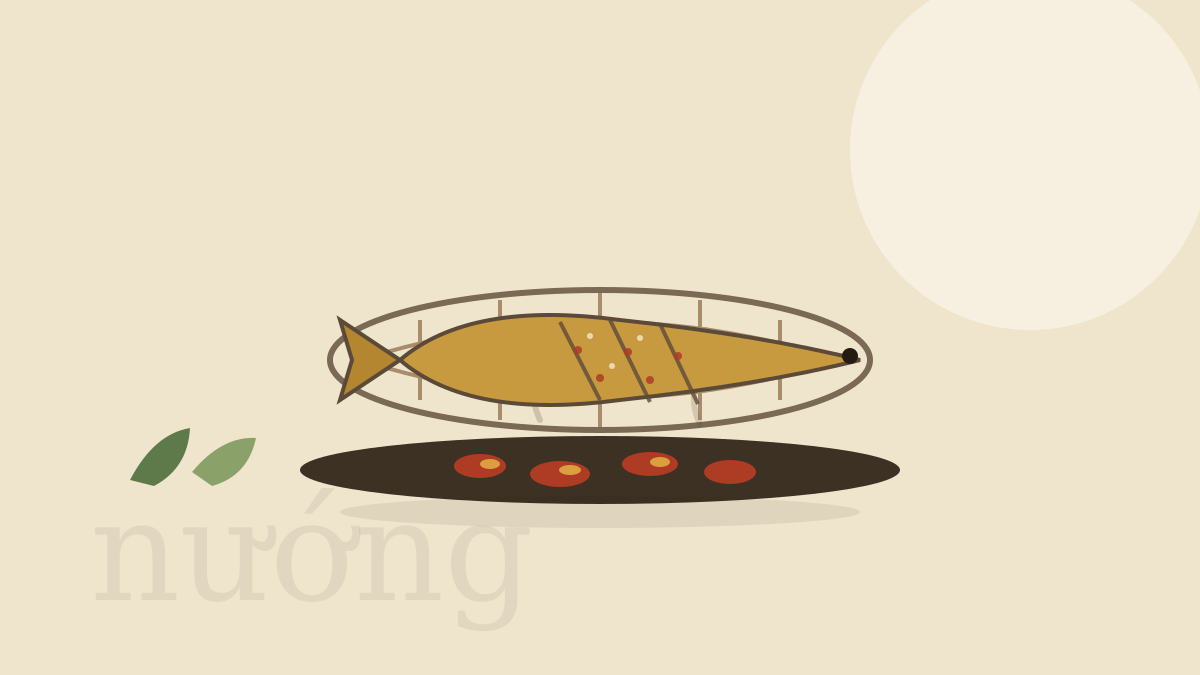 Nướng
Nướng- Prep
- 20 min
- Cook
- 25 min
- Serves
- 4
- Level
- Intermediate
Along the beaches of Bình Thuận, Phú Yên, and Khánh Hòa, this is what a charcoal brazier is for. Cá nướng muối ớt is fisherman's arithmetic: whatever came up in the morning net, a handful of coastal aromatics, and a fire built low on the sand by late afternoon. The scoring, the caging basket, the fan of lemongrass and chili packed into the cuts — none of it is restaurant technique. It is what people who grill fish every day of their working lives learned does the job fastest and best.
The method rewards restraint in exactly one place: doneness is read by the flake, never by a clock, because a whole fish's shoulder and tail cook at different speeds no matter how evenly you score it. Everything else is generous — pack the rub in hard, don't be shy with the lemongrass, and let the skin blister before you dare turn it. Eaten hot off the grate with herbs and a squeeze of lime, it tastes like a coastline that has never needed a menu to know what's good.
Buy the fish the size of the grill you actually own. A fish too long for the cage bends at both ends when you flip it, and a bent fish tears its skin exactly where you scored it.
Lời đầu bếp · A word from the kitchen
Ingredientsnguyên liệu
Serves 4
The fish
- 1whole fish, 700–900 g, scaled and gutted — about 1.5–2 lb — sea bream, snapper, or grouper; ask the fishmonger to leave the head and tail on, both are eaten
- 2 tbspneutral oil — for the skin, so the salt crust doesn't stick and tear it on the grate
Muối ớt (salt-chili rub)
- 3 tbspcoarse sea salt
- 2bird's-eye chilies, minced fine — seeds in for real heat, out for color without the burn
- 3garlic cloves, minced fine
- 2 stalkslemongrass, tender core only, minced — about 3 tbsp minced — see the foundations page for how to strip a stalk down to the usable core
- 1 tbspsugar
- 1 tspground white pepper
To serve
- 1plate of herbs — perilla, mint, and Vietnamese coriander (rau răm)
- 1green mango or star fruit, sliced — optional but very beach-stall; the tartness cuts the char
- 240 mlnước chấm or muối ớt xanh — 1 cup — the foundations nước chấm, or a green-chili salt-lime dip if you want the sharper, drier option
Methodcách làm
Step 1: Score the fish
Cut three or four diagonal slashes to the bone on each side, angled the same direction like a fan. This is not decoration — it opens a path for the rub to reach the flesh and lets the thick shoulder meat cook at the same rate as the thin tail.
Step 2: Pack the rub into the scores
Mix the salt, chili, garlic, lemongrass, sugar, and pepper into a damp paste and work it into every cut, along the cavity, and over both flanks. Let the fish sit 20 minutes at room temperature — long enough for the salt to season past the skin, not so long it starts to cure the surface.
Step 3: Oil and cage it
Brush both sides with oil and set the fish in a hinged wire grill basket if you have one — the classic beach-brazier tool, and the difference between flipping a fish and reassembling one. No basket, no shame: a well-oiled grate and a wide metal spatula do the job with more attention required.
Step 4: Grill over medium coals
Cook about 10–12 minutes a side over medium charcoal, lid off, resisting the urge to move it before the skin releases on its own — a fish that sticks isn't ready to turn. The scored cuts will have opened and curled slightly when it's close.
Step 5: Check doneness by the flake, not the clock
Slide a knife into the thickest part along the spine and twist gently: the flesh should separate into clean white flakes and pull cleanly from the bone, with no translucent center. A fish this size rarely needs more than 22–25 minutes total — pull it a minute early rather than a minute late, since carryover heat keeps cooking a whole fish longer than you'd expect.
Step 6: Rest, then serve on the platter
Let it rest 5 minutes so the juices settle back into the flesh, then lay it whole on a platter with the herbs and fruit around it. Diners pull pieces by hand or fork, wrap them in a perilla leaf, and dip — the fish is the centerpiece, not a portioned dish.
Đồ nghề · The tools
Equipment
Charcoal grill / grill pan
Vỉ nướngNướng means fire, and lemongrass pork wants char and smoke. A small charcoal grill is the true answer; a screaming-hot cast-iron grill pan under a cracked window is the honest apartment one.
Shop on Amazon →Mortar & pestle
Cối chàyLemongrass, garlic, and chilies pounded release oils a blender never finds — it bruises where blades slice. The sound of a Vietnamese kitchen starting dinner.
Shop on Amazon →Julienne peeler
Dao bào sợiThe three-dollar tool that shreds green papaya and mango into long, springy threads for gỏi. Look for the Thai Kiwi brand — it hangs in every Southeast Asian market for a reason.
Shop on Amazon →
Equipment links are Amazon affiliate links. As an Amazon Associate we earn from qualifying purchases, at no cost to you. Disclosure.
Questions from the kitchen
What if I don't have charcoal?
A very hot outdoor gas grill or a broiler close to the element gets you most of the way — you lose the smoke, not the crust, since the rub does most of the flavor work. Score, pack, and oil exactly the same; just watch the timing more closely, since gas runs less forgiving than coals that mellow as they burn down.
Which fish actually works here?
Anything whole, firm-fleshed, and under a kilo — sea bream, red snapper, and grouper are the common central-coast choices, chosen for skin that crisps without falling apart on the grate. Avoid anything very oily like mackerel for this method; the salt crust fights the fish's own fat instead of seasoning it.
Is a fish cooked this way safe if the center still looks slightly pink near the bone?
Pink flesh right against the spine is normal in a whole fish and not the same as raw — check instead that the meat flakes cleanly and shows no translucent, glassy look anywhere. If in doubt, an instant-read thermometer in the thickest part should clear 63°C (145°F).
Nấu tiếp · Cook next
Keep the burner on
 Nướng
NướngGrills & Lemongrass·80 min·Intermediate
Mắc Khén Grilled ChickenGà nướng mắc khén
Spatchcocked chicken under a crust of wild mắc khén pepper, grilled or roasted hot, with chẳm chéo — the herbal dipping salt of the northwest.
 Nướng
NướngGrills & Lemongrass·55 min·Intermediate
Lemongrass Pork SkewersNem lụi
Huế's nem lụi — springy pork paste grilled on lemongrass stalks, wrapped in rice paper and herbs, and dragged through a peanut sauce with a secret.
 Nướng
NướngGrills & Lemongrass·45 min·Intermediate
Chả Cá Lã VọngChả cá Lã Vọng
Hanoi's most famous single-dish meal — turmeric and galangal fish seared in oil, then finished at the table under a collapsing heap of dill and scallions.