Nam Ô Cured-Fish Salad
Gỏi cá Nam Ô
The raw-fish salad of Nam Ô fishing village — lime-cured herring rolled in toasted rice powder with wild herbs, made safely abroad with frozen sushi-grade fish.
By Vietnamese Cookbook Kitchen · May 8, 2026
Quảng Nam & Đà NẵngNguyễn & the Huế Court era, 1802–1883
 Gỏi
Gỏi- Prep
- 45 min
- Cook
- 10 min
- Serves
- 4
- Level
- Advanced
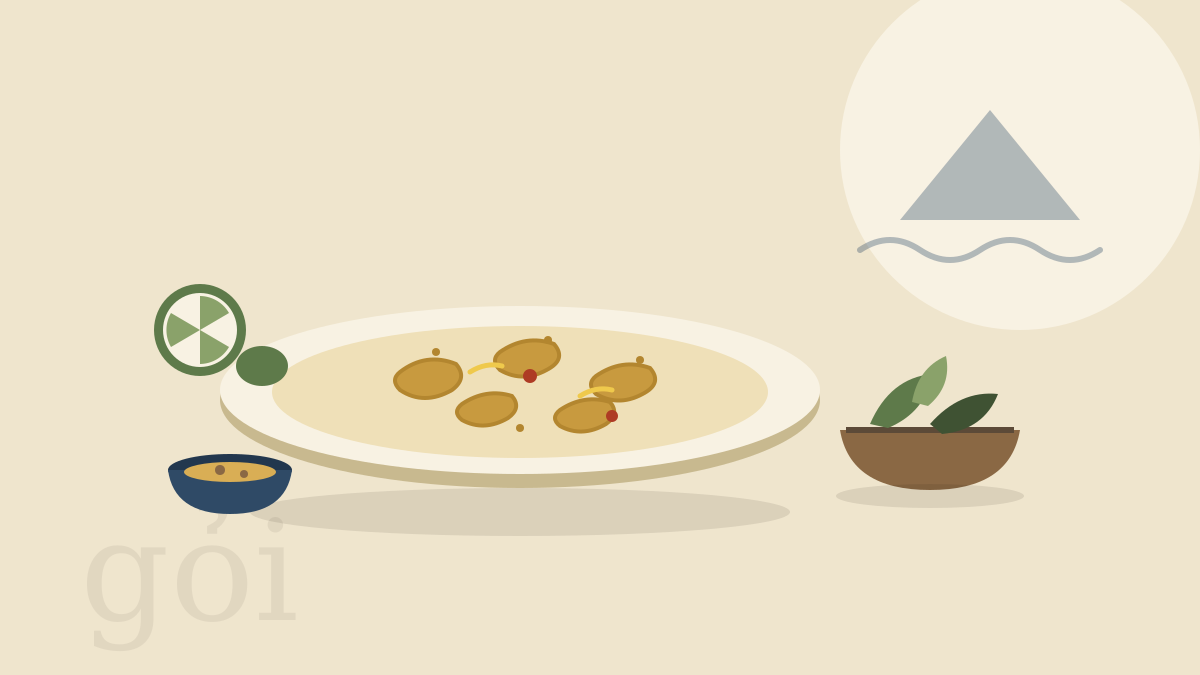
Nam Ô sits where the Hải Vân pass runs down to the sea at the northern edge of Đà Nẵng, a fishing village older than any of the borders around it. Under the Nguyễn dynasty its anchovy fish sauce traveled to the court at Huế — local tradition holds it was tribute goods, and the craft was formally recognized as national intangible cultural heritage in 2019. Gỏi cá is the other thing the village is known for: herring straight off the boats, cured in lime, rolled in toasted rice powder, and eaten in leaves foraged from the mountain that shelters the bay.
Abroad, the dish survives one honest substitution: the village's morning-fresh catch becomes commercially frozen sushi-grade fish, because freezing — not lime — is what makes raw fish safe. Everything else translates intact. The thính jacket, nutty and dry against the cool cured fish; the peanut-thickened sauce built from the cure itself; the bitter green banana holding the whole roll in tension. It is among the most sophisticated plates in central Vietnam, and it comes from a village where nobody would ever call it that.
Read the safety note before the shopping list. The lime cure changes the fish's texture, not its safety — only proper commercial freezing does that, and no amount of tradition overrules a parasite.
Lời đầu bếp · A word from the kitchen
Ingredientsnguyên liệu
Serves 4
The fish and its cure
- 400 gsushi-grade fish fillet, skinned — about 14 oz — commercially frozen for raw consumption, no exceptions; herring or sardine is traditional, mackerel or fluke-style whitefish are workable stand-ins
- 100 mlfresh lime juice — about 7 tbsp, from 3–4 limes
- 1 thumbginger, half minced, half in fine threads — galangal (riềng) if your market has it — sharper and more authentic
- 1shallot, sliced paper thin
- ½ tspsalt
Thính and dressing
- 60 graw glutinous or jasmine rice — about ⅓ cup, for the thính — toasted rice powder
- 3 tbsproasted peanuts, ground fine
- 2 tbspfish sauce (nước mắm) — a Nam Ô or Phú Quốc bottle if you own one — this is its home dish
- 1 tbspsugar
- 1–2bird's-eye chilies, minced
- 1garlic clove, minced
The table
- 16rice paper rounds (bánh tráng)
- 3 handfulssturdy mixed leaves and herbs — lettuce, mint, perilla, fig or young mango leaves if you can get them — in Nam Ô the basket is foraged from the Hải Vân foothills
- ½green banana, in thin coins — held in lime water
- 1starfruit or tart green apple, sliced thin
Methodcách làm
Step 1: Freeze or verify, then slice
Use fish sold as sushi- or sashimi-grade, which has been commercially frozen to kill parasites — or freeze your own impeccable fillet at -20°C (-4°F) for 7 days first, noting that many home freezers never get that cold. Slice the cold fillet across the grain into strips the width of a finger.
Step 2: Cure in lime
Toss the fish with lime juice, salt, minced ginger, and shallot and refrigerate 20–30 minutes, until the flesh turns opaque and firm at the edges while staying tender within. This is a ceviche-style acid cure — it sets texture and brightens flavor. It does not sterilize anything; the freezing already did that job.
Step 3: Toast the thính
Toast the raw rice in a dry pan over medium heat, shaking constantly, 8–10 minutes until deeply golden and nutty-smelling, then grind to a coarse powder. Thính is the dish's signature — it drinks the cure's moisture and coats each piece of fish in a toasty, sandy jacket.
Step 4: Squeeze, coat, and make the sauce
Drain the fish and squeeze it gently, reserving the milky curing liquid. Toss the fish with ginger threads and enough thính to coat each piece dryly. Whisk the reserved liquid with fish sauce, sugar, garlic, chili, and the ground peanuts into a creamy dipping sauce — in Nam Ô nothing from the fish is wasted, including its cure.
Step 5: Roll at the table
Serve the fish mounded beside the leaf basket, fruit, rice papers, and sauce. Each roll wants a leaf or two, a coin of green banana, a slice of starfruit, and a piece of fish — the bitter and sour elements are structural, cutting the richness so the next roll seems necessary.
Đồ nghề · The tools
Equipment
Portable gas burner
Bếp ga miniLẩu is not lẩu if someone has to keep walking to the stove. The tabletop butane burner turns a pot of broth into a two-hour dinner party.
Shop on Amazon →Mandoline
Bàn bàoĐồ chua lives or dies on evenness — carrot and daikon cut to the same whisper-thin matchstick pickle at the same speed. Use the guard; every Vietnamese grandmother has the scar that says otherwise.
Shop on Amazon →
Equipment links are Amazon affiliate links. As an Amazon Associate we earn from qualifying purchases, at no cost to you. Disclosure.
Questions from the kitchen
Is this dish safe to make at home?
Only under the recipe's conditions, so here they are plainly. Raw marine fish can carry parasitic worms, and lime juice does not kill them — that is a documented fact, not caution for its own sake. Safety comes from proper freezing: commercial sushi-grade fish is frozen to standards (for example -20°C for 7 days or -35°C for 15 hours) that destroy parasites. Buy that, keep it cold, and work cleanly. Pregnant women, young children, the elderly, and the immunocompromised should skip raw fish dishes entirely, this one included.
What fish do they use in Nam Ô?
Cá trích — herring — landed by the village's own boats the same morning, plus sardines in their season. Village cooks trust extreme freshness and generations of practice; a home cook an ocean away should trust the freezer standard instead. Frozen-at-sea herring or sardine fillets from a Japanese or Korean market are the closest honorable equivalent.
Can I cook the fish and keep the rest of the dish?
Yes, and the result is genuinely good rather than a consolation prize. Sear the strips briefly or poach them in the lime cure over low heat until just opaque, then proceed — thính coat, peanut sauce, leaf basket and all. You lose the silky rawness and keep the architecture, which is most of what makes the dish.
Nấu tiếp · Cook next
Keep the burner on
 Gỏi
GỏiRolls & Gỏi·25 min·Beginner
Green Mango SaladGỏi xoài
Green mango cut into crunchy threads, tossed with dried shrimp, rau răm, and a bold fish-sauce dressing — the central coast's sharpest little salad.
 Gỏi
GỏiRolls & Gỏi·75 min·Beginner
Fresh Spring RollsGỏi cuốn
Southern Vietnam's pork-and-shrimp fresh roll — herbs, vermicelli, and rice paper rolled with proper tension, plus the peanut-hoisin sauce it was born to meet.
 Gỏi
GỏiRolls & Gỏi·60 min·Beginner
Pork & Rice Paper RollsBánh tráng cuốn thịt heo
Đà Nẵng's boiled-pork platter — thin slices with their ribbon of fat, rice paper, a garden of herbs, and pungent mắm nêm doing the talking. You roll.