Chicken & Cabbage Gỏi
Gỏi gà bắp cải
The leftover-chicken salad of scarcity-era kitchens — shredded cabbage, poached chicken, and a fistful of rau răm doing the work a whole spice rack couldn't.
By Vietnamese Cookbook Kitchen · May 2, 2026
Sài Gòn & the SoutheastThe Subsidy Era era, 1975–1986
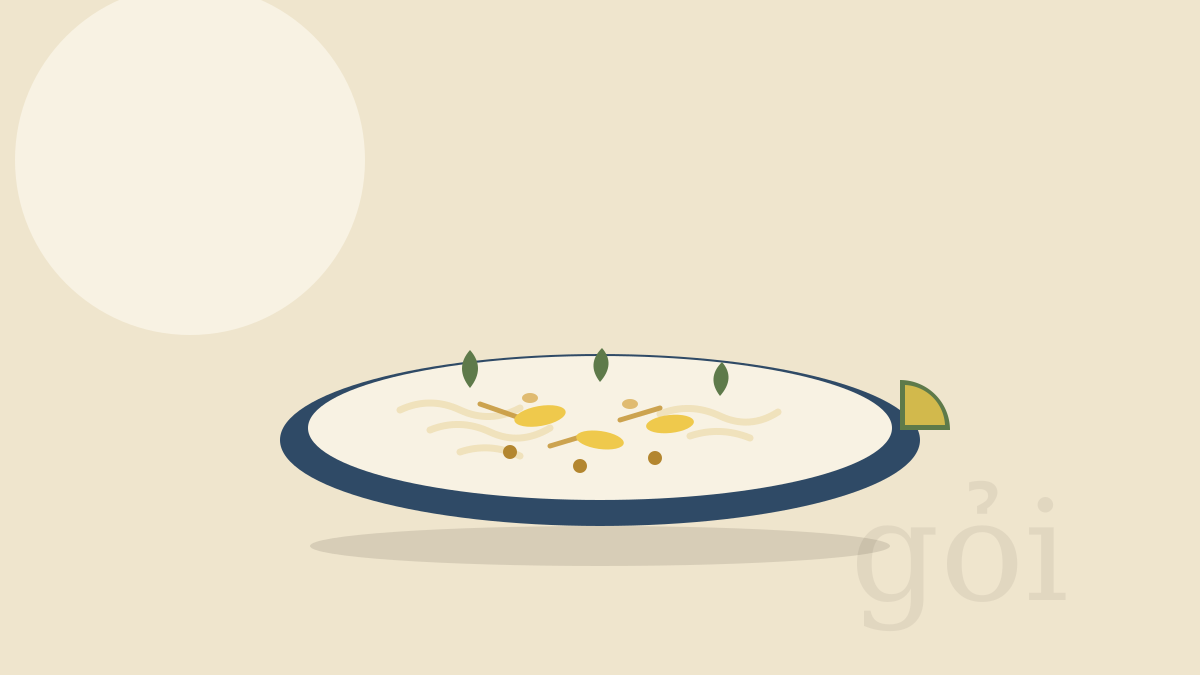 Gỏi
Gỏi- Prep
- 25 min
- Cook
- 20 min
- Serves
- 4
- Level
- Beginner
Gỏi gà bắp cải carries the fingerprints of the bao cấp period — the subsidy-and-rationing years that followed reunification, when meat was tightly rationed and a household's chicken had to answer for more than one meal. Poach a chicken for its broth, and what's left over becomes this: meat shredded thin and tossed through a mountain of cabbage bulked out with carrot and onion, so a portion that would barely feed two on its own stretches to feed a family. It's the kind of dish that gets remembered fondly by people who grew up eating it out of necessity and cooked by choice today for the same reason most economical dishes survive prosperity — it's simply good.
The whole salad depends on two disciplines most cooks skip: salting the cabbage well ahead so it weeps its water before the dressing arrives, and tossing rau răm in at the very last second so the leaves stay whole instead of wilting into mush. That peppery, citrus-sharp herb is doing more work than the ratio of ingredients suggests — it's the reason this reads as a specific Vietnamese dish and not a slaw with fish sauce poured over it. Eat it the day you make it; by tomorrow the cabbage has already told you it's done.
Salt the cabbage and let it weep before it ever meets the dressing. Skip that step and the salad drowns the nước chấm within twenty minutes, thin and watery by the time it reaches the table.
Lời đầu bếp · A word from the kitchen
Ingredientsnguyên liệu
Serves 4
Chicken
- 500 gbone-in chicken thighs or a small whole chicken piece — about 1 lb — poached and shredded; this salad is where yesterday's boiled chicken earns its second life
- 1knob ginger, smashed
- 1scallion, whole
- 1pinch salt
Salad
- 400 ggreen cabbage, shredded fine — about half a medium head
- 1carrot, julienned
- 0.5red onion, sliced paper-thin — soaked in cold water 10 minutes to soften the bite
- 1 tspfine salt — for salting the cabbage
- 30 grau răm (Vietnamese coriander), roughly torn — about 1 loosely packed cup — the herb this dish is named on; see the FAQ before substituting
- 30 groasted peanuts, crushed — about ¼ cup
- 15 gfried shallots — about 2 tbsp
Dressing
- 45 mlfish sauce (nước mắm) — 3 tbsp
- 45 mlfresh lime juice — 3 tbsp, about 1½ limes
- 40 gsugar — about 3 tbsp
- 60 mlwarm water — 4 tbsp
- 2garlic cloves, minced
- 1bird's-eye chili, sliced — optional, to taste
Methodcách làm
Step 1: Poach the chicken
Cover the chicken with cold water, add the ginger, scallion, and salt, and bring to a gentle simmer — never a rolling boil, which toughens the meat. Cook 15 to 18 minutes until just cooked through, then cool in its own broth before shredding by hand into bite-sized strips.
Step 2: Salt and drain the cabbage
Toss the shredded cabbage with the teaspoon of salt and let it sit in a colander 15 minutes, then squeeze out the water that collects — a good handful will come out. This is the difference between a crisp salad and a puddle on the plate an hour after dressing.
Step 3: Mix the dressing
Stir the sugar into the warm water until dissolved, then add the lime juice, fish sauce, garlic, and chili. Taste against a piece of the shredded cabbage, not off the spoon — the vegetables mute sharpness more than you'd expect.
Step 4: Toss just before serving
Combine the drained cabbage, carrot, onion, and shredded chicken in a wide bowl, pour the dressing over, and toss with your hands to coat every strand. Add the rau răm last, tossing once more so the leaves stay whole rather than bruising into the dressing.
Step 5: Finish and serve
Pile the salad onto a platter and scatter with crushed peanuts and fried shallots right before it reaches the table. This is a salad with a short life — serve within 30 minutes of tossing, while the cabbage still has bite.
Đồ nghề · The tools
Equipment
Mandoline
Bàn bàoĐồ chua lives or dies on evenness — carrot and daikon cut to the same whisper-thin matchstick pickle at the same speed. Use the guard; every Vietnamese grandmother has the scar that says otherwise.
Shop on Amazon →Julienne peeler
Dao bào sợiThe three-dollar tool that shreds green papaya and mango into long, springy threads for gỏi. Look for the Thai Kiwi brand — it hangs in every Southeast Asian market for a reason.
Shop on Amazon →
Equipment links are Amazon affiliate links. As an Amazon Associate we earn from qualifying purchases, at no cost to you. Disclosure.
Questions from the kitchen
What is rau răm, and can I skip it?
Rau răm — Vietnamese coriander, Persicaria odorata — is a peppery, slightly citrusy herb with no real substitute; cilantro is milder and rounder where rau răm is sharp and assertive. It is doing specific, load-bearing work in this dish, traditionally paired with poultry across Vietnamese cooking (it shows up wherever chicken meets salad). Skip it and you have a decent cabbage slaw, not gỏi gà.
Why is this dish tied to the bao-cấp era specifically?
Bao cấp — the subsidy-and-rationing period roughly from reunification through the mid-1980s — made meat scarce and cabbage cheap and plentiful, and this salad is a textbook product of that math: a little leftover chicken stretched across a mountain of shredded cabbage, dressed to taste like more than it is. The habit of repurposing a single poached chicken across two meals — broth first, salad second — dates from exactly that scarcity.
Can I use rotisserie chicken instead of poaching my own?
Yes, and plenty of home cooks do — shred about 400 g (2 cups) of rotisserie meat and skip the poaching step entirely. You'll lose the mild ginger-scallion perfume the poaching liquid gives the meat, but you'll have dinner in half the time.
Nấu tiếp · Cook next
Keep the burner on
 Gỏi
GỏiRolls & Gỏi·25 min·Beginner
Green Mango SaladGỏi xoài
Green mango cut into crunchy threads, tossed with dried shrimp, rau răm, and a bold fish-sauce dressing — the central coast's sharpest little salad.
 Gỏi
GỏiRolls & Gỏi·75 min·Beginner
Fresh Spring RollsGỏi cuốn
Southern Vietnam's pork-and-shrimp fresh roll — herbs, vermicelli, and rice paper rolled with proper tension, plus the peanut-hoisin sauce it was born to meet.
 Gỏi
GỏiRolls & Gỏi·60 min·Beginner
Pork & Rice Paper RollsBánh tráng cuốn thịt heo
Đà Nẵng's boiled-pork platter — thin slices with their ribbon of fat, rice paper, a garden of herbs, and pungent mắm nêm doing the talking. You roll.