Nem Rán (Northern Fried Rolls)
Nem rán
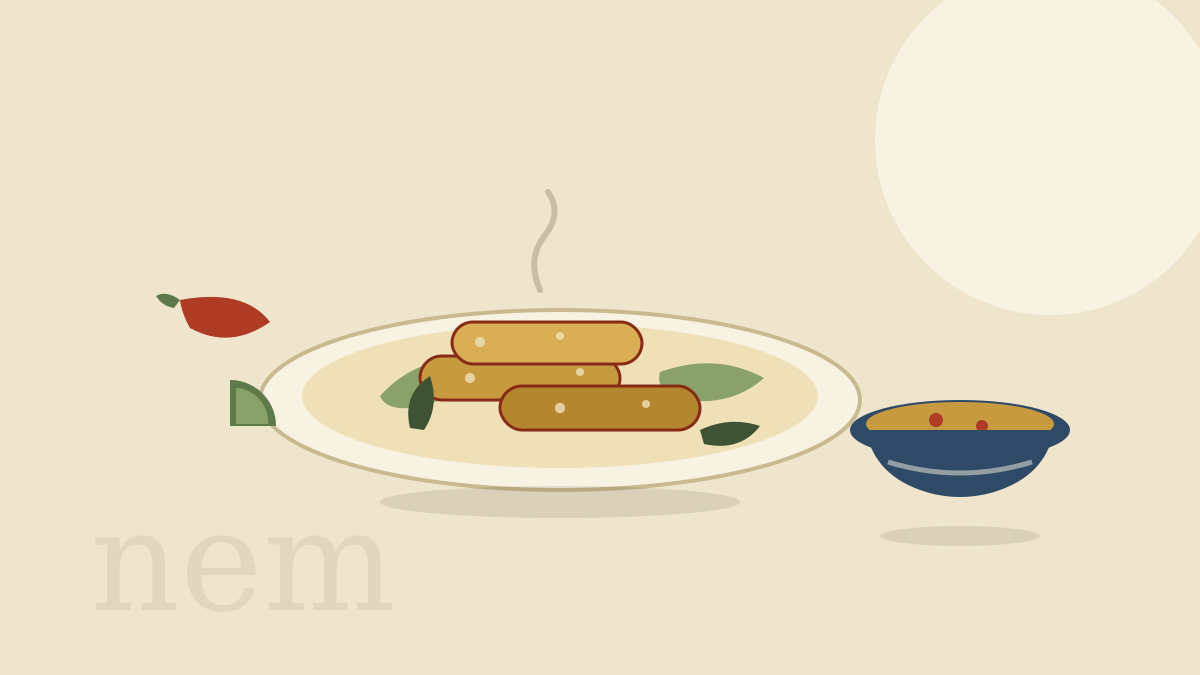
Hanoi's fried rolls — pork, wood ear, and glass noodles rolled in rice paper and fried twice for shatter, then eaten over herbs with nước chấm.
By Vietnamese Cookbook Kitchen · March 29, 2026
Hà Nội & the Red River DeltaThe Lê Dynasty era, 1428–1789
 Gỏi
Gỏi- Prep
- 45 min
- Cook
- 25 min
- Serves
- 6
- Level
- Intermediate
Every region of Vietnam fries a roll, and every region is certain its own is the reference. Hanoi's claim runs deepest: nem rán is old northern banquet food, the centerpiece of the Tết tray and the dish by which mothers-in-law have audited daughters-in-law for generations. The filling reads like an inventory of the northern pantry — pork, wood ear, glass noodles, a little grated sweetness — bound with egg and rolled in rice paper. In the south the same idea became chả giò and grew sweeter and glassier; in Hải Phòng it took on sea crab and a square fold and became nem cua bể.
The technique that separates good from great is borrowed from the fry cook's universal playbook: fry twice — once to cook, once to shatter. A patient first fry at modest heat sets the roll; a fast, hot second pass just before serving blisters the rice paper into the brittle, bubbled shell that makes the table go quiet. Serve them with lettuce, herbs, and a bowl of nước chấm, and accept that the last one will be fought over politely, in the northern manner.
Roll them snug but not tight — the filling swells and the wrapper shrinks in the oil, and a roll wound like a drum will split at exactly the wrong moment.
Lời đầu bếp · A word from the kitchen
Ingredientsnguyên liệu
Serves 6
Filling
- 400 gground pork — 14 oz, with visible fat — lean pork fries into sawdust
- 30 gdried wood ear mushrooms — about 1 cup dried — soaked 20 minutes, then chopped fine; they are the crunch inside the crunch
- 50 gdried glass noodles (miến) — soaked 10 minutes until pliable, snipped into 3 cm lengths
- 100 gcarrot and kohlrabi (or jicama) — grated fine and squeezed dry
- 2shallots — minced
- 1egg
- 20 mlfish sauce — 4 tsp
- 1/2 tspground black pepper
To roll and fry
- 20rice paper rounds, 22 cm — the sturdier Vietnamese kind; two overlapped if yours are fragile
- 250 mllight beer or 1:1 vinegar-water — about 1 cup, for softening the wrappers — either browns the rice paper better than plain water does
- 750 mlneutral oil — about 3 cups, for shallow frying
To serve
- 1 batchnước chấm — the foundations recipe; non-negotiable here
- 1 platelettuce, mint, perilla — for wrapping bites at the table
- 200 gcooked bún (optional) — to make it lunch instead of an appetizer
Methodcách làm
Step 1: Mix the filling
Combine pork, wood ear, glass noodles, vegetables, shallot, egg, fish sauce, and pepper, and knead briefly with your hand until it holds together. The vegetables must go in squeezed dry — their water is the main reason home rolls burst.
Step 2: Soften and roll
Brush a rice paper round with beer or vinegar-water and wait thirty seconds until it relaxes. Lay two fingers of filling low on the round, fold in the sides, and roll away from you — snug, with a little give. Rest the rolls seam-down while you finish the batch.
Step 3: First fry, low
Heat the oil to 160°C (320°F) and fry the rolls in batches, turning, for 6 to 7 minutes — they should cook through and set to a pale gold, no darker. Crowding the pan drops the temperature and glues the rolls together, so give them room. Drain on a rack.
Step 4: Second fry, hot
Just before serving, bring the oil to 190°C (375°F) and fry the rolls again for 60 to 90 seconds until deeply golden and blistered. The first fry cooks; the second one shatters — and it is also why restaurant nem arrive crisp while yours used to arrive chewy.
Step 5: Serve the northern way
Snip the rolls in half with scissors, pile them over herbs (and bún, if lunch), and put the nước chấm in the middle of the table. Each bite gets wrapped in a leaf and dunked — the roll is the loud half of a duet.
Đồ nghề · The tools
Equipment
Portable gas burner
Bếp ga miniLẩu is not lẩu if someone has to keep walking to the stove. The tabletop butane burner turns a pot of broth into a two-hour dinner party.
Shop on Amazon →Frying thermometer
Nhiệt kế dầuThe difference between shattering chả giò and greasy chả giò is holding the oil at temperature — stop guessing.
Shop on Amazon →Spider strainer
Vợt chiênThe wide wire basket that lifts fried food out of the oil in one pass and blanched noodles out of the pot in the next. One tool, half the site.
Shop on Amazon →Mandoline
Bàn bàoĐồ chua lives or dies on evenness — carrot and daikon cut to the same whisper-thin matchstick pickle at the same speed. Use the guard; every Vietnamese grandmother has the scar that says otherwise.
Shop on Amazon →
Equipment links are Amazon affiliate links. As an Amazon Associate we earn from qualifying purchases, at no cost to you. Disclosure.
Questions from the kitchen
What's the difference between nem rán, chả giò, and nem cua bể?
Same family, three cities. Nem rán is the Hanoi original described here — pork, wood ear, glass noodles, cylindrical. Chả giò is the southern name and style, often sweeter-filled, sometimes with taro, and in Saigon frequently rolled in wheat-based wrappers that fry glassier. Nem cua bể is Hải Phòng's swaggering cousin — sea crab in the filling, folded into a fat square parcel. That one has its own page on this site.
Can I bake or air-fry them?
You can, at 200°C with a good brushing of oil, and you'll get a decent, drier, less blistered roll — honest food, but not quite nem rán. The rice paper only develops its bubbled shatter in oil. If frying is off the table, fresh gỏi cuốn may make you happier than a compromised nem.
Why did my rolls burst in the oil?
Almost always water or tension — vegetables that weren't squeezed dry, or rolls wound too tight to let the filling swell. Wet filling steams, steam needs an exit, and the seam is the exit. Roll snug, rest them seam-down, and start in oil that is hot enough to set the wrapper fast.
Nấu tiếp · Cook next
Keep the burner on
 Gỏi
GỏiRolls & Gỏi·25 min·Beginner
Green Mango SaladGỏi xoài
Green mango cut into crunchy threads, tossed with dried shrimp, rau răm, and a bold fish-sauce dressing — the central coast's sharpest little salad.
 Gỏi
GỏiRolls & Gỏi·75 min·Beginner
Fresh Spring RollsGỏi cuốn
Southern Vietnam's pork-and-shrimp fresh roll — herbs, vermicelli, and rice paper rolled with proper tension, plus the peanut-hoisin sauce it was born to meet.
 Gỏi
GỏiRolls & Gỏi·60 min·Beginner
Pork & Rice Paper RollsBánh tráng cuốn thịt heo
Đà Nẵng's boiled-pork platter — thin slices with their ribbon of fat, rice paper, a garden of herbs, and pungent mắm nêm doing the talking. You roll.