Kitchen-Rafter Smoked Buffalo
Thịt trâu gác bếp
Black Thái smoked buffalo jerky from the northwest highlands — a mắc khén and ginger cure, slow oven drying, and the safety rules jerky demands.
By Vietnamese Cookbook Kitchen · June 3, 2026
The Northern HighlandsThe Lê Dynasty era, 1428–1789
 Nướng
Nướng- Prep
- 40 min
- Cook
- 480 min
- Serves
- 8
- Level
- Intermediate
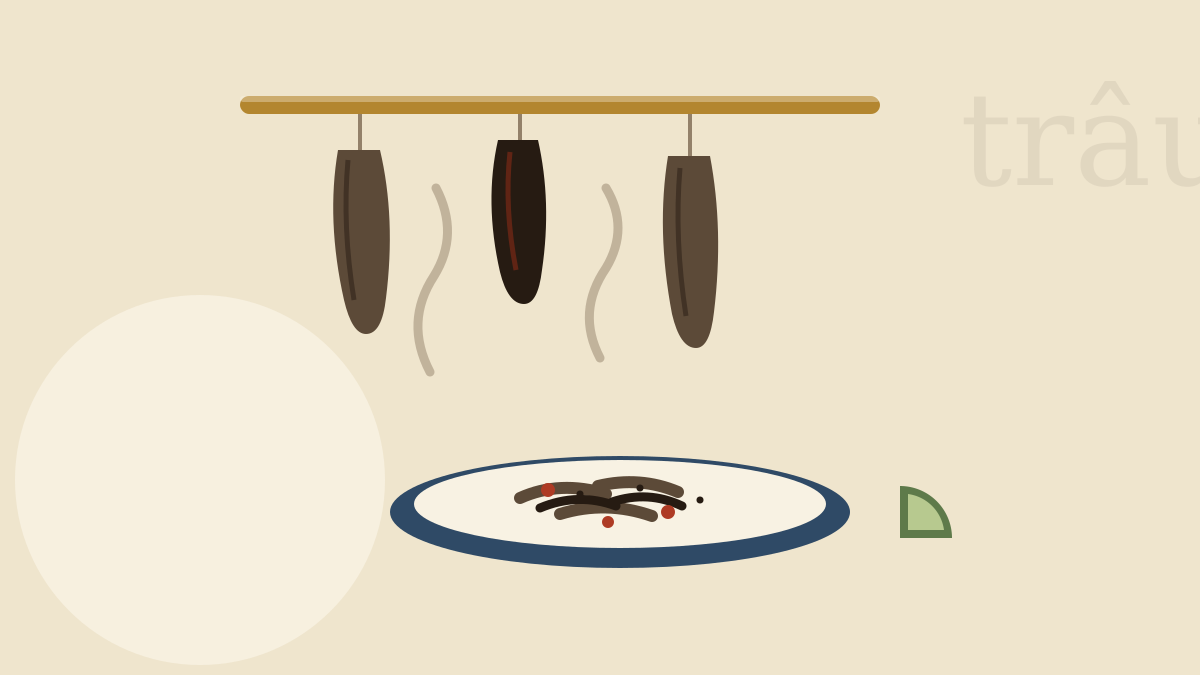
Drive into the northwest — Sơn La, Điện Biên, the mountains stacked behind Mộc Châu — and you will see it in every Black Thái kitchen: dark strips of buffalo hanging from the rafters directly above the hearth, drying in the smoke of the family's every meal. Thịt trâu gác bếp means, literally, buffalo shelved over the kitchen fire. Highland Thái villages have cured meat this way for centuries — in country with no refrigeration and long winters, the rafter was the pantry.
A home oven can't be a rafter, so this recipe changes one thing on purpose: heat the meat through to 71°C before you dry it, because a low oven has none of the smoke that protects the traditional version. Everything else — the with-the-grain cut, the overnight cure heavy with ginger and lemongrass, the long low dry — is the mountain method, and if you own a smoker you can put the smoke back exactly where it belongs.
The soul of the dish is mắc khén, a wild relative of Sichuan pepper that grows in the northwest forests and tastes of grapefruit peel and pine with a faint electric hum. Order it online if you can — it keeps for a year — but the Sichuan-and-black-pepper substitute lands closer than you'd expect. Toast whichever you use until it smokes. That two minutes is the difference between seasoning and perfume.
Done jerky bends and cracks like a green twig — if it snaps clean it's overdried, and if it folds silently it needs another hour.
Lời đầu bếp · A word from the kitchen
Ingredientsnguyên liệu
Serves 8
- 1 kgbuffalo or beef top round (thịt trâu) — about 2¼ lb — eye of round works too; abroad, lean grass-fed beef is the honest stand-in for water buffalo
- 2 tbspmắc khén peppercorns — the wild pepper of the northwest; substitute 1½ tbsp Sichuan peppercorn plus ½ tbsp black pepper
- 3 tbspfish sauce (nước mắm) — 45 ml — the salt of the cure lives here, so use a bottle you trust
- 15 gfine salt — 1 tbsp — with the fish sauce this is the cure; do not reduce it
- 30 gfresh ginger — a thumb, pounded to a rough paste
- 4garlic cloves — pounded with the ginger
- 2 stalkslemongrass — tender cores only, minced fine
- 1 tbspdried chili flakes — the highland version is assertive; halve it if you must
- 1 tbspsugar — 12 g — not for sweetness, for the mahogany color the drying brings out
Methodcách làm
Step 1: Cut with the grain
Slice the meat along the grain into strips about 2 cm thick and 12 cm long — the opposite of every steak rule you know. Gác bếp is meant to be pounded and torn into shreds later, and only with-the-grain strips shred into those long smoky ribbons.
Step 2: Toast and grind the mắc khén
Toast the peppercorns in a dry pan over medium heat until they smoke faintly and smell of citrus and pine, about 2 minutes, then grind coarsely. Raw mắc khén tastes like dust; toasted, it is the entire personality of this jerky.
Step 3: Cure overnight
Massage the meat with the salt, fish sauce, sugar, ginger, garlic, lemongrass, chili, and all but a spoonful of the ground pepper. Refrigerate 12 to 24 hours in a covered bowl, turning once. This is a cure, not a marinade — the salt is doing preservation work, so give it the full time.
Step 4: Heat it through first
Arrange the strips on a rack and roast at 150°C (300°F) for 10 to 12 minutes, until the meat reaches 71°C (160°F) inside. This is the food-safety step the smokehouse fire does in the highlands and your low oven cannot — heat first, then dry, never the reverse.
Step 5: Dry low and slow
Drop the oven to 70°C (160°F), prop the door open a finger's width with a wooden spoon, and dry 6 to 8 hours, flipping halfway — or run a smoker at the same temperature over oak or longan wood. The strips are done when they've lost about half their weight and bend with cracks instead of snapping.
Step 6: Rest, then pound to serve
Cool completely, then pound a strip with a pestle or the back of a knife and tear it into shreds along the grain. Dust with the reserved mắc khén and serve with chẳm chéo or a squeeze of lime. Store airtight — a week at room temperature, a month refrigerated, three months frozen.
Đồ nghề · The tools
Equipment
Charcoal grill / grill pan
Vỉ nướngNướng means fire, and lemongrass pork wants char and smoke. A small charcoal grill is the true answer; a screaming-hot cast-iron grill pan under a cracked window is the honest apartment one.
Shop on Amazon →Mortar & pestle
Cối chàyLemongrass, garlic, and chilies pounded release oils a blender never finds — it bruises where blades slice. The sound of a Vietnamese kitchen starting dinner.
Shop on Amazon →
Equipment links are Amazon affiliate links. As an Amazon Associate we earn from qualifying purchases, at no cost to you. Disclosure.
Questions from the kitchen
I can't find buffalo — does beef really work?
Yes, and no one in Sơn La would blink. Water buffalo is simply the cattle of the highlands; what matters is a lean, large-muscled cut like top round or eye of round. Trim every scrap of surface fat — fat is what turns jerky rancid on the shelf.
Why heat the meat to 71°C before drying? The traditional version just hangs over the fire.
The rafter version hangs in constant smoke — which is antimicrobial — for days. A 70°C home oven provides no smoke, and drying alone can leave bacteria alive in the center. Heating the strips through first, then drying, is the standard safe-jerky method and costs you nothing in texture.
How do you actually eat this? It's hard as a plank.
That's the point — it's trekking food. Pound it until the fibers loosen, shred it, and eat it with beer, or steam the shreds 5 minutes to soften them for a salad with lime, herbs, and fried shallots. Nobody bites a whole strip cold.
Nấu tiếp · Cook next
Keep the burner on
 Nướng
NướngGrills & Lemongrass·80 min·Intermediate
Mắc Khén Grilled ChickenGà nướng mắc khén
Spatchcocked chicken under a crust of wild mắc khén pepper, grilled or roasted hot, with chẳm chéo — the herbal dipping salt of the northwest.
 Nướng
NướngGrills & Lemongrass·55 min·Intermediate
Lemongrass Pork SkewersNem lụi
Huế's nem lụi — springy pork paste grilled on lemongrass stalks, wrapped in rice paper and herbs, and dragged through a peanut sauce with a secret.
 Nướng
NướngGrills & Lemongrass·45 min·Intermediate
Chả Cá Lã VọngChả cá Lã Vọng
Hanoi's most famous single-dish meal — turmeric and galangal fish seared in oil, then finished at the table under a collapsing heap of dill and scallions.