Lạng Sơn Roast Duck with Mắc Mật
Vịt quay mắc mật
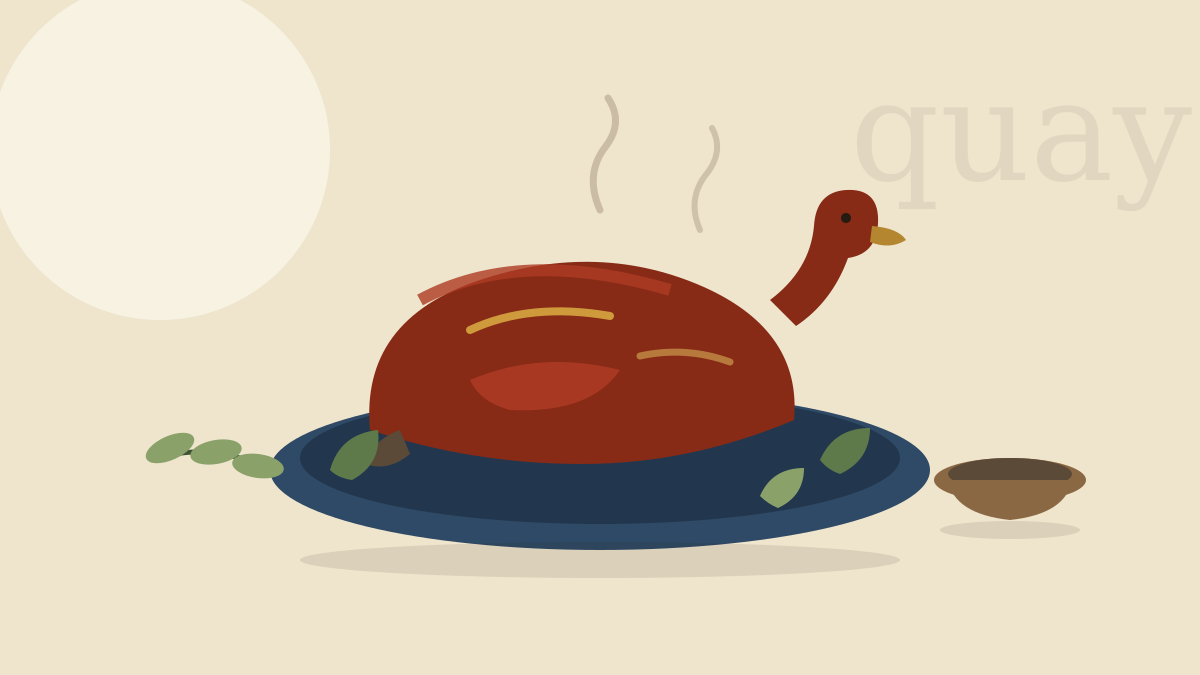
The border-town roast duck of Lạng Sơn — skin lacquered with maltose and vinegar, cavity packed with mắc mật leaves, its Cantonese lineage worn plainly.
By Vietnamese Cookbook Kitchen · April 8, 2026
The Northern HighlandsThe Lê Dynasty era, 1428–1789
 Nướng
Nướng- Prep
- 45 min
- Cook
- 80 min
- Serves
- 4
- Level
- Advanced
Lạng Sơn sits fifteen kilometers from the Chinese border, at the mountain gate where the Lê dynasty's northern road met the empire next door, and its kitchen has never pretended otherwise. The roast duck hanging glass-skinned in its market stalls is Cantonese by lineage — the scald, the maltose lacquer, the patient drying are the same moves that built Guangzhou's shopfronts — carried over the passes by centuries of border trade and the Tày, Nùng, and Chinese families who worked them. What Vietnam added is the leaf. Mắc mật, a wild citrus cousin that grows on the region's limestone hills, goes into the cavity by the fistful and turns the drippings into a sauce no one on the other side of the border can quite claim.
The bird cooks in two directions at once: dry heat lacquering the outside while the sealed cavity steams the flesh from within, leaf oils riding the vapor. Crisp skin is made the day before, not in the oven — the scald, the vinegar-maltose glaze, and the overnight dry do the work, and the roast merely collects the reward. When you tip the cavity juices into a bowl and they come out dark, glossy, and smelling of some citrus grove you have never visited, you will understand why the border towns never let this one go.
The overnight uncovered fridge-dry is the step people skip and then blame the oven. Wet duck skin steams; dry duck skin lacquers. Give it the full night on a rack.
Lời đầu bếp · A word from the kitchen
Ingredientsnguyên liệu
Serves 4
The duck
- 1whole duck, about 2 kg — 4–4½ lb; Pekin ducks from an Asian market come with the neck skin intact, which helps the glaze
- 1 tbspfine salt
The cavity
- 20–25mắc mật leaves — sold frozen or dried at northern-Vietnamese grocers and online; for a substitute, see the FAQ — and lower your expectations gently
- 4garlic cloves — smashed
- 3shallots — halved
- 2 tbspsoy sauce
- 1 tbspoyster sauce
- 1 tspfive-spice powder — a light hand; Lạng Sơn ducks are herbal, not perfumed
- 1 tspground black pepper
The skin glaze
- 2 tbspmaltose or honey — maltose (mạch nha) gives the harder, glassier shell; honey is the practical stand-in
- 2 tbsprice vinegar
- 2 tbspboiling water
Methodcách làm
Step 1: Season inside, sew it shut
Pat the duck dry and salt the skin. Mix the cavity ingredients, bruise the mắc mật leaves in your fist to wake their oils, and pack everything into the cavity. Sew the opening closed with a trussing needle or seal it with two skewers laced with twine — the leaves must steam inside the bird, not fall out of it.
Step 2: Scald and glaze the skin
Set the duck on a rack over the sink and pour a full kettle of boiling water slowly over the skin — it will visibly tighten. Stir the maltose, vinegar, and boiling water together and brush the hot skin all over with the glaze.
Step 3: Dry overnight
Refrigerate the duck uncovered on its rack for 12–24 hours, until the skin feels like paper. This is the whole secret of every glass-skinned duck hanging in every window from Lạng Sơn to Guangzhou; there is no shortcut, only regret.
Step 4: Roast
Roast breast-up on a rack over a water-filled tray at 190°C / 375°F for about 70–80 minutes, brushing once more with glaze at the halfway mark. If the breast darkens too fast, tent it loosely with foil and let the legs catch up.
Step 5: Verify the temperature
Because the cavity is stuffed, check two places: 74°C / 165°F in the deepest thigh, and the same at the center of the cavity packing. A stuffed bird lags at its core — do not carve on color alone.
Step 6: Rest, then carve over the juices
Rest 15 minutes, then open the cavity over a bowl and pour off the dark, leaf-scented juices — that liquid, spiked with a little of the glaze, is the dipping sauce. Carve and serve with rice or stuff into a baguette.
Đồ nghề · The tools
Equipment
Charcoal grill / grill pan
Vỉ nướngNướng means fire, and lemongrass pork wants char and smoke. A small charcoal grill is the true answer; a screaming-hot cast-iron grill pan under a cracked window is the honest apartment one.
Shop on Amazon →Bamboo steamer
Xửng hấpFor bánh bao, xôi, and fish steamed whole — bamboo breathes, so nothing drips condensation back onto your work. Line it with a cabbage leaf, not parchment, and steal the leaf after.
Shop on Amazon →Mortar & pestle
Cối chàyLemongrass, garlic, and chilies pounded release oils a blender never finds — it bruises where blades slice. The sound of a Vietnamese kitchen starting dinner.
Shop on Amazon →
Equipment links are Amazon affiliate links. As an Amazon Associate we earn from qualifying purchases, at no cost to you. Disclosure.
Questions from the kitchen
What actually substitutes for mắc mật?
Nothing exactly — the leaf is a Clausena, a citrus relative with a resinous, lemongrass-meets-bay perfume. The nearest approximation is a mix of fresh bay and makrut lime leaves, two to one. It gets you a very good roast duck; it does not get you Lạng Sơn. Dried mắc mật bought online, though muted, beats any substitute.
Why is my skin chewy instead of crisp?
Almost always moisture — the overnight dry was skipped, shortened, or done covered, or the duck was basted with fatty pan juices instead of the vinegar glaze. Fat softens; sugar-vinegar lacquers. The scald, glaze, and long dry are a chain, and it holds only whole.
Can I do this with duck legs instead of a whole bird?
Yes, and it is a good weeknight translation: marinate legs in the cavity mixture with bruised leaves for a few hours, dry uncovered overnight, glaze, and roast at 200°C / 400°F for 40–45 minutes to the same 74°C. You trade the ceremony for convenience; the flavor stays.
Nấu tiếp · Cook next
Keep the burner on
 Nướng
NướngGrills & Lemongrass·80 min·Intermediate
Mắc Khén Grilled ChickenGà nướng mắc khén
Spatchcocked chicken under a crust of wild mắc khén pepper, grilled or roasted hot, with chẳm chéo — the herbal dipping salt of the northwest.
 Nướng
NướngGrills & Lemongrass·55 min·Intermediate
Lemongrass Pork SkewersNem lụi
Huế's nem lụi — springy pork paste grilled on lemongrass stalks, wrapped in rice paper and herbs, and dragged through a peanut sauce with a secret.
 Nướng
NướngGrills & Lemongrass·45 min·Intermediate
Chả Cá Lã VọngChả cá Lã Vọng
Hanoi's most famous single-dish meal — turmeric and galangal fish seared in oil, then finished at the table under a collapsing heap of dill and scallions.