Bamboo-Tube Rice
Cơm lam
Highland sticky rice roasted in bamboo tubes — plus an oven method with foil and banana leaf — served with muối vừng lạc, sesame-peanut salt.
By Vietnamese Cookbook Kitchen · July 1, 2026
The Northern HighlandsĐông Sơn & Văn Lang era, c. 2000–111 BCE
 Gốc
Gốc- Prep
- 20 min
- Cook
- 75 min
- Serves
- 4
- Level
- Beginner
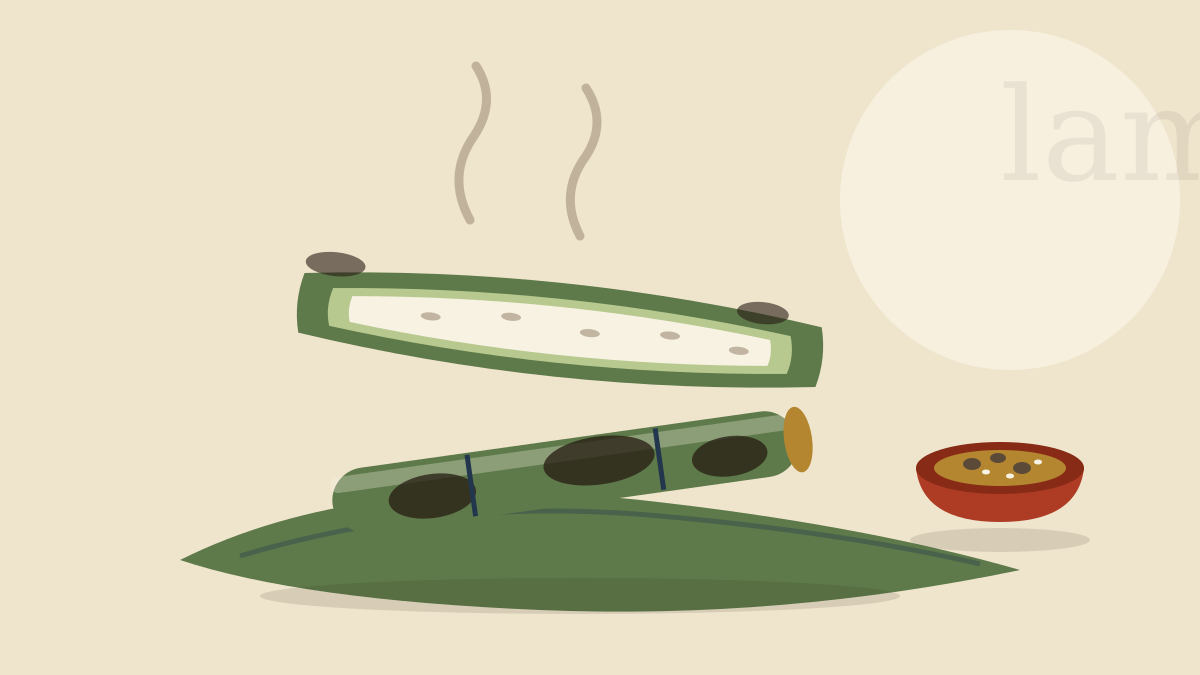
Cơm lam is cooking older than the pot: rice, water, and a tube of green bamboo set against a fire, the vessel becoming steam, mold, and serving dish at once. Cooking rice in bamboo is one of Southeast Asia's most ancient techniques — the kind of method the rice-growing cultures of the Đông Sơn era would have known long before metal or mass-made ceramics reached every hearth — and in the northern highlands it never stopped being practical. It's farmer food, forager food, and now the thing every trekker in Sapa gets handed warm at the top of a hill.
The whole method balances on one piece of physics: the green bamboo must stay wetter than the fire is hot, so the rice steams inside while the tube scorches outside. That is why the bamboo must be fresh-cut, why the tubes are single-use, and why a blackening skin is the sign of success rather than disaster. The foil-and-banana-leaf fallback works on the same logic — a sealed, faintly perfumed cylinder that turns fierce oven heat into gentle steam.
Serve it the way the highlands do, with muối vừng lạc: sesame and peanuts pounded with salt into a fragrant rubble. The rice is deliberately plain — the salt is the seasoning, applied slice by slice, dip by dip — and the pairing is so good you'll start keeping a jar of the salt for plain steamed rice, cucumbers, and boiled eggs. Of the five northern-highlands recipes on this site, this is the one to cook first with children; cracking open the tube never stops being a small ceremony.
The bamboo should scorch and the rice should not — if the outside of the tube isn't blackening, you're steaming furniture, not roasting rice.
Lời đầu bếp · A word from the kitchen
Ingredientsnguyên liệu
Serves 4
The rice
- 400 gglutinous rice (gạo nếp) — 2 cups — soaked 4 hours or overnight; highland cooks would use fragrant nếp nương
- 4fresh green bamboo tube sections, about 25 cm long — one node closed at the bottom; from Asian markets or a bamboo grower — never garden-center canes, which may be treated
- 480 mlwater or half water, half coconut milk — 2 cups — coconut is a lowland flourish the mountains skip
- 1 tspfine salt
- 4pieces of banana leaf — for plugging the tubes — and for the foil fallback; frozen leaves, wiped and warmed, work fine
Muối vừng lạc — sesame-peanut salt
- 60 graw peanuts — ½ cup
- 30 gwhite sesame seeds — 3 tbsp
- 1 tspcoarse salt
- 1 tspsugar — optional, and argued about in every household
Methodcách làm
Step 1: Soak the rice
Rinse the glutinous rice until the water runs nearly clear, then soak it 4 hours or overnight and drain. Unsoaked rice in a sealed tube cooks unevenly — the outside blows out while the center stays chalky — so treat the soak as part of the recipe, not a suggestion.
Step 2: Load the tubes
Fill each bamboo section two-thirds with rice — never more, the grains need room to swell — then pour in salted water (or the coconut mix) to two fingers above the rice. Fold a piece of banana leaf into a plug and stopper the open end firmly.
Step 3: Roast and turn
Over charcoal, stand the tubes leaning against a support at the fire's edge and turn a quarter-turn every 10 minutes for 50 to 60 minutes, until the outer skin is scorched all over and the plug steams hard. In the oven, lay the tubes on a rack at 220°C (425°F) for 60 to 70 minutes, turning twice.
Step 4: No bamboo? Roll foil parcels
Line foil with banana leaf, shape a log of soaked rice down the middle, add 3 tablespoons of the liquid, and roll into a tight cylinder with twisted ends — two parcels for this amount. Roast at 220°C for 45 to 50 minutes, turning once. You lose the green-bamboo perfume but keep the shape, the leaf scent, and the ceremony.
Step 5: Rest, peel, slice
Rest the tubes 15 minutes — they finish cooking inside, and fresh from the fire they are genuinely dangerous to open. Then whittle or crack away the charred outer bamboo until a thin pale sleeve remains, and slice into rounds still wearing it, to be peeled at the table.
Step 6: Make the muối vừng lạc
Toast the peanuts in a dry pan over medium heat until spotted deep gold, about 8 minutes, then the sesame seeds until they pop, about 2. Pound or pulse with the salt (and sugar, if your household votes yes) to a coarse, sandy rubble — stop well before butter. Serve alongside for dipping every slice.
Đồ nghề · The tools
Equipment
Portable gas burner
Bếp ga miniLẩu is not lẩu if someone has to keep walking to the stove. The tabletop butane burner turns a pot of broth into a two-hour dinner party.
Shop on Amazon →Charcoal grill / grill pan
Vỉ nướngNướng means fire, and lemongrass pork wants char and smoke. A small charcoal grill is the true answer; a screaming-hot cast-iron grill pan under a cracked window is the honest apartment one.
Shop on Amazon →Mortar & pestle
Cối chàyLemongrass, garlic, and chilies pounded release oils a blender never finds — it bruises where blades slice. The sound of a Vietnamese kitchen starting dinner.
Shop on Amazon →Fine sieve / muslin
Rây lọcFor straining broth crystal-clear, squeezing coconut milk, and working tamarind pulp through into pure sour. Line it with muslin when the recipe says “clear” and means it.
Shop on Amazon →
Equipment links are Amazon affiliate links. As an Amazon Associate we earn from qualifying purchases, at no cost to you. Disclosure.
Questions from the kitchen
Where do I get food-safe bamboo, and can I reuse the tubes?
Fresh green bamboo turns up at Asian markets, bamboo nurseries, and online — you want thick-walled sections cut so one node seals the bottom. Never use garden-center or craft-store canes, which are often dried out or chemically treated. The tubes are strictly single-use; the moist green wall is what steams the rice, and a used tube is neither moist nor green.
My rice came out dry and chalky in the middle. What went wrong?
One of three things — the rice wasn't soaked long enough, the liquid didn't stand a full two fingers above the rice, or the tube was overfilled so the grains had no room to swell. When in doubt, err wet; overmoist cơm lam is merely soft, but underdone glutinous rice is a lost cause.
Can I use regular jasmine rice instead of sticky rice?
It will cook, but it won't be cơm lam — the dish depends on glutinous rice setting into a sliceable cylinder that holds together in the hand. Jasmine gives you loose grains in a scorched tube. Glutinous rice is inexpensive and keeps for a year; buy the real thing.
Nấu tiếp · Cook next
Keep the burner on
 Gốc
GốcFoundations·20 min·Beginner
Caramel SauceNước màu
Vietnamese caramel sauce — sugar taken past amber to bitter mahogany, the color and backbone of every kho. Stages by shade and smell, jarred for months.
 Gốc
GốcFoundations·25 min·Beginner
Pickled Carrot & DaikonĐồ chua
The sweet-sour carrot and daikon pickle that lives inside every bánh mì — a ratio-first quick pickle, with the salting step that guards the crunch for weeks.
 Gốc
GốcFoundations·10 min·Beginner
Nước Chấm, Balanced by TasteNước chấm
The everything-sauce of the Vietnamese table — fish sauce, lime, sugar, and chili in living balance, plus the tasting method that beats any fixed ratio.