Nước Chấm, Balanced by Taste
Nước chấm
The everything-sauce of the Vietnamese table — fish sauce, lime, sugar, and chili in living balance, plus the tasting method that beats any fixed ratio.
By Vietnamese Cookbook Kitchen · June 1, 2026
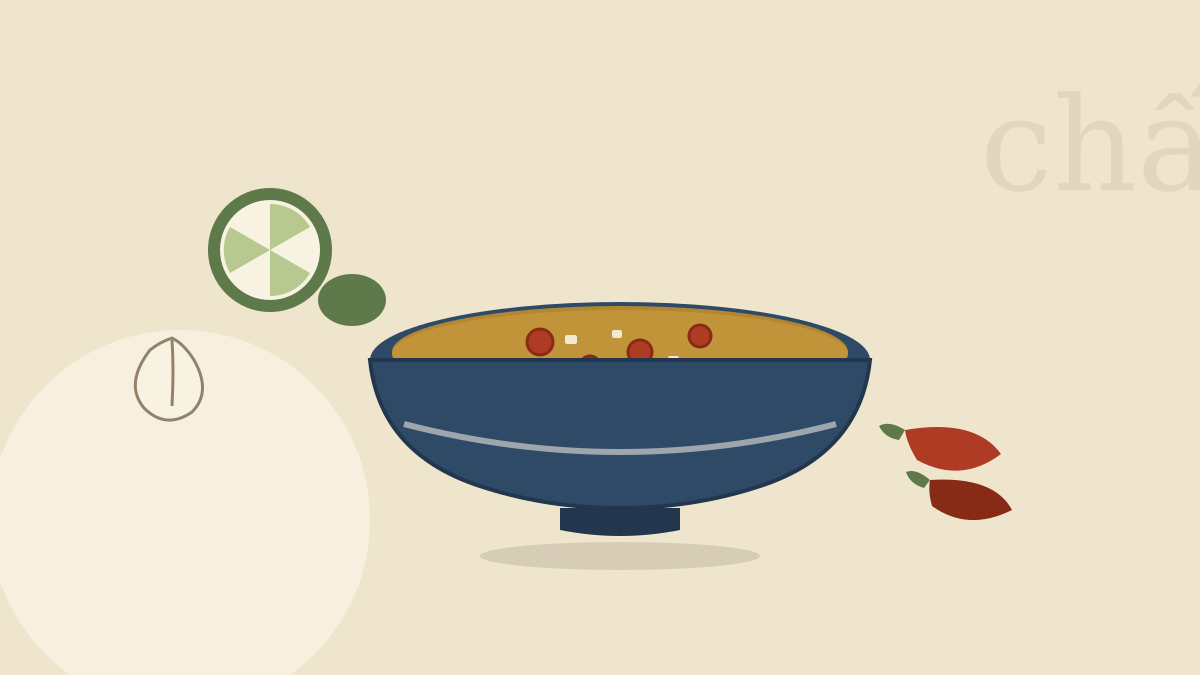 Gốc
Gốc- Prep
- 10 min
- Cook
- No cook
- Serves
- 6
- Level
- Beginner
Ask what the most important recipe in Vietnamese cooking is and you will start an argument about phở. But phở is a dish; nước chấm is the grammar. It lands on spring rolls, grilled pork, bánh xèo, steamed rice, fried fish — a third of this site assumes a bowl of it is within reach. Learn it first and every other page gets easier.
What you are actually learning here is not a recipe but a reflex: sweet, sour, salty, hot, in that order of adjustment. Vietnamese cooks don't measure this sauce; they taste it against the meal. The quantities above are scaffolding — accurate for a decent bottle of fish sauce and ordinary limes — but the third step is the recipe.
One habit worth stealing: after juicing the limes, drop a spent half into the bowl for a minute. The oils in the peel add a bitterness so faint you'd never name it — you'd only miss it.
Taste it with the thing it will sauce, not off a spoon. A nước chấm that tastes perfect alone is too weak for a spring roll and too loud for a rice bowl.
Lời đầu bếp · A word from the kitchen
Ingredientsnguyên liệu
Serves 6
- 60 mlfish sauce (nước mắm) — 4 tbsp — a first-press, 40°N bottle; this sauce is only as good as this bottle
- 60 mlfresh lime juice — 4 tbsp, about 2 limes — plus the spent halves, see the method
- 50 gsugar — 4 tbsp; palm sugar if you have it, white if you don't
- 120 mlwarm water — 8 tbsp — warm enough to dissolve the sugar, no more
- 2garlic cloves — minced fine enough to float
- 1–2bird's-eye chilies — thinly sliced; start with one
Methodcách làm
Step 1: Dissolve the sugar
Stir the sugar into the warm water until the liquid turns clear again. Every failed nước chấm with sugar grit at the bottom skipped this thirty seconds.
Step 2: Build the base
Stir in the lime juice first, then the fish sauce. Adding them in this order lets you smell what the lime does before the fish sauce arrives — you are learning the sauce, not just making it.
Step 3: Balance by taste
Dip a leaf of lettuce or a corner of whatever you're serving and taste. Too sharp, add a spoon of water and a pinch of sugar. Too flat, more lime. Too polite, more fish sauce. There is no final ratio — there is only your fish sauce, your limes, and your dinner.
Step 4: Finish with garlic and chili
Stir in the garlic and chili last so they float — a nước chấm where the garlic sits on top is the sign of a cook who knows the order of operations. Rest it 10 minutes before serving.
Đồ nghề · The tools
Equipment
Mandoline
Bàn bàoĐồ chua lives or dies on evenness — carrot and daikon cut to the same whisper-thin matchstick pickle at the same speed. Use the guard; every Vietnamese grandmother has the scar that says otherwise.
Shop on Amazon →Fine sieve / muslin
Rây lọcFor straining broth crystal-clear, squeezing coconut milk, and working tamarind pulp through into pure sour. Line it with muslin when the recipe says “clear” and means it.
Shop on Amazon →
Equipment links are Amazon affiliate links. As an Amazon Associate we earn from qualifying purchases, at no cost to you. Disclosure.
Questions from the kitchen
Can I make it ahead?
The base (sugar, water, lime, fish sauce) keeps a week in the fridge. Add garlic and chili the day you serve — after a day or two they turn the whole jar hot and muddy.
Which fish sauce should I buy?
Look for two things on the label — “nhĩ” or “first press,” and a nitrogen level of 40°N. Red Boat is the easy call abroad; Phú Quốc or Phan Thiết bottles if your market carries them. Skip anything with hydrolyzed protein in the ingredients.
Why did mine taste different from the restaurant's?
Southern nước chấm runs sweeter, northern leaner and saltier, and the version for bánh xèo is thinner than the one for spring rolls. Yours isn't wrong — it's regional. Adjust sugar and water toward what you're serving.
Nấu tiếp · Cook next
Keep the burner on
 Gốc
GốcFoundations·20 min·Beginner
Caramel SauceNước màu
Vietnamese caramel sauce — sugar taken past amber to bitter mahogany, the color and backbone of every kho. Stages by shade and smell, jarred for months.
 Gốc
GốcFoundations·95 min·Beginner
Bamboo-Tube RiceCơm lam
Highland sticky rice roasted in bamboo tubes — plus an oven method with foil and banana leaf — served with muối vừng lạc, sesame-peanut salt.
 Gốc
GốcFoundations·25 min·Beginner
Pickled Carrot & DaikonĐồ chua
The sweet-sour carrot and daikon pickle that lives inside every bánh mì — a ratio-first quick pickle, with the salting step that guards the crunch for weeks.