Pickled Carrot & Daikon
Đồ chua
The sweet-sour carrot and daikon pickle that lives inside every bánh mì — a ratio-first quick pickle, with the salting step that guards the crunch for weeks.
By Vietnamese Cookbook Kitchen · July 1, 2026
Sài Gòn & the SoutheastFrench Indochina era, 1883–1945
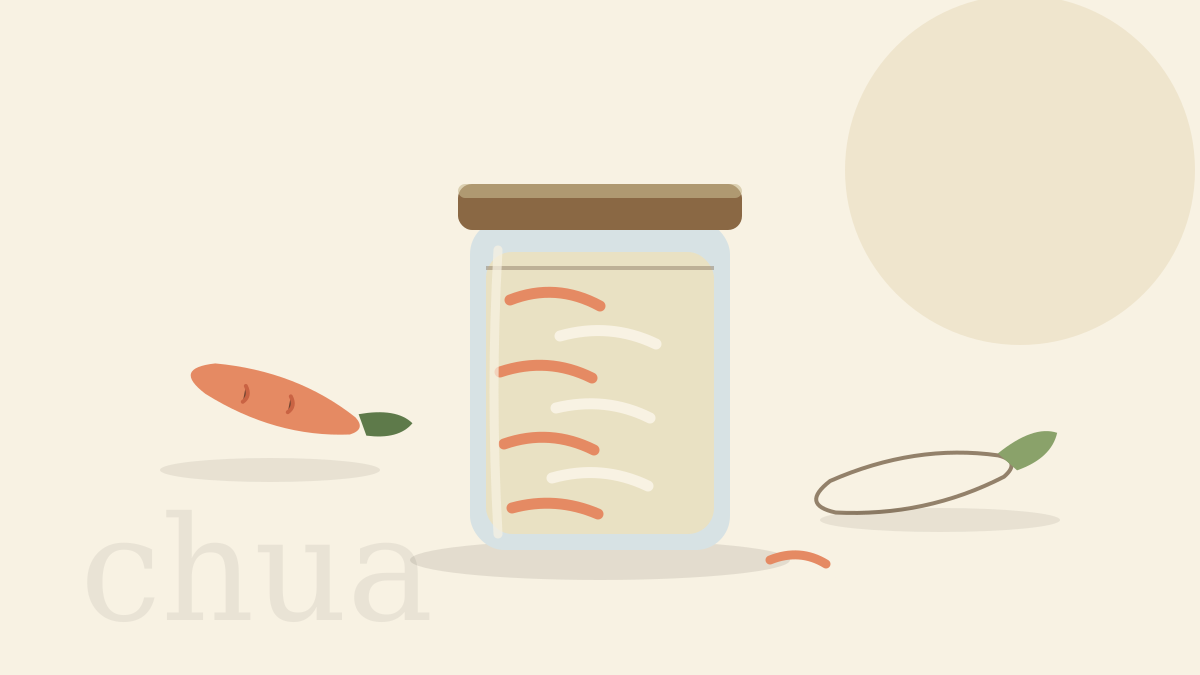 Gốc
Gốc- Prep
- 25 min
- Cook
- No cook
- Serves
- 8
- Level
- Beginner
Đồ chua just means "sour stuff," which tells you how basic the habit is — Vietnam has salted and soured vegetables for as long as there have been clay jars to do it in, from fermented mustard greens to whole braided heads of pickled garlic. But this particular pickle — carrot and daikon, quick, sweet, cut to matchsticks — is the sandwich's contemporary, rising with the bánh mì in colonial-era Saigon as the acid designed to cut pâté, mayonnaise, and rich pork. The pairing is engineering, not garnish: two roots, one sweet and one faintly peppery, with two distinct registers of crunch.
The crunch has a mechanism, and it is worth understanding once. A raw strand is a column of water-filled cells; salt pulls that water out, so the strand turns supple and the brine that replaces it carries flavor instead of getting watered down. Acid then keeps the cell-wall pectin firm — which is why the brine goes in cold, and why the bend test matters more than the clock. Salt is for texture; the brine is for flavor. Make a double jar while you're at it. It empties in ways nobody in the house will explain.
The test is a bend, not a bite. When a salted strand of daikon curls into a circle without snapping, it is ready for the brine.
Lời đầu bếp · A word from the kitchen
Ingredientsnguyên liệu
Serves 8
- 300 gcarrots — peeled
- 300 gdaikon — one slim, heavy root; large old ones go spongy and hot
- 1 tspfine salt — for salting the vegetables
- 1 tspsugar — for the salting step, alongside the salt
- 240 mldistilled white vinegar — 1 cup; rice vinegar gives a softer sour — see the FAQ
- 240 mlwarm water — 1 cup — warm only enough to dissolve the sugar
- 70 gsugar — a scant ⅓ cup by volume; the brine ratio to remember is 1 to 1 to ⅓ — vinegar, water, sugar
- 1 tspfine salt — for the brine
Methodcách làm
Step 1: Cut to sandwich gauge
Cut the carrots and daikon into matchsticks about 3 mm thick and 6 cm long — the width of a bánh mì bite. Thinner turns to mush in the brine; thicker never bends into a sandwich properly.
Step 2: Salt and massage
Toss the vegetables with the teaspoon each of salt and sugar and leave them 15 minutes, turning once. Osmosis pulls water out of the strands so they flex instead of snapping — and so their water doesn't leak out later and dilute your brine.
Step 3: Test, rinse, squeeze
Bend a strand of daikon into a circle; if it curls without breaking, it's ready. Rinse the vegetables briefly under cold water, then squeeze them hard in your fists, a handful at a time — wetness left in now is flavor the brine can't get in later.
Step 4: Mix the brine cold
Stir the sugar and salt into the warm water until dissolved, then add the vinegar. No boiling — heat softens the pectin in the vegetable walls and cooks away the crunch you just engineered.
Step 5: Jar and wait
Pack the vegetables into a clean jar and pour brine to cover completely — anything above the surface goes soft and dull. Edible in an hour, right at 24, and good in the fridge for 3–4 weeks.
Đồ nghề · The tools
Equipment
Mandoline
Bàn bàoĐồ chua lives or dies on evenness — carrot and daikon cut to the same whisper-thin matchstick pickle at the same speed. Use the guard; every Vietnamese grandmother has the scar that says otherwise.
Shop on Amazon →Fine sieve / muslin
Rây lọcFor straining broth crystal-clear, squeezing coconut milk, and working tamarind pulp through into pure sour. Line it with muslin when the recipe says “clear” and means it.
Shop on Amazon →
Equipment links are Amazon affiliate links. As an Amazon Associate we earn from qualifying purchases, at no cost to you. Disclosure.
Questions from the kitchen
Why does the jar smell like that?
Daikon releases sulfur compounds as it sits — the whiff when you open the lid is normal and fades in a minute. Spoilage announces itself as slime or a cloudy, ropey brine, not as smell; a funky-but-crisp đồ chua is doing exactly what it should.
White vinegar or rice vinegar?
Distilled white is the deli standard — a clean, loud sour that stands up to pâté and mayonnaise inside a bánh mì. Rice vinegar makes a rounder, gentler pickle that's lovely beside grilled meats. Both work at the same ratio; avoid anything darker, which muddies the color.
Mine went soft after a week — what happened?
One of three things — the salting step was skipped or cut short, the brine went in hot, or the daikon was old and spongy to begin with. The salt-and-bend routine isn't ceremony; it is where the multi-week crunch actually comes from.
Nấu tiếp · Cook next
Keep the burner on
 Gốc
GốcFoundations·20 min·Beginner
Caramel SauceNước màu
Vietnamese caramel sauce — sugar taken past amber to bitter mahogany, the color and backbone of every kho. Stages by shade and smell, jarred for months.
 Gốc
GốcFoundations·95 min·Beginner
Bamboo-Tube RiceCơm lam
Highland sticky rice roasted in bamboo tubes — plus an oven method with foil and banana leaf — served with muối vừng lạc, sesame-peanut salt.
 Gốc
GốcFoundations·10 min·Beginner
Nước Chấm, Balanced by TasteNước chấm
The everything-sauce of the Vietnamese table — fish sauce, lime, sugar, and chili in living balance, plus the tasting method that beats any fixed ratio.