Caramel Sauce
Nước màu
Vietnamese caramel sauce — sugar taken past amber to bitter mahogany, the color and backbone of every kho. Stages by shade and smell, jarred for months.
By Vietnamese Cookbook Kitchen · July 7, 2026
The Mekong DeltaThe Lê Dynasty era, 1428–1789
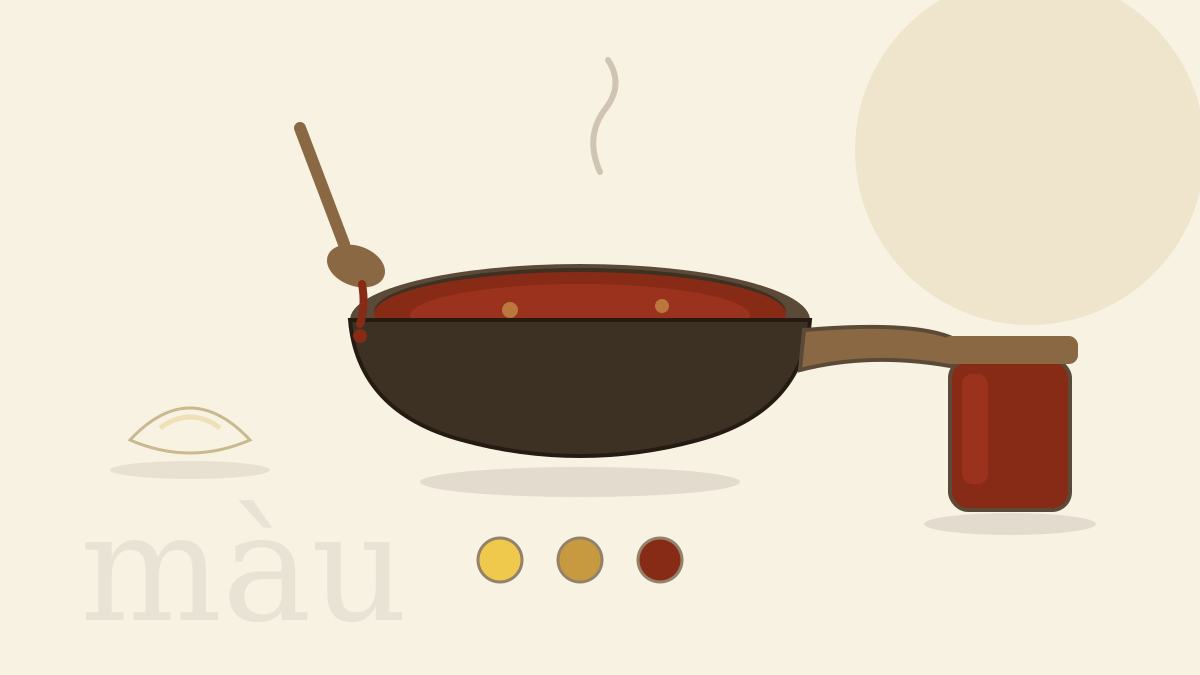 Gốc
Gốc- Prep
- 5 min
- Cook
- 15 min
- Serves
- 12
- Level
- Beginner
Nước màu — literally "color water" — is the quiet ingredient behind every kho on this site: the reason cá kho tộ is mahogany instead of beige, and the bittersweet undertow beneath the fish sauce. It is caramel by technique but not by temperament; where French caramel stops at amber and dessert, the Vietnamese version pushes deliberately past sweetness into controlled bitterness, trading dessert for seasoning. Southern kitchens, and Mekong Delta kitchens especially — where kho built on it doubled as preservation in the tropical heat — keep a jar within reach of the stove the way other kitchens keep soy sauce.
Making it is five minutes of patience and one minute of nerve. The stages announce themselves twice over, by shade and by smell — honey, amber, tea, coffee, then the red-brown edge where toasty tips into bitter — and the only rule that matters is this: nước màu is a coloring and a seasoning, not a sweetener, and it only becomes one past the point where instinct says stop. Respect the hot sugar, keep your arm long when the water goes in, and the reward is a jar that makes every braise you cook this year look like it came from a claypot with a past.
Judge it by smell as much as color — the moment the toasty caramel smell picks up one clear note of bitter smoke, count five seconds and stop it with water. Wait for visible black and you've made an ashtray.
Lời đầu bếp · A word from the kitchen
Ingredientsnguyên liệu
Serves 12
- 200 gsugar — 1 cup; plain white sugar — you are about to give it all the character it needs
- 60 mlwater, to start — 4 tbsp, just enough to make wet sand
- 120 mlhot water, to stop — 8 tbsp, measured and standing next to the stove before the burner goes on
- 1 tsplime juice — optional insurance against crystallizing; a few drops do it
Methodcách làm
Step 1: Set up like you mean it
Use a heavy, light-colored saucepan so you can read the color, and put the hot stopping-water within arm's reach. Caramel at this depth runs past 180°C — clear the counter, park the pets, and keep a bowl of cold water nearby for a splashed finger, because there is no pausing this once it moves.
Step 2: Dissolve, then hands off
Stir the sugar, starting water, and lime juice over medium heat only until the sugar dissolves, then put the spoon down for good. Stirring a boiling syrup invites crystals; from here you swirl the pan, nothing more.
Step 3: Read the stages
The syrup goes water-clear, then champagne, then honey — smelling sweet and neutral. Amber comes next, smelling like flan; most Western recipes stop here. You keep going.
Step 4: Push to mahogany
Past amber the color deepens fast — tea, then coffee, then a red-brown mahogany with thin wisps of smoke, and the smell tips from toasty to the first clear note of bitterness. That red-edged darkness, seconds before black, is nước màu. The whole run from amber takes under a minute, so stand there.
Step 5: Stop it at arm's length
Kill the heat, hold the lid like a shield, and pour in the hot water — it will erupt into furious steam and spitting sugar, which is why the water is hot, measured, and poured from as far away as your arm allows. Swirl, then stir over low heat until every seized lump melts smooth.
Step 6: Jar it
Simmer a minute more to the thickness of thin maple syrup, then cool completely and bottle in a clean jar. It pours slowly, keeps for months in the cupboard, and one jar colors a season of kho.
Đồ nghề · The tools
Equipment
Claypot
Thố đấtThe vessel kho was invented in — clay heats slowly, holds a caramel simmer without scorching, and goes straight to the table still bubbling. Season it once with rice water and it outlives you.
Shop on Amazon →Bamboo steamer
Xửng hấpFor bánh bao, xôi, and fish steamed whole — bamboo breathes, so nothing drips condensation back onto your work. Line it with a cabbage leaf, not parchment, and steal the leaf after.
Shop on Amazon →Fine sieve / muslin
Rây lọcFor straining broth crystal-clear, squeezing coconut milk, and working tamarind pulp through into pure sour. Line it with muslin when the recipe says “clear” and means it.
Shop on Amazon →Ramekins
Khuôn bánh flanFor bánh flan — the French crème caramel Vietnam adopted, darkened the caramel on, and never gave back. Small metal moulds chill faster; ceramic unmoulds prettier.
Shop on Amazon →
Equipment links are Amazon affiliate links. As an Amazon Associate we earn from qualifying purchases, at no cost to you. Disclosure.
Questions from the kitchen
My sugar seized into a white crust. What happened?
Crystals — usually from stirring after the boil, or stray sugar on the pan wall. Start over with a clean pan, add the lime juice this time, and once the syrup boils, swirl instead of stirring. Sugar is the cheapest thing in your kitchen; the lesson costs pennies.
How do I know I've gone too dark?
Steady smoke and a flat black surface with no red left in it means burnt — it will taste acrid, not bittersweet, and no amount of braising liquid dilutes that. Tilt the pan over something white: you want deep red-brown at the edge of the pour. Black means start again.
Can I just use dark soy sauce or store caramel coloring?
They color, but they don't cook. Nước màu brings a bittersweet, faintly smoky depth that dark soy's saltiness and bottled coloring's neutrality can't imitate, and it is fifteen minutes of work that keeps for months. Some Vietnamese groceries do sell jarred nước màu — a fair shortcut, better than either substitute.
Nấu tiếp · Cook next
Keep the burner on
 Gốc
GốcFoundations·95 min·Beginner
Bamboo-Tube RiceCơm lam
Highland sticky rice roasted in bamboo tubes — plus an oven method with foil and banana leaf — served with muối vừng lạc, sesame-peanut salt.
 Gốc
GốcFoundations·25 min·Beginner
Pickled Carrot & DaikonĐồ chua
The sweet-sour carrot and daikon pickle that lives inside every bánh mì — a ratio-first quick pickle, with the salting step that guards the crunch for weeks.
 Gốc
GốcFoundations·10 min·Beginner
Nước Chấm, Balanced by TasteNước chấm
The everything-sauce of the Vietnamese table — fish sauce, lime, sugar, and chili in living balance, plus the tasting method that beats any fixed ratio.