Kho Quẹt (Scrape-the-Pot Caramel Dip)
Kho quẹt
A scarcity-era dip of caramel, fish sauce, pork fat, and pepper, cooked down thick enough to scrape from a claypot with blanched vegetables.
By Vietnamese Cookbook Kitchen · May 21, 2026
The Mekong DeltaThe Subsidy Era era, 1975–1986
 Gốc
Gốc- Prep
- 10 min
- Cook
- 20 min
- Serves
- 4
- Level
- Beginner
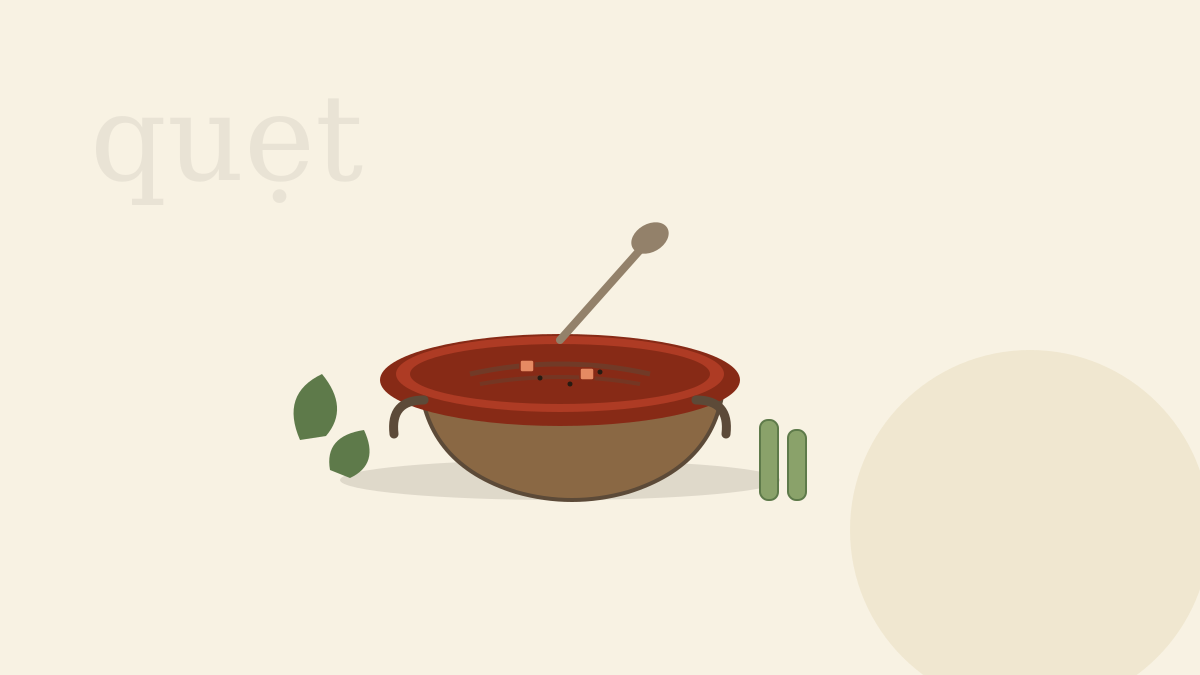
Kho quẹt is scarcity cooking that outlived the scarcity. Its shape belongs to the bao cấp period — the subsidy-era years roughly from 1976 to 1986, after reunification, when centrally planned rationing left Vietnamese households, the Mekong Delta included, stretching thin supplies of meat and fish sauce across as many meals as they could. A family with a small piece of pork fat, a spoonful of fish sauce, and whatever caramel was on hand could turn it into a dip that seasoned an entire pot of blanched vegetables and rice — protein-poor by necessity, flavor-rich by design. What began as a way to make almost nothing stretch across a family table has since become a deliberate order at restaurants that can afford far more, prized now for the same reason it was invented: it makes plain rice taste like something worth finishing.
That arc is the whole story of the dish, and the cooking method still carries its logic. Reduce past the point where the sauce looks finished — kho quẹt isn't done simmering until it clings to a dragged spoon in a slow ribbon, thick enough to be scraped rather than spooned. Vegetables get blanched plain, without their own seasoning, because the sauce is meant to supply all of it; that's not an aesthetic choice but the original economics of the dish, one thick pot of flavor covering a table with almost nothing else. Eaten down to a shining, scraped claypot, kho quẹt remembers exactly what it was built for even now that it doesn't have to be.
Let it go further than looks comfortable — kho quẹt is done when it clings to the spoon in a slow ribbon, not when it still pours. A thin kho quẹt is just seasoned water with ambitions.
Lời đầu bếp · A word from the kitchen
Ingredientsnguyên liệu
Serves 4
Kho quẹt
- 100 gpork belly — diced small, skin on if you can get it, for rendered fat and crisp bits — dried shrimp or nothing at all are the honest scarcity-era alternatives, see the essay below
- 45 mlnước màu (Vietnamese caramel sauce) — 3 tbsp — see our foundations recipe on the site; this is the dish it was written to support
- 45 mlfish sauce — 3 tbsp, a decent bottle — there is nowhere for a bad one to hide
- 30 gsugar — 2 tbsp
- 3shallots — finely diced
- 4garlic cloves — finely minced
- 150 mlwater
- 1 tspcoarsely ground black pepper — plus more to finish
- 2bird's-eye chilies — sliced, to taste
To serve
- 1cucumber — sliced into spears
- 200 gmixed vegetables for blanching — water spinach, cabbage, okra, or whatever's in the fridge — blanched until just tender
- 4bowls steamed rice
Methodcách làm
Step 1: Render the pork
Cook the diced pork belly in a dry claypot or small saucepan over medium heat until it browns and releases its fat, 5 to 6 minutes. If you're going without pork, warm 1 tablespoon of oil instead and move straight to the next step.
Step 2: Fry the aromatics
Add the shallots and garlic to the pot and fry in the rendered fat until golden and fragrant, about 2 minutes. Watch them closely — garlic this finely minced turns from golden to burnt in the time it takes to answer the phone.
Step 3: Build the sauce
Stir in the nước màu, fish sauce, sugar, and water, and bring to a simmer. The mixture will look thin and loose at first — that's correct, and patience is the entire technique from here.
Step 4: Reduce until it clings
Simmer uncovered, stirring occasionally, for 12 to 15 minutes, until the liquid has reduced to a thick, glossy paste that coats a spoon and holds its shape when dragged across the pot's bottom. This is not a sauce you pour — it's one you scrape.
Step 5: Finish with pepper and chili
Stir in the black pepper and chilies in the last minute, then taste. It should hit salty and bittersweet at once, sharp enough that a small scoop seasons a whole spoonful of rice and vegetables.
Step 6: Serve straight from the pot
Bring the claypot to the table as-is, with blanched vegetables, cucumber spears, and bowls of rice for scooping and dragging through the thick sauce. Kho quẹt is meant to be eaten down to a scraped, shining pot — that's the whole tradition in one gesture.
Đồ nghề · The tools
Equipment
Claypot
Thố đấtThe vessel kho was invented in — clay heats slowly, holds a caramel simmer without scorching, and goes straight to the table still bubbling. Season it once with rice water and it outlives you.
Shop on Amazon →Portable gas burner
Bếp ga miniLẩu is not lẩu if someone has to keep walking to the stove. The tabletop butane burner turns a pot of broth into a two-hour dinner party.
Shop on Amazon →Bamboo steamer
Xửng hấpFor bánh bao, xôi, and fish steamed whole — bamboo breathes, so nothing drips condensation back onto your work. Line it with a cabbage leaf, not parchment, and steal the leaf after.
Shop on Amazon →Fine sieve / muslin
Rây lọcFor straining broth crystal-clear, squeezing coconut milk, and working tamarind pulp through into pure sour. Line it with muslin when the recipe says “clear” and means it.
Shop on Amazon →
Equipment links are Amazon affiliate links. As an Amazon Associate we earn from qualifying purchases, at no cost to you. Disclosure.
Questions from the kitchen
Why is kho quẹt called a "scrape-the-pot" dish?
"Quẹt" means to scrape or wipe, and the name describes exactly how it's eaten — a vegetable or a spoon dragged along the bottom of the claypot to collect the last thick residue of sauce. It's less a dip you portion out and more a communal pot you work down to bare clay.
Can I make it without pork?
Yes, and during its leanest years many families did — a spoon of oil and extra caramel and fish sauce in the reduction carries the dish close enough, and dried shrimp fried into the aromatics is another period-accurate stand-in when pork wasn't available. The sauce still works; it's simply less rich.
What's the difference between this and nước màu on its own?
Nước màu is the caramel base — color and bittersweet backbone with no seasoning of its own. Kho quẹt takes that caramel and builds it into a finished, salty-sweet dip with fish sauce, pork fat, and pepper, then reduces the whole thing to a paste. One is a pantry staple; the other is dinner.
Nấu tiếp · Cook next
Keep the burner on
 Gốc
GốcFoundations·20 min·Beginner
Caramel SauceNước màu
Vietnamese caramel sauce — sugar taken past amber to bitter mahogany, the color and backbone of every kho. Stages by shade and smell, jarred for months.
 Gốc
GốcFoundations·95 min·Beginner
Bamboo-Tube RiceCơm lam
Highland sticky rice roasted in bamboo tubes — plus an oven method with foil and banana leaf — served with muối vừng lạc, sesame-peanut salt.
 Gốc
GốcFoundations·25 min·Beginner
Pickled Carrot & DaikonĐồ chua
The sweet-sour carrot and daikon pickle that lives inside every bánh mì — a ratio-first quick pickle, with the salting step that guards the crunch for weeks.