H'Mông Steamed Corn Mèn Mén
Mèn mén
The H'Mông staple of the high karst — cornmeal steamed twice into a dry, tender "rice," eaten with soup and greens where paddy fields cannot climb.
By Vietnamese Cookbook Kitchen · April 26, 2026
The Northern HighlandsNguyễn & the Huế Court era, 1802–1883
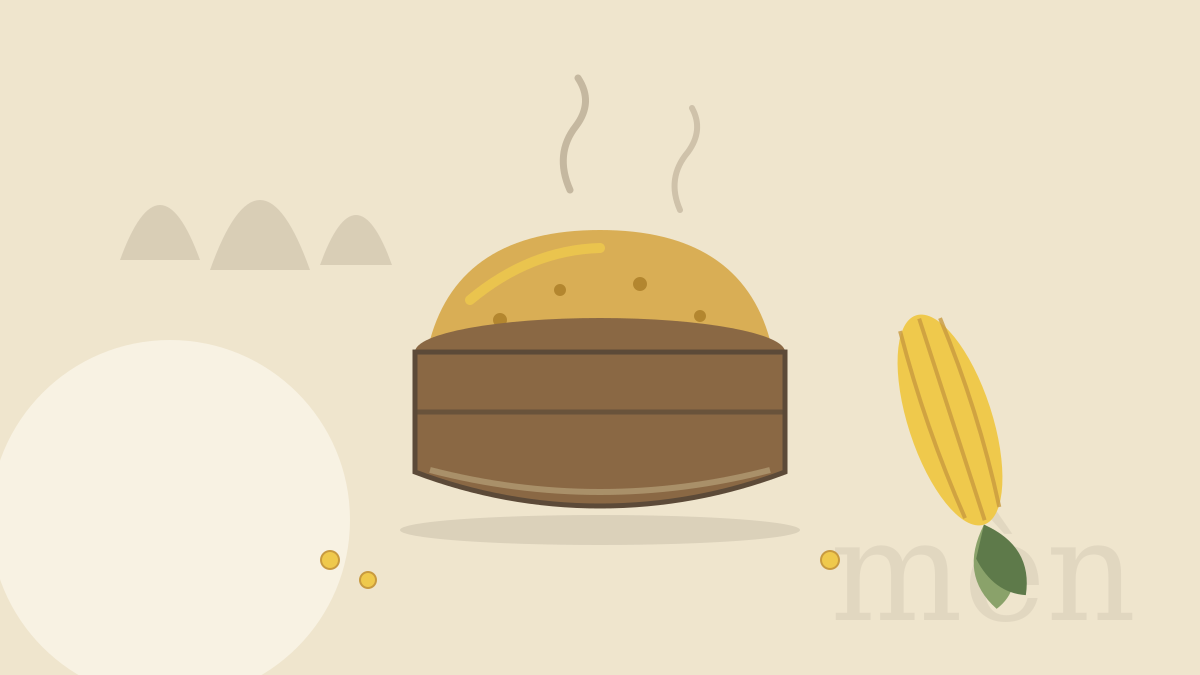 Gốc
Gốc- Prep
- 20 min
- Cook
- 55 min
- Serves
- 4
- Level
- Intermediate
Mèn mén is what the mountains serve when the mountains will not grow rice. The H'Mông arrived in Vietnam's far north in waves, chiefly across the eighteenth and nineteenth centuries — the era of the late Lê lords and the Nguyễn court — moving south from China under pressure of taxation and rebellion, and settling the highest, stoniest ground still unclaimed. On the Đồng Văn karst plateau of Hà Giang, where soil collects in pockets between grey teeth of limestone, the crop that answers is maize. Ground on stone mills, moistened, and steamed — twice — it becomes the everyday "rice" of H'Mông tables and market stalls, eaten with broth ladled over.
The double steam is not folklore; it is engineering. A single steaming leaves the grain chalky at heart, and boiling would spend precious water and firewood turning good corn into paste. Steam, break, re-wet, and steam again, and the starch cooks through while every particle stays separate and light. What you get is quietly delicious — sweet, nutty, somewhere between couscous and cornbread crumb — and a lesson in how much technique a "simple" staple can hold. Serve it under something brothy and it stops being a substitute for rice and starts being a preference.
The crumbs should just barely hold when squeezed and fall apart when poked — at both moistening stages. Err dry; you can always sprinkle more water before the second steam, but a pasty first steam never recovers.
Lời đầu bếp · A word from the kitchen
Ingredientsnguyên liệu
Serves 4
- 400 gmedium-grind cornmeal — about 2⅔ cups; stone-ground if you can get it, polenta-grind otherwise. Not instant polenta and not fine corn flour — the texture lives in the grind
- 240 mlwater, approximately — about 1 cup, added in stages; humidity and grind will move this number, so trust your hands over the cup
- 1 tspfine salt
- 1 tbspneutral oil — optional, rubbed in before the second steam for a softer finish
Methodcách làm
Step 1: Moisten and rub
Toss the cornmeal with the salt, then sprinkle on about 180 ml of the water a little at a time, rubbing the meal between your palms until it forms loose, damp crumbs with no dry pockets and no clumps bigger than a pea. This rubbing is the skill of the dish — H'Mông cooks judge it entirely by feel.
Step 2: First steam
Line a steamer with cloth or parchment, mound the crumbs loosely — do not press — and steam 20 minutes over hard-boiling water. Loose matters: steam must travel up through the pile, and a packed mound cooks into a damp brick.
Step 3: Break, cool, and re-moisten
Turn the half-cooked meal into a wide bowl and break every lump back to crumbs with a fork or fingers as it cools a few minutes. Sprinkle with the remaining water (and the oil, if using), rubbing again to the same loose-crumb stage.
Step 4: Second steam
Return the crumbs loosely to the steamer for 25 minutes more. The second pass is what finishes the starch and gives mèn mén its signature texture — dry at first glance, tender and faintly sweet in the mouth, closer to a fine couscous than to polenta.
Step 5: Serve as the rice
Fluff and serve hot, in place of rice — spooned into bowls with a brothy soup poured alongside or over, with stir-fried greens, or under anything braised. Leftovers re-steam perfectly, which is how the plateau has always eaten it.
Đồ nghề · The tools
Equipment
Bamboo steamer
Xửng hấpFor bánh bao, xôi, and fish steamed whole — bamboo breathes, so nothing drips condensation back onto your work. Line it with a cabbage leaf, not parchment, and steal the leaf after.
Shop on Amazon →Fine sieve / muslin
Rây lọcFor straining broth crystal-clear, squeezing coconut milk, and working tamarind pulp through into pure sour. Line it with muslin when the recipe says “clear” and means it.
Shop on Amazon →
Equipment links are Amazon affiliate links. As an Amazon Associate we earn from qualifying purchases, at no cost to you. Disclosure.
Questions from the kitchen
Why steam it twice instead of just boiling polenta?
Boiled cornmeal becomes porridge — a spoon food. Twice-steaming with minimal water cooks the starch through while keeping every grain separate, giving a staple you can eat with chopsticks or a spoon alongside soup, the way rice is eaten. Different technique, different food, and only one of them is mèn mén.
What do I serve it with?
In Hà Giang's markets it comes with a bowl of pork-bone or vegetable broth, often with tofu and tomato, plus sautéed greens like chayote shoots and a spoon of chili sauce. At home, any brothy soup on this site works — the corn wants something wet beside it.
My mèn mén turned out gluey. What happened?
Too much water at one of the moistening stages, or the crumbs were pressed down in the steamer. The pile must stay loose and just-damp both times. Gluey batches are still good eating, for the record — just call it something else and add butter.
Nấu tiếp · Cook next
Keep the burner on
 Gốc
GốcFoundations·20 min·Beginner
Caramel SauceNước màu
Vietnamese caramel sauce — sugar taken past amber to bitter mahogany, the color and backbone of every kho. Stages by shade and smell, jarred for months.
 Gốc
GốcFoundations·95 min·Beginner
Bamboo-Tube RiceCơm lam
Highland sticky rice roasted in bamboo tubes — plus an oven method with foil and banana leaf — served with muối vừng lạc, sesame-peanut salt.
 Gốc
GốcFoundations·25 min·Beginner
Pickled Carrot & DaikonĐồ chua
The sweet-sour carrot and daikon pickle that lives inside every bánh mì — a ratio-first quick pickle, with the salting step that guards the crunch for weeks.